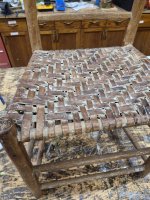
Hi Scott... i gave Google a go on the paint removal from the chair, came up with some steps you may find interesting and worth considering.
GOOGLE.
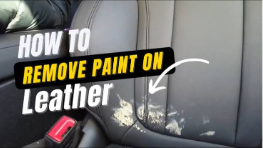
To remove old, dried paint from a leather seat, use a small amount of
rubbing alcohol or
petroleum jelly on a cotton swab to gently soften and lift the paint without ruining the material. [
1,
2]
Step-by-Step Removal Guide
- Test First: Dab a hidden spot on the seat with your chosen cleaner first to make sure it does not change the color of the leather. [1]
- Soften the Paint: Put a little 90% rubbing alcohol or petroleum jelly on a cotton swab or microfiber cloth. Dab it directly onto the dried paint spot. Let petroleum jelly sit for 15 minutes, or let rubbing alcohol sit for a few seconds to break the bond. [1, 2]
- Lift the Paint: Gently rub or scrape the paint using a soft cloth, a soft-bristled brush, or the edge of a blunt plastic card. Do not push hard or use sharp metal blades, as this can tear the leather. [1, 2, 3, 4]
- Clean the Residue: Wipe the area immediately with a damp cloth and mild soap to remove any leftover cleaner. [1, 2]
- Condition the Leather: Dry the seat and apply a quality leather conditioner to restore lost moisture and keep the material soft. [1, 2]
For tips on how to effectively rub and lift stubborn dried paint using alcohol and a cloth:

3m
How to Remove Stubborn Paint from Leather Chairs
85k views · 6 years ago

YouTube · Ergonomic Trends
If you want more specific help, tell me:
- What type of paint is it (latex, acrylic, spray paint)?
- Is the leather perforated (has small holes)?
In response to the additional questions I put in:
no idea as to type of paint. chair has weaved leather straps for the seat, shows white staining around the weave areas. old chair
And got the following;
For an older chair with woven leather straps, white staining around the gaps often indicates either
dried water-based latex paint or
fatty bloom (natural oils/waxes migrating out of old leather). Because the chair is vintage, the leather is likely fragile, and standard scraping can permanently warp or tear the interwoven straps.


Safe Removal Strategy for Woven Straps
- The Warm Compress Method: If it is old latex paint, it will soften with moisture. Soak a microfiber cloth in warm water and wring it out completely so it is just damp. Press it firmly against the stained weave areas for 5 to 10 minutes to rehydrate and loosen the white crust.
- The Toothbrush Technique: Avoid flat scraping tools, which cannot reach into the gaps of woven straps. Instead, take a soft-bristled toothbrush and gently brush the white residue using a circular motion.
- Olive Oil or Petroleum Jelly: If water does not work, the substance might be oil-based. Dab a tiny amount of olive oil or petroleum jelly onto the weave. Let it sit for 15 minutes to break down the stain, then brush gently.
- Clean the Gaps: Wrap a thin microfiber cloth around the edge of a plastic credit card or a wooden toothpick to gently slide between the overlapping straps. This lifts the trapped white residue out of the crevices without stretching the leather.
- Dry and Condition: Wipe away all lifted residue with a dry cloth. Old leather dries out rapidly; always finish by massaging a premium leather conditioner deep into the straps to prevent cracking.
What if the white staining won't budge?
If the white areas feel waxy rather than chalky, or if heating the spot slightly with a hair dryer makes the white film disappear temporarily, it is
not paint. It is a natural condition called
spew or
fatty bloom. This happens when fats inside old leather crystallise on the surface due to temperature changes. It can be easily wiped away with a dry cloth or a 50/50 mix of white vinegar and water.
To help narrow down the restoration, let me know:
- Does the white residue feel hard and chalky (like paint) or soft and waxy?
- What is the natural colour of the leather straps?
................................
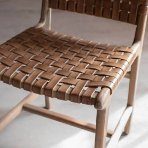
As I can't answer how the Residue feels, hard and chalky etc., I haven't continued further to see what Google would come up with. I thought it interesting that it came up with a photo of a chair almost identical to the one you have. I could continue with the 'discussion' with Google if you want to try to say how the residue feels.