duke
Old Oak
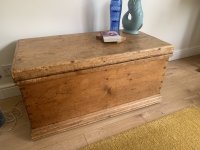
Bought it yesterday $40 cdn. 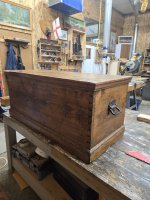
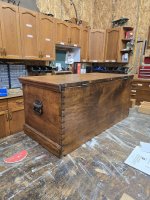
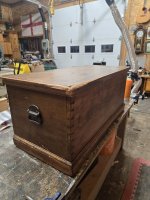
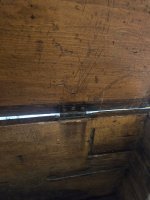
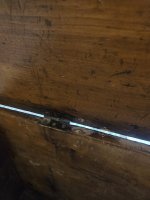
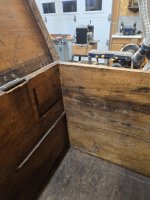
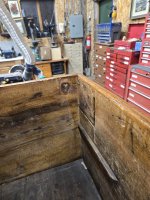


Thinking the same, I think originally it was for storing clothes blankets and odds and ends.looks like a bargain, I would probably re-make the skirting around the bottom, re-do the hinges and buy a working lock, then make some compartments and trays but you could just use it for another purpose like storing clothes, it would definitely cost more than $40 just for the wood.
It would be helpful if you could send a pic or two.This was painted Matt black when I first acquired it some 20 years ago.
It has a full set of trays if you want to see them for a pattern to work to.
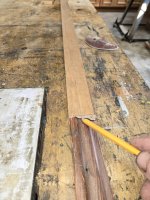
The corner of trim around top is my major concern, still pondering what to do.Difficult call on replacing the trim, on the one hand it looks a bit scruffy, but on the other hand if you replace it will either look brand new, or you'll have to articificially age/distress it, which kind of defeats the authenticity a little.
Either way it's a thing of beauty and well done for rescuing and repurposing.

There is a faint imprint of where a lock was, I'd like to source a period correct one. And yes make the compartment and tray as you suggested. Sitting on fence regarding the skirting.looks like a bargain, I would probably re-make the skirting around the bottom, re-do the hinges and buy a working lock, then make some compartments and trays but you could just use it for another purpose like storing clothes, it would definitely cost more than $40 just for the wood.
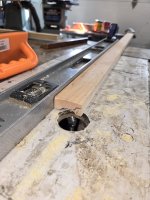
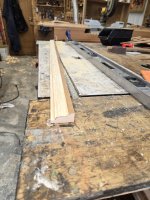
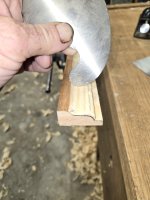
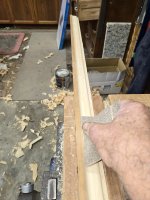
I will remove the trim and see if the profile is available if not make new to match. Good reason to by more vintage moulding planes.Bargain find. I’d seek out some old pine and replace the top trim.


Surely it could be counted as authentic with a few taps of a gennou... or whatever equivalent tool from where it came,Difficult call on replacing the trim, on the one hand it looks a bit scruffy, but on the other hand if you replace it will either look brand new, or you'll have to articificially age/distress it, which kind of defeats the authenticity a little.
Spot on Wallace, completely blanked out on that use.Where the rebates are would normally have a section for holding candles
Also trying to find a pic of the tray below the candle box.Yes I was about to say that would have been a candle box, the damage to the top corner, I think I would just splice a couple of bits on rather than replacing it all.
Ian
I will keep an eye out for a lock and if I can't find one then that's ok.Nice find.
I'm not a furniture restorer and I don't know how you intend to use it. But if it was mine I'd do what Blackswan recommends and try to find some old pine replace the lid trim. I would not bother staining or refinishing anything. Just clean it up a bit. The mismatched new trim will eventually age and blend in, mostly. If not it will become part of the history anyway. You mentioned some attention to the hinges and if they don't work properly then I'd fix them, too. Do you imagine it needing a lock?
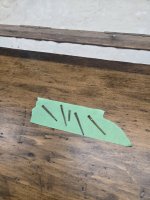
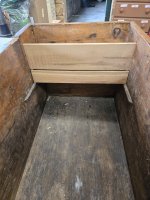
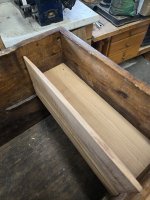
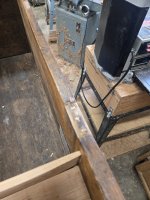
Hi Tom, I have decided not to do anything about the slight gap in the top two dovetails on both sides of front corners. From 2 feet it's hardly noticeable.Surely it could be counted as authentic with a few taps of a gennou... or whatever equivalent tool from where it came,
for what one could call a sympathetic restoration?
On the other hand, should this chest be of little value, and it finds another purpose....
and for whatever reason you might want to have a go at closing the gap, sliding trays for example.
It' d be interesting to see if some might suggest to do something about the cupped front,
should a trench/dado be a possible solution on that flatsawn slab, should it not be too close to the pith, that is.
I wonder if folks have done things along those lines, perhaps if it were a disassembly job,
or the case of the hide glue disassembly process been already taken care of.
Something along the lines of clamping down the panel to a rigid worktop offcut, the use of a track or circular saw thereafter,
whilst perhaps waiting a week before repeating the same operation, or until the panel gives in and clamps down flat
and gluing in a spline afterwards.
Not really seen anything of the sort, though I've not studied furniture restoration to see if this is a done thing.
Seems something like this chest would be the kind of thing where that might be utilized.
All the best
Tom

Depending on it’s future use perhaps make up some sachets of lavender to leave inside with the lid partially open to allow air to circulate.Any one know how to get rid of or tame the old musty smell that is inside of this chest?

 www.febreze.com
I will will give the inside a good clean.Looking good. I'd have thought that any significant smell would be down to grunge on the surface and a good clean will get rid of it.
We have some in our laundry room, Ill give it a go.In UK we have a spray called Febreze. Somehow it work to remove smells rather than mask them with a stronger one. I acquired an upholstered chair from a house of heavy smokers and several heavy sprays with this stuff removed the smell completely such that a closely applied nose detected nothing.
Fabric Sprays | Febreze FABRIC
Spritz away and instantly fight fabric odors with Febreze Fabric Refresher.
Scrubbing with soap for sure, never tried the lemon treatment before.How about washing the inside with very hot water, a scrubbing brush and some soap? If there's still a musty pong, chop a lemon in half and wipe it round the inside. Better in my view than to use artificial chemicals. Once it's clean, use some sachets of lavender as AndyP suggested above - Rob
Good also for freshening up the inside of fridges, cool boxes etc - Rob... never tried the lemon treatment before.
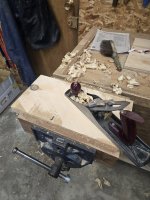
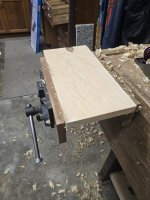
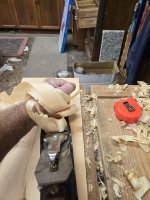
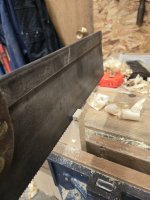
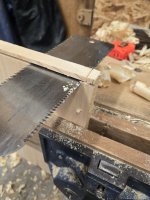
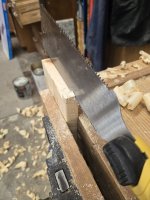
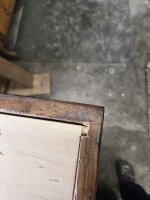
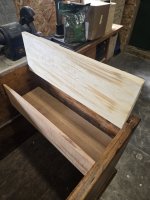
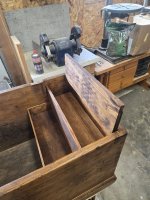
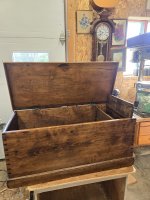

Funny , yesterday I did exactly what you have suggested . Trying to source this trim but I think I may need to reproduce it.Very nice chest. I particularly like the drawer under the till--I've never seen that.
As far as the trim is concerned, you might be able to pull the front piece, cut off the damaged part, and use it to replace the damaged side trim. Then you'd only have to make one piece of trim for the front.
Good job!