• Hi all and welcome to TheWoodHaven2 brought into the 21st Century, kicking and screaming! We all have Alasdair to thank for the vast bulk of the heavy lifting to get us here, no more so than me because he's taken away a huge burden of responsibility from my shoulders and brought us to this new shiny home, with all your previous content (hopefully) still intact! Please peruse and feed back. There is still plenty to do, like changing the colour scheme, adding the banner graphic, tweaking the odd setting here and there so I have added a new thread in the 'Technical Issues, Bugs and Feature Requests' forum for you to add any issues you find, any missing settings or just anything you'd like to see added/removed from the feature set that Xenforo offers. We will get to everything over the coming weeks so please be patient, but add anything at all to the thread I mention above and we promise to get to them over the next few days/weeks/months. In the meantime, please enjoy!

Cut & Dried - latest print run

Richard

New Shoots
Joined
Jul 25, 2018
Messages
166
Reaction score
144
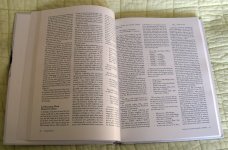
Just a bit of a self-satisfied smugness really because I've just received my author's copy of the third print run of my book. It's been reworked somewhat adding about 1300 words to section 6.6 which was all about calculating wood moisture content. The reason for the reworking was to bring into the discussion the difference between calculating wood moisture content using the 'dry basis' (db) and the 'wet basis' (wb).

We woodworkers and our wood suppliers use the dry basis to calculate wood MC after oven drying wood samples, but the wet basis methodology is the one used by the biomass fuel sector. The reason for including discussion of this 'wet basis' topic at this newest print run was because the UK government, for one, has fairly recently introduced legislation to reduce pollution caused by burning biomass fuel that is deemed to be overly wet. So, although this biomass fuel sector is perhaps somewhat tangential to our wood and woodworking focus I thought it was important for us to have some awareness of the topic.

Some of you may have noticed bags of logs for sale labelled 'Ready to Burn'. This indicates that the wood is certified by the supplier to be at or below 20% MC as calculated by using the 'wet basis' for determining moisture content. The wet basis for assessing wood MC always results in a lower value than using the dry basis. Interestingly, for example, 20%MC (wb) works out as 25%MC (db).

Anyway, a couple of images below. Slainte.
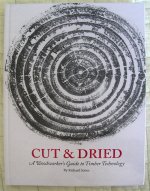

Cut-Dried-Front-April-2025-700px-web.JPG

Cut-Dried-S6.6-April-2025-1000px-web..jpg
 
Congrats with the new edition!

I bought the 2018 version from Lost Art years ago and still like it very much. Thanks for writing it. I learned a lot from it. Which to me, as a fellow author (although in a completely different field), is the biggest compliment I can give. I think a lot of people have and will enjoy all the effort you put into writing this book.
 
Many thanks for the kind words, HdV. To clarify though, this third print run isn't actually what the publisher defines as a new edition. I can't recall how much reworking of the book Lost Art Press would need before they'd say they're releasing a new edition, but I seem to recall it's quite large, perhaps 20% plus. Apart from picking up and correcting some typos and the like in the second print run in 2019, all that's happened in this third run has been correcting four or five minor typos and an expansion of section 6.6 of the book as briefly described in my opening post which amounts to about 1300 words. Slainte.
 
Well done Richard. I still need to buy a copy! It is on my list.
 
Well done Richard. I still need to buy a copy! It is on my list.
Many thanks for the compliment. Classic Hand Tools or Woodsmith in Tyne and Wear are the people here in the UK that carry it if you're looking. Slainte.
 
You are, of course, correct. I misread. A print run is not the same as a new edition. Still, I hope and expect many people will enjoy your book as much as I did/do.
 
Many thanks for the kind words, HdV. To clarify though, this third print run isn't actually what the publisher defines as a new edition. I can't recall how much reworking of the book Lost Art Press would need before they'd say they're releasing a new edition, but I seem to recall it's quite large, perhaps 20% plus. Apart from picking up and correcting some typos and the like in the second print run in 2019, all that's happened in this third run has been correcting four or five minor typos and an expansion of section 6.6 of the book as briefly described in my opening post which amounts to about 1300 words. Slainte.
Maybe you can invent some new tree species?
No splintering, machines well, easy to cut, hard wearing? 🤣
 
Maybe you can invent some new tree species?
No splintering, machines well, easy to cut, hard wearing? 🤣
Sorry, not that clever. But maybe I could arrange two out of four of those characteristics. It's a bit like the old saw of being able to provide for a demanding customer only any two out of the options of best, cheapest, quickest ha, ha. Slainte.
 
Does Cut & Dried provide any description or data on how applying an oil finish to (kiln dried) wood affects a) its size or b) its dimensional stability?
 
@Windows : I would be very much surprised if this would have any measurable effect at all. The finish will at most penetrate a few millimetres and be cured in a relatively short time. The wood fibres near the surface will probably expand somewhat and some grain will be raised. But a bit deeper in the wood the fibres won't be impacted at all. Therefore, I don't expect there to be any significant changes in its overall dimensions. Unless you dip end grain in a bath of the stuff...
 
Does Cut & Dried provide any description or data on how applying an oil finish to (kiln dried) wood affects a) its size or b) its dimensional stability?
None at all I'm afraid, information, that is. Wood finishes in general have little or no effect on wood's dimension, even water borne finishes, and their only likely role on dimensional stability is almost certainly restricted to how effective any finish is at preventing the ingress and egress of water/water vapour. No finish is an absolute barrier to liquid water or water vapour, although epoxy finishes are almost impervious and the finishes least resistant to water penetration are waxes and oils. Slainte.
 
Back
Top