
derekcohen
Sapling
One more plane added to the tool box over the weekend, joining the trying plane and smoother ...
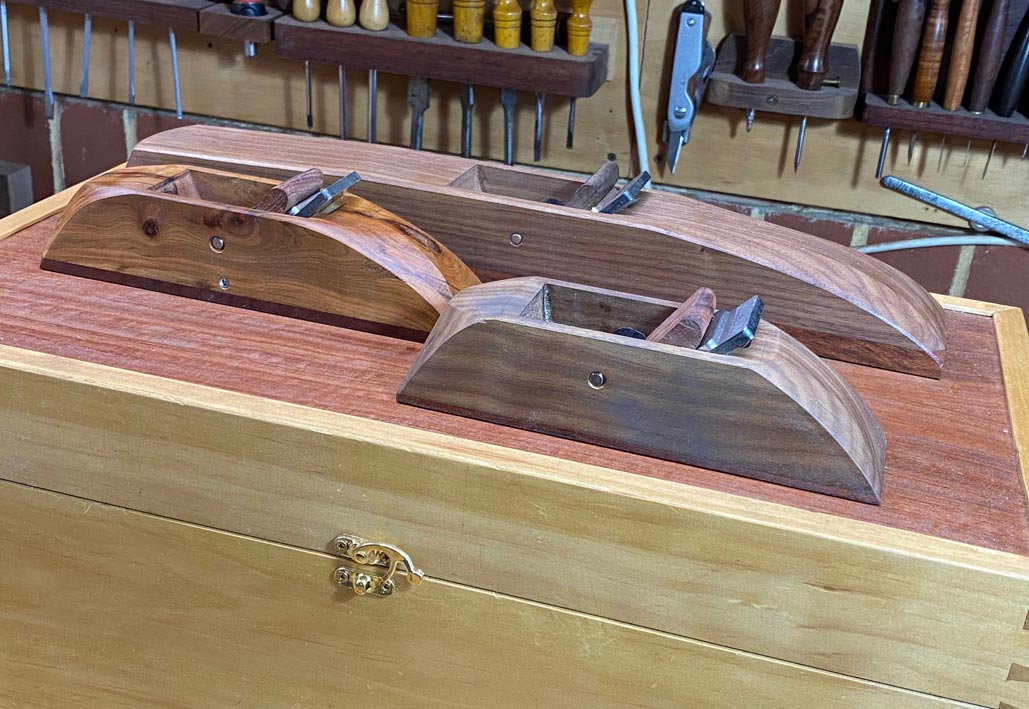
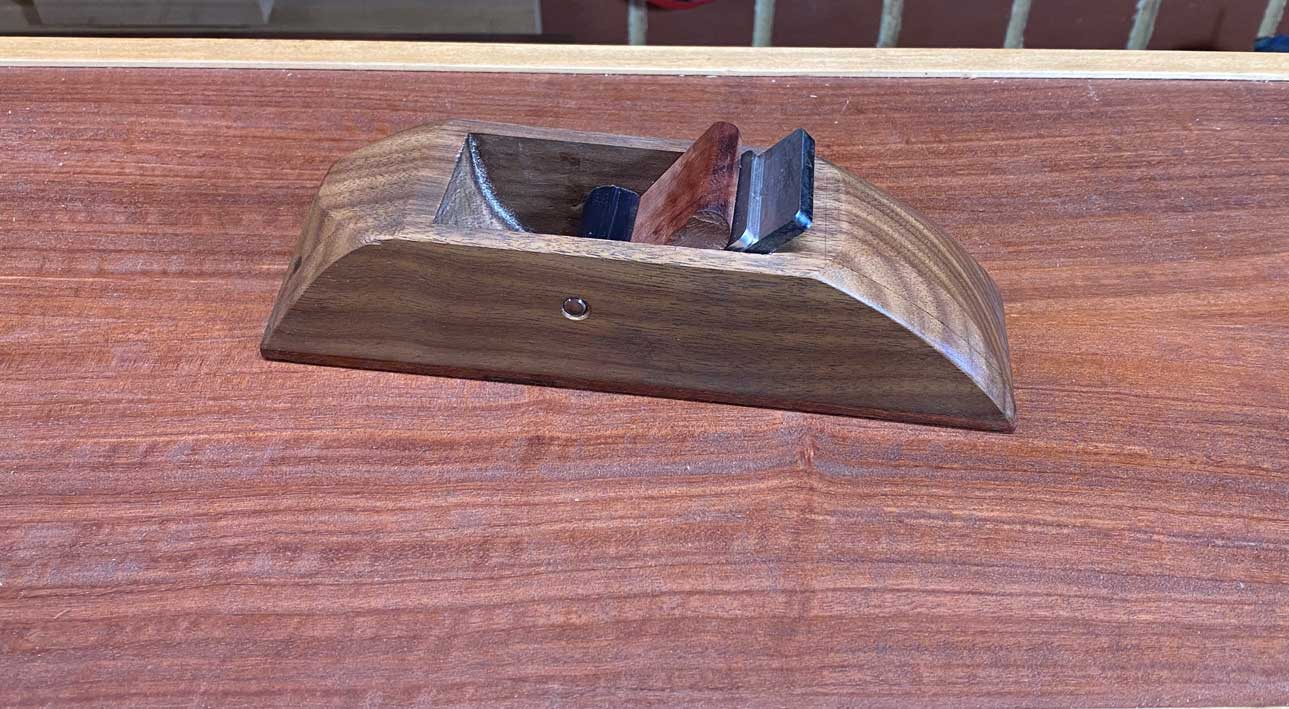
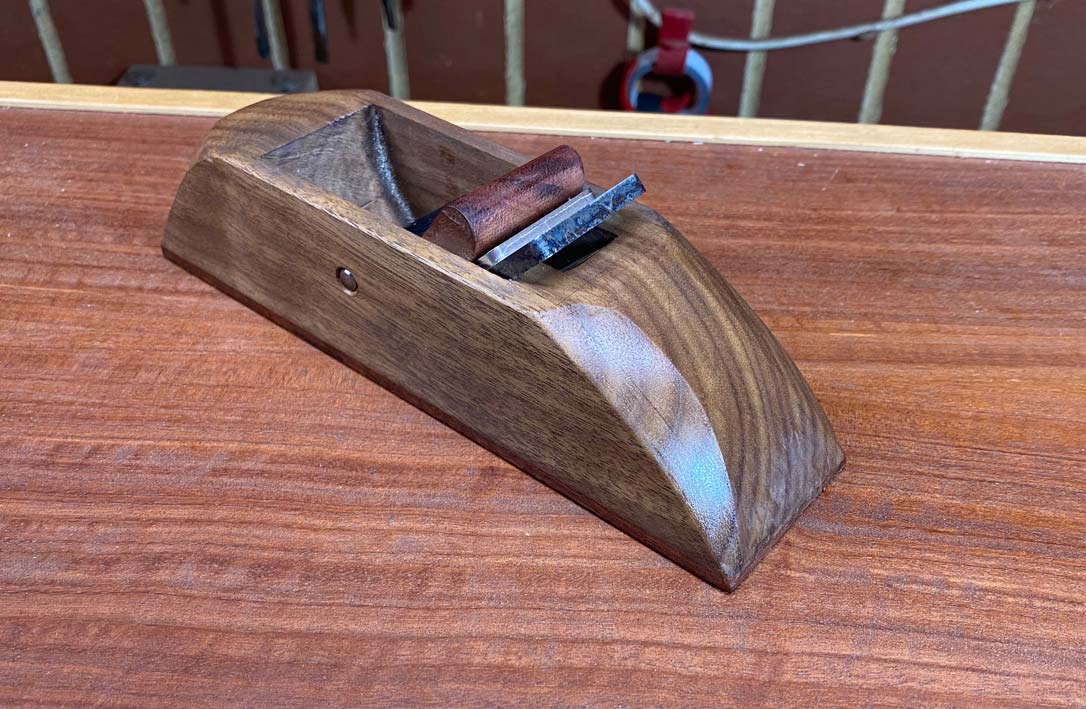
200mm (8") long x 50mm (2") wide x 50mm (2") high
From this angle, this plane looks like any other smoother. It just is not.
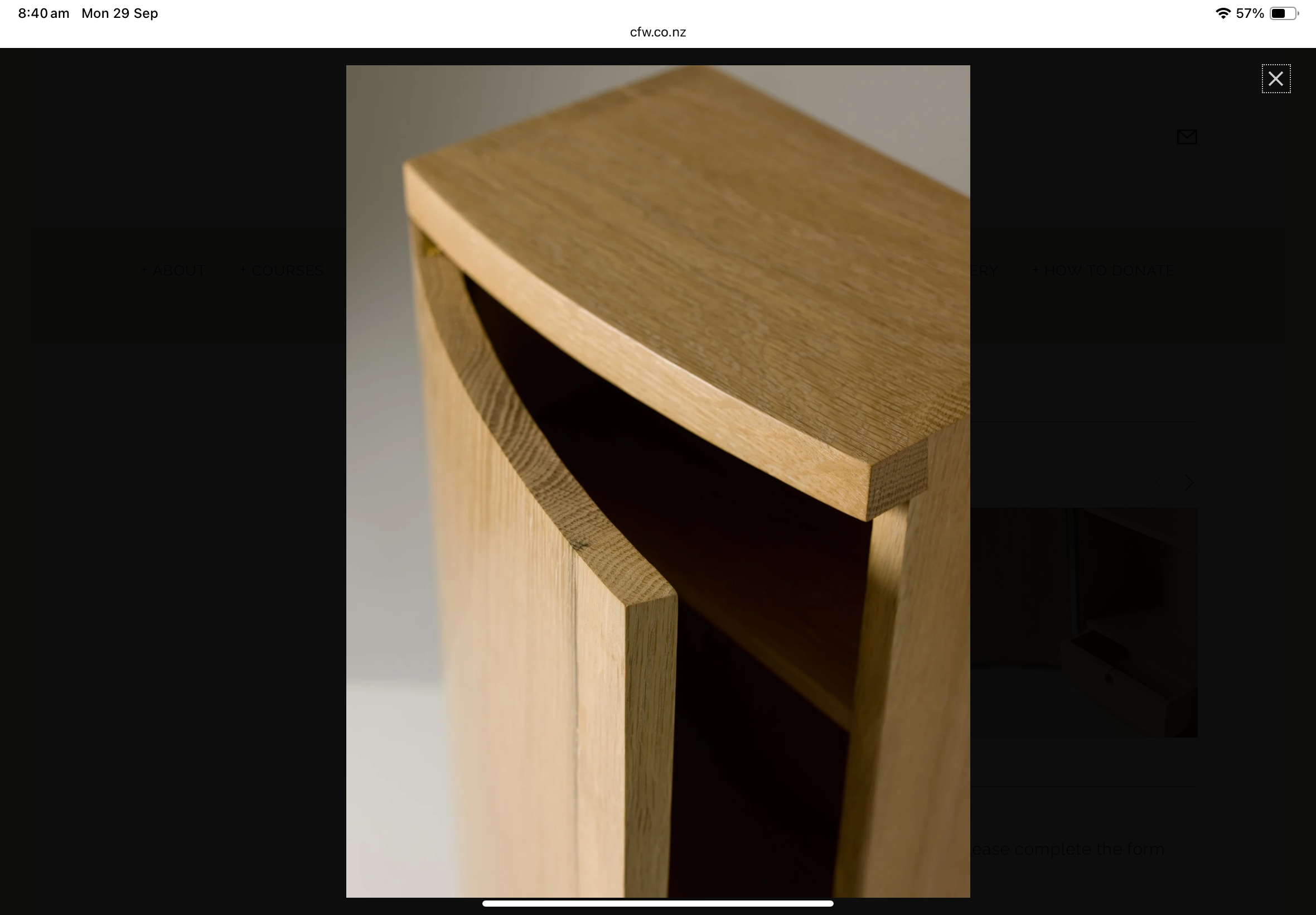
What is the purpose of this plane? The cabinet to be built has a curved door in solid wood which is shaped by coopering. That is, staves are first joined and angled to create a rough curve. The outside face of the curved door can be smoothed with most planes, and finished with scrapers or sanding. The inside face, however, needs a plane which matches its curve, both its sole and blade. Scrapers
The inside curve of the door follows a radius of 480mm (18.9") ...
I traced this curve on MDF and cut it out to act as a template to check the curvature of the sole. Then ground the 1 1/2" wide Hock blade and chipbreaker to match.
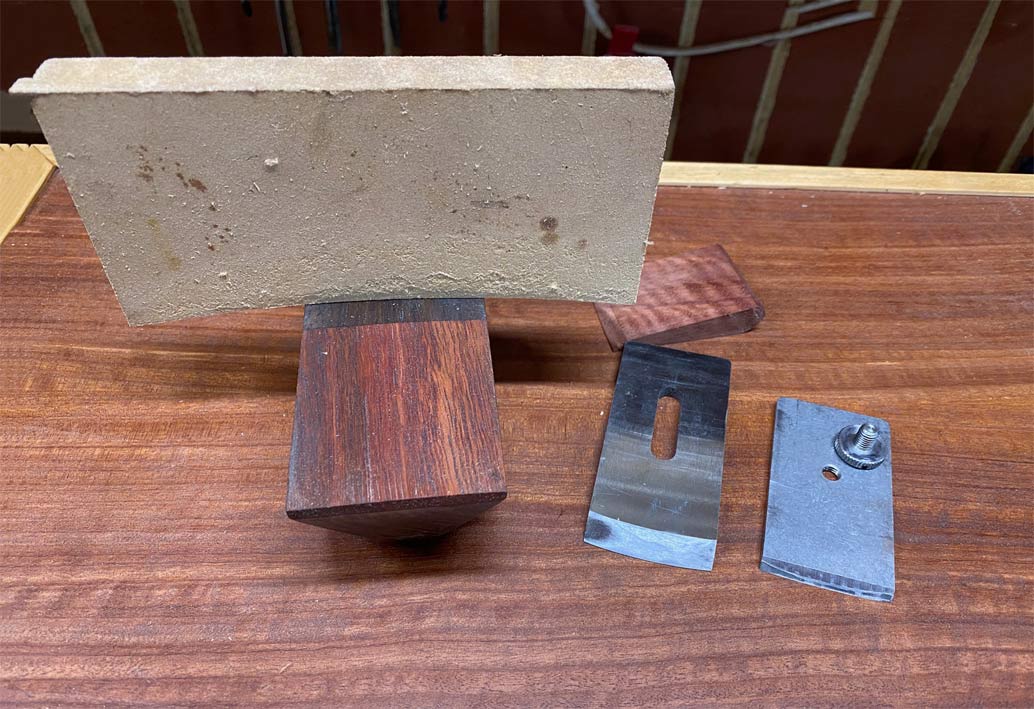
The mouth is reasonably tight, but large enough for shavings to pass over a closed chipbreaker. In planing the sole, the mouth opened up a little more than I wanted, and I added an Ebony patch.
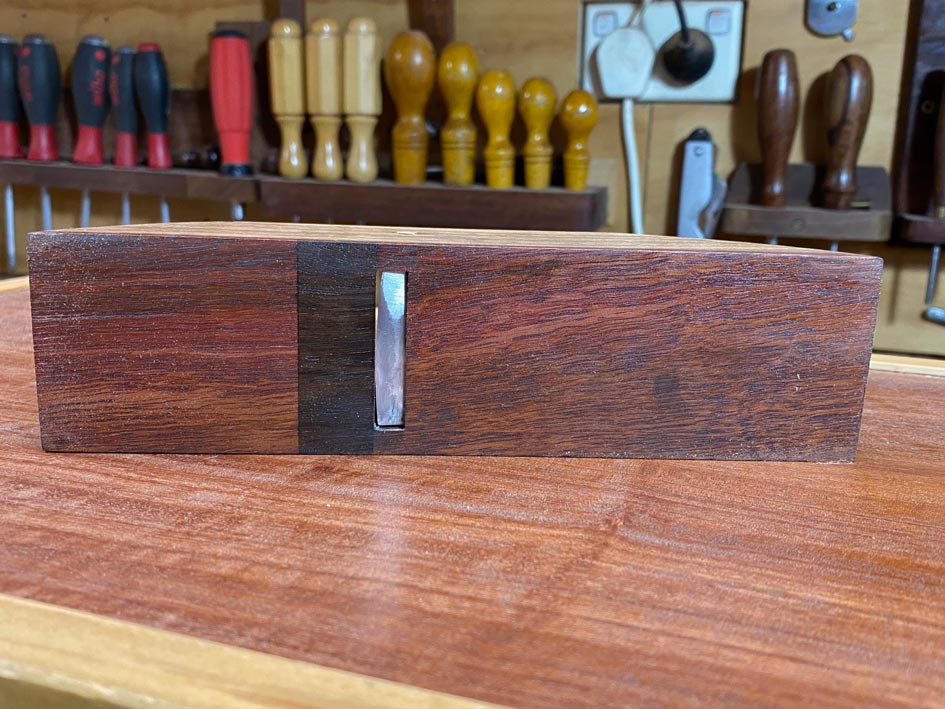
A front view of the sole does not immediately show the curve, although it is apparent as the plane rocks side-to-side ...

In action, it removed a narrow strip of wood, much like a jack plane ... but the sides are relieved to allow for curved surfaces ...

Tucked up in bed ...
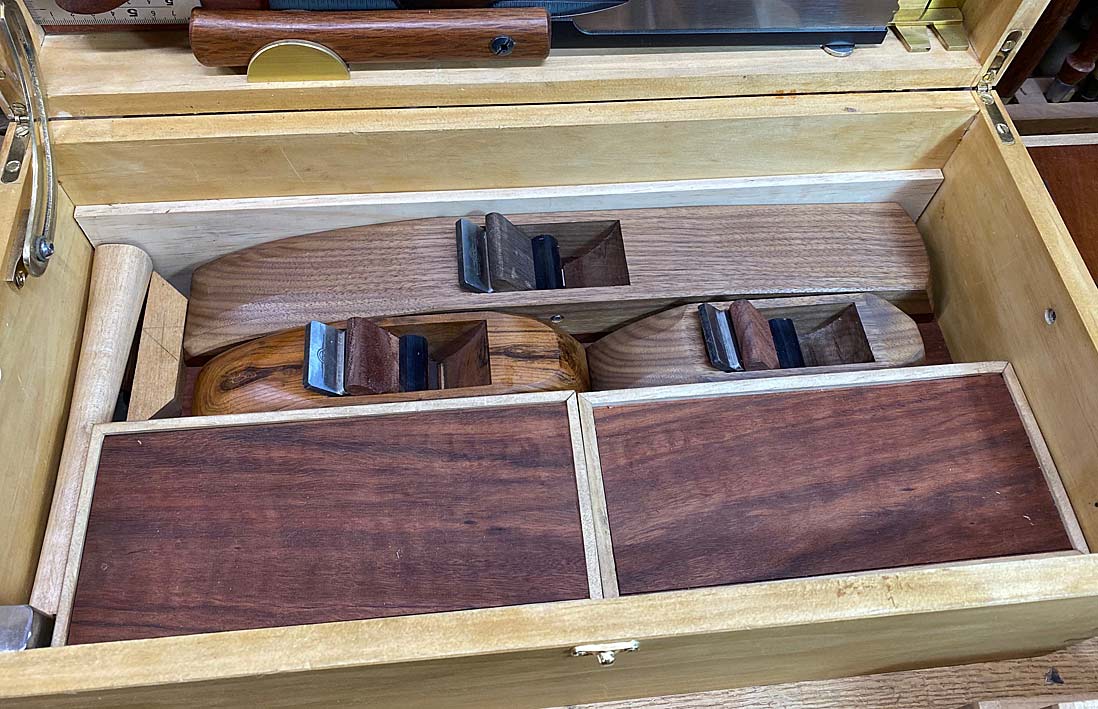
Regards from Perth
Derek
200mm (8") long x 50mm (2") wide x 50mm (2") high
From this angle, this plane looks like any other smoother. It just is not.
What is the purpose of this plane? The cabinet to be built has a curved door in solid wood which is shaped by coopering. That is, staves are first joined and angled to create a rough curve. The outside face of the curved door can be smoothed with most planes, and finished with scrapers or sanding. The inside face, however, needs a plane which matches its curve, both its sole and blade. Scrapers
The inside curve of the door follows a radius of 480mm (18.9") ...
I traced this curve on MDF and cut it out to act as a template to check the curvature of the sole. Then ground the 1 1/2" wide Hock blade and chipbreaker to match.
The mouth is reasonably tight, but large enough for shavings to pass over a closed chipbreaker. In planing the sole, the mouth opened up a little more than I wanted, and I added an Ebony patch.
A front view of the sole does not immediately show the curve, although it is apparent as the plane rocks side-to-side ...
In action, it removed a narrow strip of wood, much like a jack plane ... but the sides are relieved to allow for curved surfaces ...
Tucked up in bed ...
Regards from Perth
Derek


