
Richard Craig
Seedling
- Joined
- Feb 20, 2025
- Messages
- 3
- Reaction score
- 11
- Name
- Richard Craig
- LOCATION
- Surrey
I have been a Guest for some time but finally decided to join. I have learnt quite a lot the hard way but I have picked up lots of good tips from the site, thank you very much.
I would certainly not call myself a woodworker, more of an assembler. The projects I have attempted have so far have been done with basic equipment - spade, shovel, garden fork, garden roller (for ground works), impact driver, drill, nail gun (featheredge would have been really boring without one), screwdrivers, hammers, lumpies, handsaws, hand jigsaw and the hiring of a jackhammer and scaffolding. I am now 64 with my first project started 5 years ago which was a 6 m span bridge, designed to taked up to 3T vehicles:
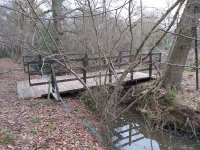
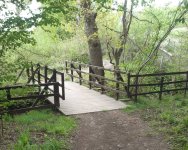
This needed double planning permission (guess where the boundary between Guildford and Mole Valley runs?). It connects our property with a 20 acre field we initially rented and then bought for my wife's horses. We needed the bridge for day to day access because the main access to the field involves a 7 mile round trip and opening/shutting 16 gates and two negotiations of a railway level crossing.
This is a picture of the bridge trial erection with load test:
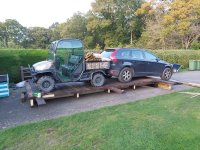
Main members were two 6 m long aluminium beams that the chap we rented the field from had lying around in his yard which he gave us. Transporting these (150 kg each) was fun on the back of the Kubota. They had to be placed sideways and it was interesting getting them through our 3.5 m wide gates as well as launching them across the stream.
Cost of materials was half the cost of getting planning permission (including tree and fauna surveys). I did my own topographical survey and application to the river authority (not a main river so the authority was Surrey). This was not an issue as the bridge is at bank level and has a much bigger opening than the 1.2 m diameter culvert just upstream under the railway. I have seen this run 80% full bore.
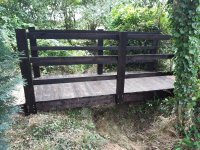
Second project was a footbridge at the mother-in-law's over a small dyke in Lincolnshire. It replaced an earlier bridge which was rotten so I was able to use the existing foundations. Completed over a weekend.
Final project, which is ongoing, is a permitted development 11 m x 5 m barn for hay, garaging and with outside toilet/shower. It replaces an earlier, smaller structure (originally pig pens) which was demolished. Quite a lot of material was reused (concrete base and most of structure either fill, fence repairs due to horses gnawing or kicking out rails, or noggings).
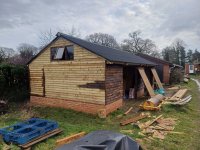
General view of the west end of the barn:
I have bought the windows and doors ready made. Windows have been fine. I am wishing I had made the doors myself. There were no measurements of hinge fixings on their website so I asked whether the hinge plates would fit on 45 mm wide timber and they said yes. They also request supplied dimensions to be the clear opening size and they would make a fitting allowance. So I measured the clear opening dimensions 4 times (once I got someone else to do the measurements) and confirmed they were square. Doors arrive - they haven't made a fitting allowance so I now need to remove 15 to 20 mm all round. And the hinge plates are 60 mm wide so I will now have to work out how to deal with that. Not happy!
And here is the east end (apologies for the finger):
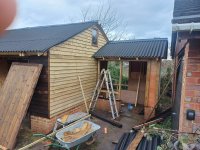
Toilet area is going to be insulated using recyled insulation from our house (see later) with doors and windows also recycled. I am also going to collect the rainwater into a coffin tank for toilet flushing.
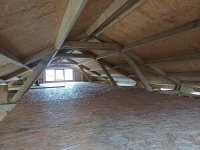
And this is a view of the roof trusses (20 mm coach bolts used at intersections) and attic storage area:
Main details:
Next project is rebuilding our house. Planning permission already obtained to demolish existing bungalow and build two storey on a slightly displaced but similar sized footprint. This is largely going to be project managing rather than DIY.
Regards
Richard
I would certainly not call myself a woodworker, more of an assembler. The projects I have attempted have so far have been done with basic equipment - spade, shovel, garden fork, garden roller (for ground works), impact driver, drill, nail gun (featheredge would have been really boring without one), screwdrivers, hammers, lumpies, handsaws, hand jigsaw and the hiring of a jackhammer and scaffolding. I am now 64 with my first project started 5 years ago which was a 6 m span bridge, designed to taked up to 3T vehicles:
This needed double planning permission (guess where the boundary between Guildford and Mole Valley runs?). It connects our property with a 20 acre field we initially rented and then bought for my wife's horses. We needed the bridge for day to day access because the main access to the field involves a 7 mile round trip and opening/shutting 16 gates and two negotiations of a railway level crossing.
This is a picture of the bridge trial erection with load test:
Main members were two 6 m long aluminium beams that the chap we rented the field from had lying around in his yard which he gave us. Transporting these (150 kg each) was fun on the back of the Kubota. They had to be placed sideways and it was interesting getting them through our 3.5 m wide gates as well as launching them across the stream.
Cost of materials was half the cost of getting planning permission (including tree and fauna surveys). I did my own topographical survey and application to the river authority (not a main river so the authority was Surrey). This was not an issue as the bridge is at bank level and has a much bigger opening than the 1.2 m diameter culvert just upstream under the railway. I have seen this run 80% full bore.
Second project was a footbridge at the mother-in-law's over a small dyke in Lincolnshire. It replaced an earlier bridge which was rotten so I was able to use the existing foundations. Completed over a weekend.
Final project, which is ongoing, is a permitted development 11 m x 5 m barn for hay, garaging and with outside toilet/shower. It replaces an earlier, smaller structure (originally pig pens) which was demolished. Quite a lot of material was reused (concrete base and most of structure either fill, fence repairs due to horses gnawing or kicking out rails, or noggings).
General view of the west end of the barn:
I have bought the windows and doors ready made. Windows have been fine. I am wishing I had made the doors myself. There were no measurements of hinge fixings on their website so I asked whether the hinge plates would fit on 45 mm wide timber and they said yes. They also request supplied dimensions to be the clear opening size and they would make a fitting allowance. So I measured the clear opening dimensions 4 times (once I got someone else to do the measurements) and confirmed they were square. Doors arrive - they haven't made a fitting allowance so I now need to remove 15 to 20 mm all round. And the hinge plates are 60 mm wide so I will now have to work out how to deal with that. Not happy!
And here is the east end (apologies for the finger):
Toilet area is going to be insulated using recyled insulation from our house (see later) with doors and windows also recycled. I am also going to collect the rainwater into a coffin tank for toilet flushing.
And this is a view of the roof trusses (20 mm coach bolts used at intersections) and attic storage area:
Main details:
- 18T dug out by hand and used in field to remove depressions
- 350 mm hardcore (12 T), all broken down from waste material from our and neighbours' demolitions
- Sand layer with dpm
- 150 mm concrete slab reinforced with mesh
- Engineering A brick dwarf wall single skin 6 courses with double brick buttresses every 2.4 m.
- Timber all C24 nominal 100 x 50 (actually 95 x 45) with sole plate timber double coated with bitumen paint.
- 4 main trusses plus end gables support roof
- Roof Onduline on 18 mm OSB
- 22 mm featheredge cladding
Next project is rebuilding our house. Planning permission already obtained to demolish existing bungalow and build two storey on a slightly displaced but similar sized footprint. This is largely going to be project managing rather than DIY.
Regards
Richard

 .
.


