• Hi all and welcome to TheWoodHaven2 brought into the 21st Century, kicking and screaming! We all have Alasdair to thank for the vast bulk of the heavy lifting to get us here, no more so than me because he's taken away a huge burden of responsibility from my shoulders and brought us to this new shiny home, with all your previous content (hopefully) still intact! Please peruse and feed back. There is still plenty to do, like changing the colour scheme, adding the banner graphic, tweaking the odd setting here and there so I have added a new thread in the 'Technical Issues, Bugs and Feature Requests' forum for you to add any issues you find, any missing settings or just anything you'd like to see added/removed from the feature set that Xenforo offers. We will get to everything over the coming weeks so please be patient, but add anything at all to the thread I mention above and we promise to get to them over the next few days/weeks/months. In the meantime, please enjoy!

New vs Old Machines + Optimum Drill Press

CMax

Seedling
Joined
Jul 28, 2022
Messages
17
Reaction score
3
Location
Thurrock, Essex
Name
Colin
Hi all (again), I posted a few times several years ago, and used to post to the other place under a different name almost 20 years ago now. Long-story short, I'm coming back to woodworking and would be grateful of some help. My apologies for the long initial post.

I'm setting up shop in a garage and have 14 x 10' space. I've decided for machines I want a bandsaw, pillar drill, lathe, and a planer/thicknesser. I opted against a TS due to space limitations. So I have a general question and a specific one if anyone can help.

Firstly, I have a budget of around 3-3.5k for these machines (I already have a decent set of hand tools). I'm not sure that's going to stretch for all new machines, so is it better to find older used ones, or spend the budget on just a few new ones for now and add others down the line? I'm planning on doing this partly for a business and the kinds of things I'll be making are generally small: rarely more than a foot in any dimension, though maybe in the future I'd make a few furniture pieces but that's not a priority.

For machines, I was thinking of sourcing a Startrite 352 bandsaw (I previously had an SMC S45, but sold it as it was overkill. Before that I've had Scheppach Basato and Axminster craft/trade machines and would prefer something closer to the trade end). New options would be the iTechBS400 or one of the Axi offerings.

For the P/T, I've seen some Startrite Inca planer machines for a good price, but I know very little of these. Any advice? I'd still need a thicknesser, though. One of these:
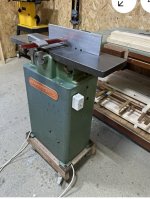
Screenshot 2026-07-13 at 00.06.00.jpg

For new on the P/T I was thinking the iTech 260SS (or one of the other rebadged similar machines). I used to have one of the original combo machines from axminster where you lift both beds. I found that a bit of a pain, but it seems the newer versions allow you to lift the entire top as one piece, presumably making it easier/quicker to change over.

The more specific question: I need a good and accurate drill press. Doing a load of research lately, and remembering the advice from years ago, it seems most modern wood drill presses are chinese Rexon clones and not that well thought of. The used option would be a Meddings or a Fobco. A new option that I stumbled across was a metal drill press from Optimum, the german company. At least on sight-only, they look nicer than the regular offerings from Axminster and co. They at least advertise the guaranteed run-out and come with a variable speed drive. I was looking at this one:
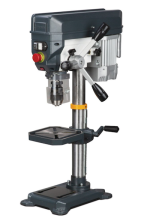
Screenshot 2026-07-13 at 00.21.11.png

From here for £442

With regards to the general old v new, I admit to not being that much of an engineer. I'd like good quality machines that can work without too much fuss so I'm leaning toward new, but given my budget constraint, would I end up wanting to change things down the line? I expect to be working approximately 20-30 hours a week so although the things I'll be making aren't heavy duty cabinets or such, it would be nice to know the machines are reliable and will continue to work well.

I'd appreciate any thoughts on this :)

Thank you!
 
You seem to have your bases pretty well covered anyway!

I personally would buy secondhand machines, especially in the current economic climate as you can get some exceptional machines for very little due to so many liquidation auctions and retirement sales and very few coming into the trade anymore. Check sites like BPI Auctions or Bidspotter and you’ll see what I mean, swathes of relatively new machines fetching 20% or less of their original value, but a lot of these will be quite large three-phase machines so not quite relevant to your case.

For the space constrained, I would suggest looking at Kity machines, which were mostly intended for that criteria but built very well for compact machines as they were aimed at light trade rather than hobbyists.

The only thing that I would probably consider buying new would be a bandsaw, unless you can get a really good machine for a bargain price. Something along the lines of the Record Sabre 350 or Hammer N2-35. The reason for buying a new one is that secondhand bandsaws can be an absolute pain to dial in if they’ve been messed with, or if they’ve been abused and had a lack of maintenance, and a new bandsaw isn’t that expensive for a decent machine, compared to other machines where you would need to spend a lot more to get a good one, Planer Thicknessers for example. The Startrite 352 is lauded, but it is really a really basic machine, essentially the Land Rover of Bandsaws, extremely rugged but lacks any mod-cons that you will get with a new machine like basic dust extraction ports. They also have the issue of pressed steel wheels with rubber vulcanised onto the rim, which can be an issue if it has perished as it’s very expensive to have the wheels revulcanised.
 
You seem to have your bases pretty well covered anyway!

I personally would buy secondhand machines....
Hi Trevanion, thank you for the quick and informative reply. I wasn't aware of BPI but having had a quick look, it seems there are some very attractive prices there. I'll be sure to keep a watch on that in case something comes up.

And I appreciate the headsup on the Startrite. Having had some fairly nice bandsaws in the past, something overly agricultural may end up being more of a pain than I'm willing to deal with, so I'll refocus on something else. I had initially earmarked the BS400 as I was looking at that a few years ago before I bought a used SMC S45, but looking now, it's jumped a fair bit in price. The Hammer looks decent for the money.
 
Last edited:
352 are very good bandsaws, rugged and simple to setup. I don’t know how you can mess one up. The main thing with band saws is the blade, get a good blade and most of your problems are solved.
Fobco or Meddings are very nice drills, even an old one can be serviced with a few new bearings and be back to new.

Pete
 
I don’t know how you can mess one up.

You'd be surprised! A common one is messing with the bottom wheel so the blade tracks terribly, which can be a nightmare to adjust properly.

Don't get me wrong, they're a decent bandsaw if you can pick one up for £100-250, but definitely not worth any more than that in my opinion. They are just such a bare-bones machine and were one of the cheapest on the market when they were originally made, the lack of dust extraction ports makes them a very messy machine too, unless you rig something up. Plumes of dust coming out of a bandsaw in such an enclosed workshop isn't ideal.
 
I have the Record BS400. At the time I bought it I was torn between it and a Hammer bandsaw. If I were making the choice again I would go with the Hammer as you will spend the difference on upgrades and still not be satisfied. It is a good bandsaw but could be so much better.
 
Fobco or Meddings are very nice drills, even an old one can be serviced with a few new bearings and be back to new.
Glad to hear those are still worth checking out. Buying an old one is a little daunting; I don't really know what to look for, or even how to diagnose problems, but on the flipside, it seems the money for a decent drill press from new today is way out of my budget. Cheaper ones seem very variable as to whether you get a good one.
 
I have the Record BS400. At the time I bought it I was torn between it and a Hammer bandsaw. If I were making the choice again I would go with the Hammer as you will spend the difference on upgrades and still not be satisfied. It is a good bandsaw but could be so much better.
Thanks for that. For some reason I've always been slightly put off by Record's stuff. Though I've never had any so it's somewhat unfounded. Hammer/Felder definitely has that caché to them. And the price seems quite reasonable. Unlike the iTech I had originally considered.
 
Last edited:
Not everyone agrees but I have found this to be perfectly adequate for woodworking purposes. https://www.screwfix.com/p/bosch-pb...3p.ds&gad_source=7&gad_campaignid=22478593823
I accept that if you are looking for accuracy to 0.1 of a Nats then this is not the machine. But for everyday woodworking it is adequate. It has some nice features such as speed control being electronic as is depth control. The steering wheel on the other hand is less than perfect but could be changed for the traditional three spoke lever.
PS do not be put off by the Green rather than Blue jacket.
 
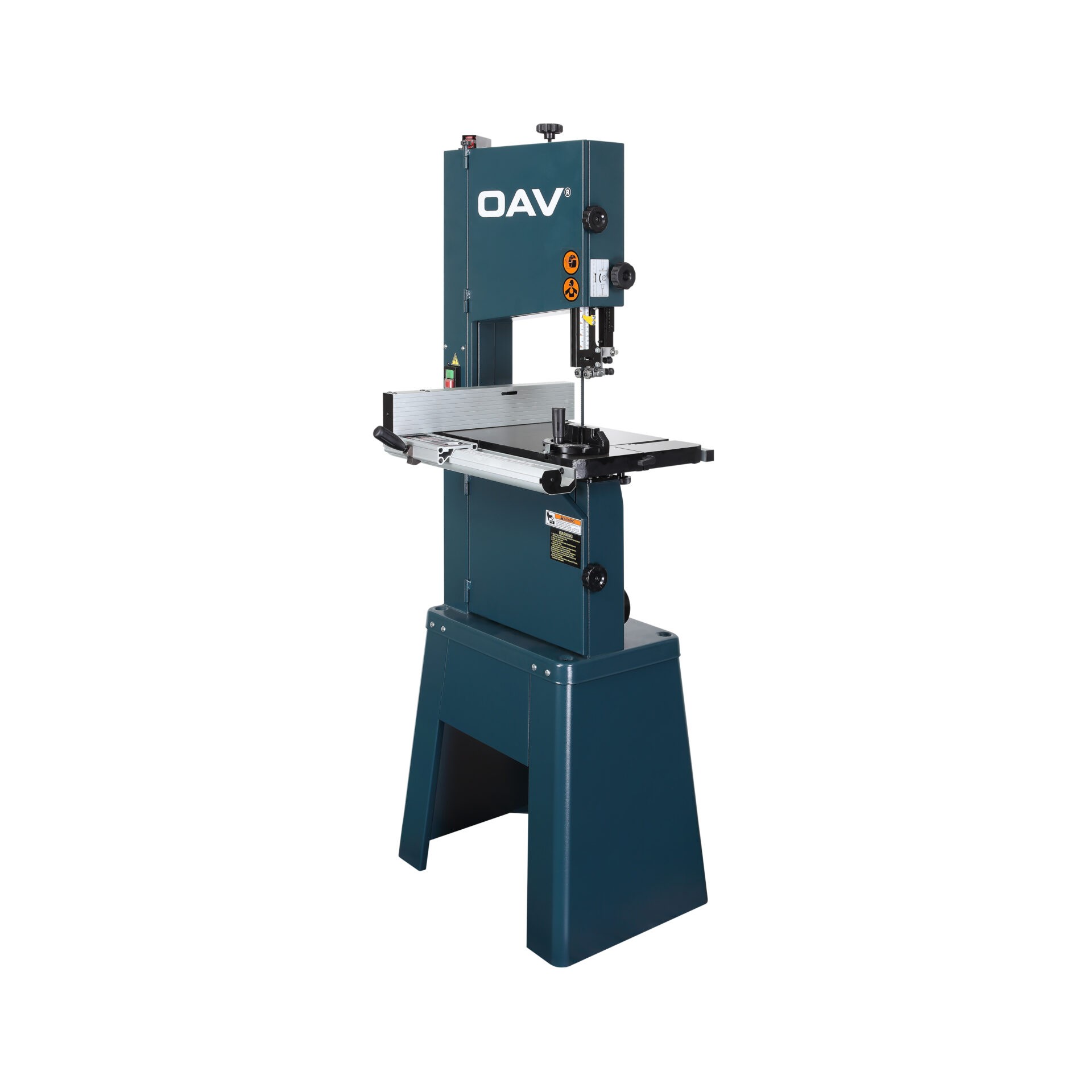
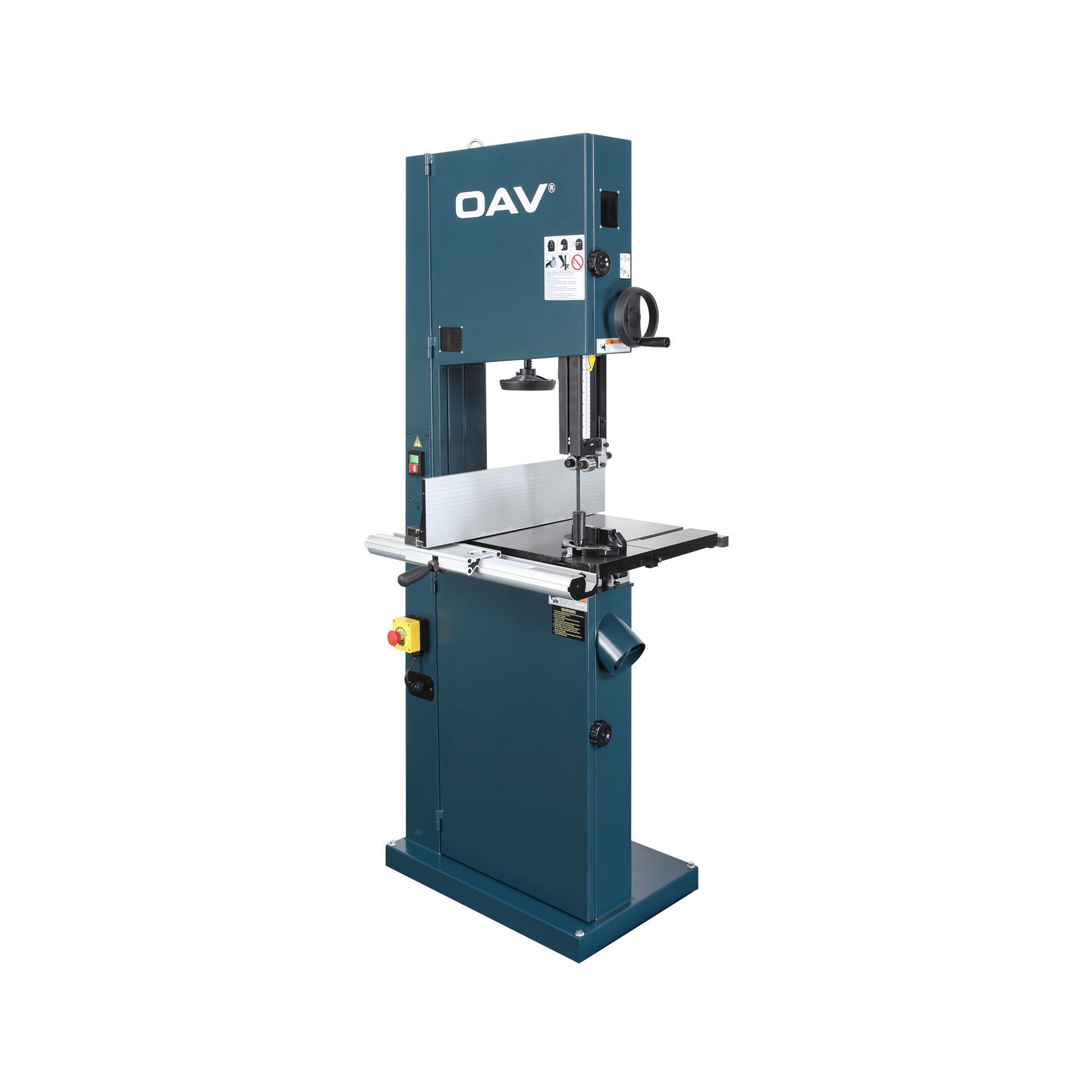
If I was setting up again I’d definitely have a good look at OAV, back in the day when Axminster sold decent machines OAV made them for Axminster, they manufacture in Taiwan & have been doing so since 1980.
I had a bandsaw & an extractor made by OAV & found the quality to be good, Markfield woodworking machinery now sell them as a stand alone brand so I imagine you’d be able to see the machines at their showroom if you were interested.
Their prices don’t seem bad either

I had the 4300 & it handled everything I threw at it,

I agree with @Trevanion comments about bandsaws I supposedly upgraded from my OAV to a second hand Hammer & had no end of problems get it to function properly mainly due to the previous owner.
I also agree with his assessment of the 352, I’ve worked on a couple of them & agricultural is a kind description.

As for a pillar drill I’d definitely look at second hand, I had a couple of modern drills before I got a Meddings the difference is night & day
Also from what I’ve heard from friends with Itech gear I’d give them a wide berth.
 
Not everyone agrees but I have found this to be perfectly adequate for woodworking purposes.
I'm glad to hear you like it. Funnily enough, it was one of the first 'modern' pillar drills I looked at since coming back to woodworking. I definitely like the electronic speed control and depth settings. And although I said I need accuracy, I'm not making watches here: I just want holes to be at 90 degrees and a certain depth consistently across hardwood plinths ranging from 50-100mm or so tall. I watched a bunch of YT videos on it and it seems generally well-liked.

This is part of my problem: I get so torn on buying a 'good' new machine now or opting for the 'forever' old, industrial thing. I'm finding it difficult to know what's the best route.


If I was setting up again I’d definitely have a good look at OAV
Their prices don’t seem bad either

Hi Doug, thank you for the suggestion. That is a decent price. I think I'd like to stay around the 1k or under and that fits the bill. It does look quite like the axminster one of a similar spec. The appeal to me of Axminster is the 3 year guarantee. But it's good to have another brand to consider :)
 
My pillar drill is a floorstanding "Clarke" brand, from Machine Mart. It has terrible runout, and it's the replacement as the first one was even worse. I suspect non-Chinesium bearings would fix that, but I havent got round to it. I bought a Röhm keyless chuck for smaller diameters, which was a good purchase. The other really annoying thing is the tilting table: it's not true to the pillar, if you lock the tilt, it's no longer square to the column!
I do find the tilting and the floor stand to be very useful sometimes - worth having.

A big original reason for purchase, and why I stick with it, was that the gearbox (belts), has a good slow speed range (180-2740 RPM). That is often important, especially when running big forstner bits, etc.

The other thing worth looking for if you buy new is removable handles on the quill advance. That's really useful to stop them catching on a workpiece.
 
Last edited:
You'd be surprised! A common one is messing with the bottom wheel so the blade tracks terribly, which can be a nightmare to adjust properly.

Don't get me wrong, they're a decent bandsaw if you can pick one up for £100-250, but definitely not worth any more than that in my opinion. They are just such a bare-bones machine and were one of the cheapest on the market when they were originally made, the lack of dust extraction ports makes them a very messy machine too, unless you rig something up. Plumes of dust coming out of a bandsaw in such an enclosed workshop isn't ideal.
Hi Trev. I don't hold the same opinion.

I think getting a 352 for £100 -£250 would be a bargain, they usually fetch more than that. From memory and a long time ago so I could be wrong they weren't one of the cheapest on the market when my branch stocked and sold them in the 80s. We had cheaper machines but the 352 price was well pitched as value for money and we sold a lot during my time as branch manager. Again from memory many of the HD bansaws around at the time were heavily overpriced and I remember a conversation with the Startrite rep who told me they pitched the 352 at education, small joinery businesses and butchers. It seems to me they got it spot on.

I freely admit to a bias as I've had one for the last 20 years or so and wouldn't swap it for a more modern machine with more bells and whistles because I don't need them, the OP might.
The attraction of the 352 is it's solid build and simplicity, as you said the Land Rover of machines (there's a reason old Land rovers are still sought after as well). It all depends what you want and need from a machine and the OP hasn't said exactly what he requires from machines apart from reliability and accuracy.
The machine isn't that difficult to improve regarding dust. Yes as it was made there's only an outlet centre bottom but a roll of cheap draught excluder around the seams and doors, a few bits of ply or hard plastic to channel sawdust and chips helps and it's not a difficult task to rig up a crude shroud around the blade guides under the table to attach a shop vac. My 352 doesn't throw plumes of dust around my workshop double garage, I have other machines that manage to do that. 😏
We all have different needs and I know that when my machine is set up it will do everything I ask of it without fuss and very few problems as long as with everything it's used within capacity, maintaned and fitted with good quality blades, I use Tuffsaws.

As an aside Colin
I also have a Meddings Drilltru, can't remember if it's a mark 2 or 3. I bought it s/h from a neighbour 18 years ago who made large scale steam locos. It's a table top model, damned heavy, very reliable and again I'd be reluctant to swap it for anything else. I't's used extensively for wood, metal and plastics and hasn't missed a beat.
 
My 352 has a hopper and 110mm dust hose in the bottom it works very well.
I have a floor standing Axminster drill press that is variable speed and a fobco bench top.
The variable speed is great and quick to adjust, all drills should have it as standard.

Test drills by fully extended the quill and see if you can feel any play, it shouldn’t click when moved about.

Pete
 
A big original reason for purchase, and why I stick with it, was that the gearbox (belts), has a good slow speed range (180-2740 RPM). That is often important, especially when running big forstner bits, etc.
I'll mostly be drilling 5-10mm holes, but if i were to use forstners for other projects I've yet to conceive of, what speed would you recommend?
The attraction of the 352 is it's solid build and simplicity
Hi Lons, this is definitely an appeal. I mostly want the bandsaw for roughly dimensioning wood before planing/thicknessing and preparing spindles for the lathe so it doesn't necessarily need to be fancy, but solid and reliable and not made of cheese :) I've seen a few of the newer Startrites in the grey livery, are they still considered as desirable as the older green ones?

Test drills by fully extended the quill and see if you can feel any play, it shouldn’t click when moved about.
That's very helpful, thank you Pete. If I were to look at a new Axminster drill option with variable speed, would something like this be what I'd be looking at: https://www.axminstertools.com/axmi...variable-speed-floor-pillar-drill-230v-113333 ?
 
Hi Colin

I can't compare the newer Sartrite machines with the old ones, trevanion could likely answer that far better but in general I think older machines of most quality brands were heavier and more solid than their replacements, all down to cost presumably. I'd guess for what you need any of them would be suitable.

I'll post a pic of my 352. I don't abuse it though it's former owner was a bit less careful but I'm certainly not precious in keeping it original, it's a tool to be used as far as I'm concerned. I still use the original solid guides though you can get roller bearing adaptions and Steve Maskery on here made an excellent set from scratch for very little money. The main thing I don't like is no removeable blade insert as the table has been damaged by the previous owner, not uncommon and I might get around to sorting that. If you do go for one as Trev said additional dust collection is worth it and if I get around to re doing mine as a 3D print I'd let you know.

I cut everything from firewood and logs for my son to large lathe blanks and MDF templates as well as plastics and occasioatly alloy. I cut a large shape just a couple of days ago for a member on here out of some very dense mahogany that their saw on the works premises would touch. It was like a knife theugh butter using a decent blade.
 
Not tried the Bosch. I have a Fobco Star. Paid £70 for this one (pristine apart from a couple of table marks) plus £20 for a new bearing and £20 for a used industrial clamp. Bombproof.

Jet Bandsaws are seen quite cheaply now. The 16" one with the triangular pillar had proper extraction and much better than the Startright I used to have.
 
If I were considering both a bandsaw and pillar drill, (cannot answer yer P/T question)
what would be foreseen to get well used for said buisness, then it would be industrial without question.
I bought a solid pillar drill like a Naerok, with a 16mm chuck, totally abused for 40...
I could buy some new parts for it, like a new chuck and taper, and magnetic dial indicator to check runout,
And hope I could get it running nicer... Perhaps throw another few quid on a spindle or bearings and belts..

Or just start looking for something a bit heavier again, which I've seen go for a hundred and fifty.
That will likely be made better, should accuracy be of concern.

I'd buy an Italian or Italian style bandsaw, with solid iron wheels.
That shouldn't be too hard to find, the newer Itech for instance being a good example of a good copy...
Just without the nice guides, for the most part...Though I could go on why, note the tension screw, CI trunnion, wheel bearings will mention shaft diameter, some details not mentioned in many articles, but weight is the giveaway.

I'd not buy new because there's so many near pristine looking examples about, that you could go shopping for whatever
colour you liked best, and for say a grand, (and not just half that) you should be able to see the machine run/cut something reasonable before buying, which is more than can be said about opening up a plywood box from the far east.
Reason for such, being down to the design of all modern small bandsaws, not having an adjustable motor to move with the lower wheel,
like with some of the older Italian models, which had foot mounted motors, rather than the flange/face mount seen on near all bandsaws today.

I doubt there's need to spot out examples of such on the bay or gumtree, and those who refuse to go into detail about their saw, likely has one of the "lemons"... Those I'd be actively looking for myself, being a titewad, though I'd be making them fully honest designs for a no compromise setup, rather than the cross yer fingers job, that was done at the factory.


Good luck
Tom
 
Definitely go for a Naerok pillar drill

For a p/t then an 260 Machine if space is tight or a bigger cast iron one if not.
 
It was like a knife through butter using a decent blade.
That's very useful information, thanks Lons, I appreciate that.

Not tried the Bosch. I have a Fobco Star. Paid £70 for this one (pristine apart from a couple of table marks) plus £20 for a new bearing and £20 for a used industrial clamp. Bombproof.

Jet Bandsaws are seen quite cheaply now. The 16" one with the triangular pillar had proper extraction and much better than the Startright I used to have.
Many moons ago I had the 14" Jet bandsaw. I'll forever kick myself for selling it. It was superb for the money.

Good luck
Tom

Thanks for the ideas, Tom. Mentioning italian bandsaws, I wonder if it was you on the other forum about 4 years ago who recommended the SMC S45 saw that I ended up buying?

Having had a look on eBay and marketplace for Fobcos and 352s, it seems the sellers are getting clued in as they all seem pretty expensive. The other downside of this is the need to hire a van to collect. And someone to help me move the machines as I'm not a fit man these days.
 
Definitely go for a Naerok pillar drill

For a p/t then an 260 Machine if space is tight or a bigger cast iron one if not.
Space is a little tight (14' x 10' space, but a third of that is also a work/packing area). It's one of the reasons the combo machines appeal. I had one of the axminsters years ago in a fairly small workshop and that worked out well-ish. I remembered not enjoying replacing the blades.
 
On the P/T question, I am wondering if I shouldn't just joint with the help of the bandsaw and hand planes and just get that lunchbox thicknesser from Axminster with the helical head. It's not like I'll be working with massive timbers.
 
I'll mostly be drilling 5-10mm holes, but if i were to use forstners for other projects I've yet to conceive of, what speed would you recommend?
Clarke-press.pngThis one (left) seems to be a cost-reduced version of mine. The quill handles look horrible though.

Slow speeds: I think it depends a lot on the stock you're drilling and the tool you're using. For example, spade bits simply don't work* at slow speeds, but auger-style bits are better slower. In pine you need speed, but in hardwoods slower gives a cleaner finish. I usually check on scrap first.

If you do drill metal, slower==better for bigger holes, definitely. There are tables for this on the inside of the belt/gearbox case of my drill. It The chuck it came with nominally goes up to 5/8" shank, but that's jobber drills, other designs (e.g blacksmiths' drills will go larger and you have to slow down appropriately.

The other thing to note is that you get higher torques at slower speeds with a mechanical gearbox (either gears or belts/pulleys). I'd hope that's also true of electronic gearboxes, but it would be worth checking if buying new. It can either be helpful or problematic depending!

Finally, when I first got the drill I would tension the belts far too much. I soon realised it will run well with hardly any tension and that saves the bearings.

*I hate them, but sometimes they're necessary.
 
On the P/T question, I am wondering if I shouldn't just joint with the help of the bandsaw and hand planes and just get that lunchbox thicknesser from Axminster with the helical head. It's not like I'll be working with massive timbers.
In a tight space (which also needs room for wood) that is a good idea. I have a S/H 12" PT because I have the space, but I would probably still prefer a smaller spiral cutter.

In my experience, bandsaw is not ideal for jointing. Tracksaw far better and very versatile (get a good one eg Mafell or Festool) with scoring function and full size track and short track. I have used mine much more than my table saw.
 
In my experience, bandsaw is not ideal for jointing. Tracksaw far better and very versatile (get a good one eg Mafell or Festool) with scoring function and full size track and short track. I have used mine much more than my table saw.

I do have a tracksaw and my plan was to integrate a hinge + rail into an MFT-style segment at the end of my handtool bench. When I say using the bandsaw for jointing, I just basically mean to cut the obvious high spots/twist before doing the actual jointing with hand planes (I have a n0.7 for that), but I hadn't considered the tracksaw, so that's a good idea for thinner stock.
 
The other good thing with a track saw is that on a dry day you can go outside. Two trestles and you are sorted. Even though I have space and very good table saw, I find myself more and more choosing to make the first cut on a sheet of plywood, mdf etc outside simply on two trestles with natural dust extraction.
 
The other good thing with a track saw is that on a dry day you can go outside. Two trestles and you are sorted. Even though I have space and very good table saw, I find myself more and more choosing to make the first cut on a sheet of plywood, mdf etc outside simply on two trestles with natural dust extraction.
That's a great point! The garage that my workshop is going in has an up-and-over door that leads out to a small driveway. My plan was to fence that off and reclaim the driveway as 'outdoor workshop' space. Which makes me realise I'll need to put the workbenches on castors.

This thread has been super helpful in coalescing my plans into something more coherent. Thanks everyone, much appreciated.
 
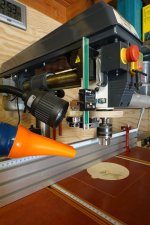
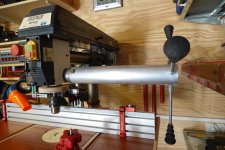
I have a Optimum OptiDrill RB 8S. This is a floor-standing radial pillar drill. It really is a nice drill, but the chuck that came with it was so so. I replaced it with an Albrecht keyless chuck. With the new chuck there is almost no run-out and the machine has more than enough power for what I do with it. It is sturdy and has never failed me yet. I didn't like the depth stop though, so I added a Wixey depth gauge. I also added lots of other stuff to it, but that was just to make it nicer to use. It was in no way necessary to make it useful. I think I have it almost 20 years now. So, all in all Optimum seems to be nice for what you pay for it.

1.jpg


2.jpg

Hmm, it seems I don't have a photo with the Albrecht on it. Sorry for that. I can add that later, if needed/wanted.
 
Love the quill handle!

And I was going to say, "get a light on a stalk" - I haven't yet, but really should, as the built in one on my press is in just the wrong spot - bright but usually unhelpful.

Quick question - I was originally considering a radial arm one, but stuck with a straightforward model. I can see how it leaves much more room for the fence and drilling in the middle of boards, but do you find it a PITA to get back to square and centre if you need to use that movement?
 
Love the quill handle!

Ha, yeah, I was getting fed up with the handles always getting in the way.

do you find it a PITA to get back to square and centre if you need to use that movement

Not really. I just use a square and a hardened steel rod that is verified to be straight. I know I can use a drill bit, but I found this to be much easier. I had some round steel for an axle that was about 30 cm long. That way it is much less finicky to get back to square. The trick is to tighten the clamps just enough to make the system static, but no so tight that you can't adjust it.

To center the table again (although that isn't really necessary in many cases) I use the laser cross-hairs.

However, as you can see I made a large table and that does get in the way. Now I have to reach under the table to get to the unlocking clamp and the swing for the rack and pinion. I intend to make a system with worm gears and a wheel so I can do this from the front. I already have the parts in house, but I haven't found the time to build it yet.
 
Back
Top