• Hi all and welcome to TheWoodHaven2 brought into the 21st Century, kicking and screaming! We all have Alasdair to thank for the vast bulk of the heavy lifting to get us here, no more so than me because he's taken away a huge burden of responsibility from my shoulders and brought us to this new shiny home, with all your previous content (hopefully) still intact! Please peruse and feed back. There is still plenty to do, like changing the colour scheme, adding the banner graphic, tweaking the odd setting here and there so I have added a new thread in the 'Technical Issues, Bugs and Feature Requests' forum for you to add any issues you find, any missing settings or just anything you'd like to see added/removed from the feature set that Xenforo offers. We will get to everything over the coming weeks so please be patient, but add anything at all to the thread I mention above and we promise to get to them over the next few days/weeks/months. In the meantime, please enjoy!

Wooden spoke shaves

Reggieb

New Shoots
Joined
Apr 25, 2024
Messages
53
Reaction score
34
Name
Rob
LOCATION
Worcestershire
I've been on the lookout for a decent spokeshave. I have a number of metal spokeshaves of various types but was looking for something with a little more finesse.

On a recent bodging course I got to try out some Veritas and Luban spokeshaves. Both felt like an improvement over the Stanley pattern metal spokeshaves I've used before. But the former are expensive and both seem difficult to pickup second hand it appears.

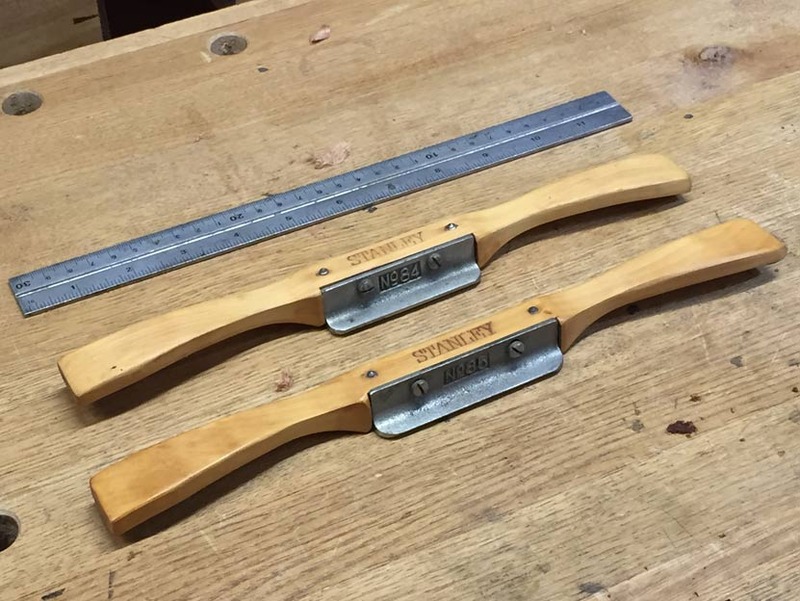
So when I saw a couple of old wooden spoke shaves in a local house clearance store for a fiver I thought I'd give them a try.

1000003087.jpg

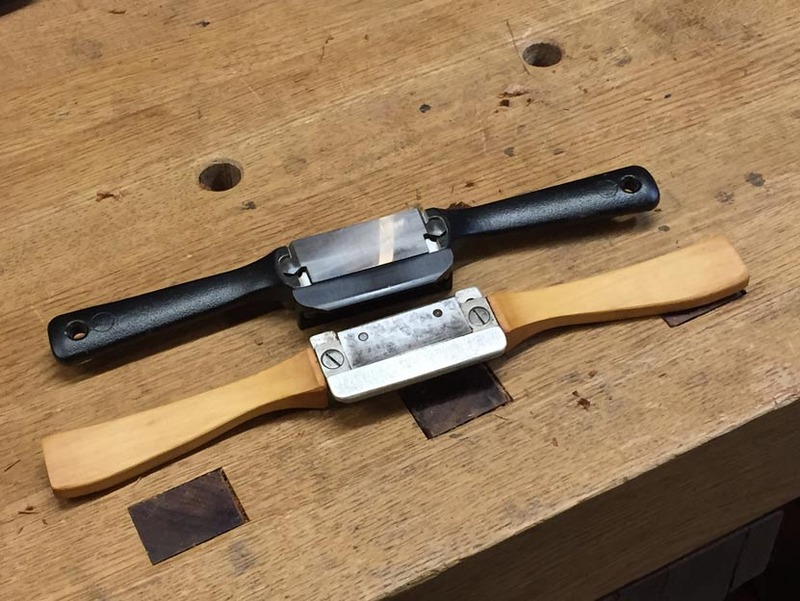
1000003086.jpg

My. Main concern was that they'd be difficult to sharpen. However both blades were easy to tap out of the handles and with a little care I found them easy to sharpen on my diamond stones.

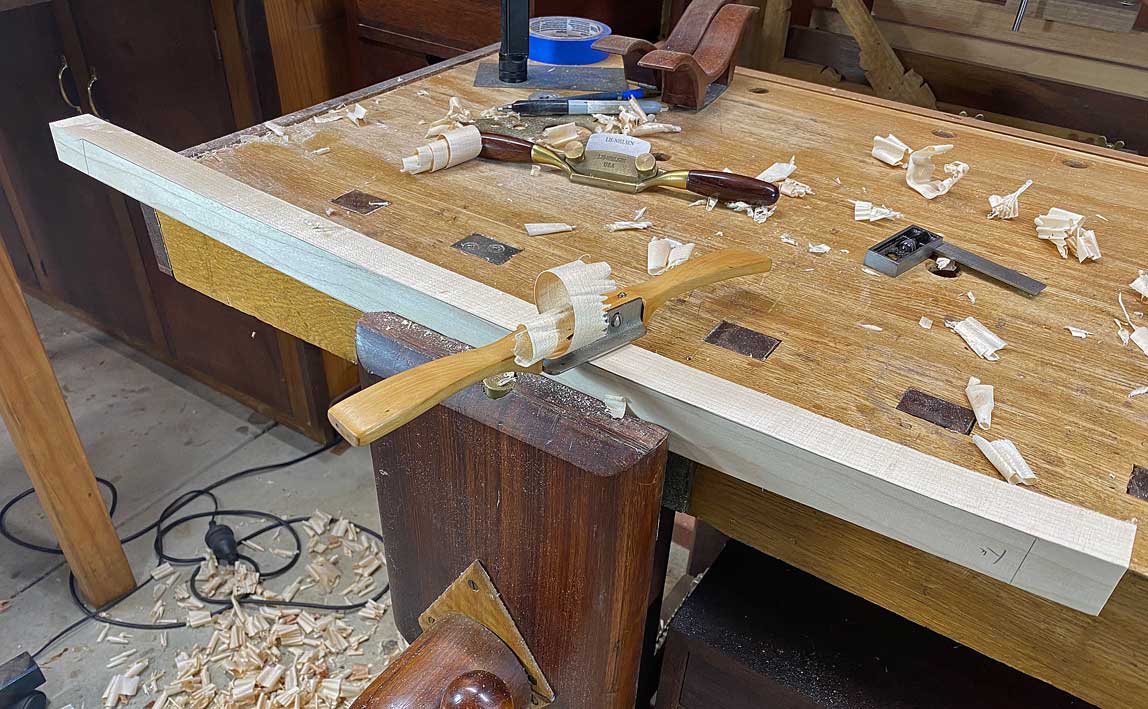
With the blades back in the handles, I gave them a go on some scrap oak. I found them a joy to use. Really light with a lot of feedback back through the fingertips.

I found I could vary the depth of cut by rolling the spoke shave back and forth. That's something I think I'll need to practice but I don't think will take long to master.

I started by rounding a corner which was very easy. But to give the spokeshave more of a tryout I used them on a flat face. The result was nice clean thin shavings and a silky finish.
1000003088.jpg

I'm really pleased with my purchase and can definitely recommend giving these old spokeshaves a try if you have the chance.
 
I thoroughly agree. When you can pick up tools that good, for so little, it makes a lot of sense.

Another aspect of wooden spokeshaves is that they were made in a wide range of sizes, from the tiny up to the rather large :) .IMG_20240512_185833.jpg
 
They're often overlooked by modern woodworkers, but old wooden shaves can work really well. One tip I would give is that I have taken to having the cut vary across the width of the blade, so one side cuts coarsely, and the opposite side cuts finely. With a medium cut in the middle you have lots of control over depth of cut without doing any adjusting.

And it's setting spokeshaves which I find somewhat problematic, rather than sharpening. The problem is that the little prongs/ tangs become a bit loose in the hole with repeatedly being tapped in and out. Bashing them with a hammer on a small anvil (the back end of a metalworking vice, obviously :) ) to cause a little distortion, can help, but only for a short while.
 
For loose fitting tangs, try just poking a scrap of wood shaving in the hole.
If it's really worn, glue one or two shavings in and adjust them with a thin needle file after the glue has set.
 
One tip I would give is that I have taken to having the cut vary across the width of the blade, so one side cuts coarsely, and the opposite side cuts finely. With a medium cut in the middle you have lots of control over depth of cut without doing any adjusting.
I've seen that advice before. I think Paul Seller's has suggested it too. To be honest I'm not convinced.

First you lose the ability to cut a consistent shaving across a flat concave/convex surface. For example a curved edge of a board. It also limits the option of using a slicing action to deal with some particularly awkward grain

With metal spokeshaves I don't find it difficult at all to adjust the blade to the desired depth.

If I want to repeatedly switch between shallow and deep cut I'd rather have two spokeshaves set up. One for each cut depth. Rough out with one, and then finesse with the other.

I'd rather concentrate on how the wood is taking the cut and whether I'm cutting in the right place, rather than being distracted by which part of the tool I'm using.

For fine adjustment of cut being able to roll the shave back and forth to adjust the cut feels more intuitive to me and more a natural response to what I'm feeling in my fingertips.
 
Last edited:
That's why this hobby of ours gives us so much to talk about: there are as many different ways of working as there are people doing it, and they're all right!
 
That's why this hobby of ours gives us so much to talk about: there are as many different ways of working as there are people doing it, and they're all right!
Absolutely
 
I love the wooden ones, I tend to use wooden ones for hogging off big amounts of material then follow them up with metal ones set to a finer cut.
 
Rob, look for Stanley #84 and #85. These are wooden, bevel up shaves. I use them.


Essentially, the Veritas Low Angle spokeshave is a metal copy ...


Regards from Perth

Derek
 
At the risk of showing my ignorance............there's some other type of shave other than bevel up, is there? I've never seen a bevel down shave, which isn't to say they don't exist.
 
Rob, look for Stanley #84 and #85. These are wooden, bevel up shaves. I use them.

Essentially, the Veritas Low Angle spokeshave is a metal copy ...

Regards from Perth

Derek
I've not seen those stanleys before. Interesting. The Veritas Low Angle was on my shopping list before I got the wooden spokeshaves.
 
Back
Top