• Hi all and welcome to TheWoodHaven2 brought into the 21st Century, kicking and screaming! We all have Alasdair to thank for the vast bulk of the heavy lifting to get us here, no more so than me because he's taken away a huge burden of responsibility from my shoulders and brought us to this new shiny home, with all your previous content (hopefully) still intact! Please peruse and feed back. There is still plenty to do, like changing the colour scheme, adding the banner graphic, tweaking the odd setting here and there so I have added a new thread in the 'Technical Issues, Bugs and Feature Requests' forum for you to add any issues you find, any missing settings or just anything you'd like to see added/removed from the feature set that Xenforo offers. We will get to everything over the coming weeks so please be patient, but add anything at all to the thread I mention above and we promise to get to them over the next few days/weeks/months. In the meantime, please enjoy!

French holiday house

BigMonka

New Shoots
Joined
Feb 18, 2019
Messages
113
Reaction score
39
Location
Yorkshire & Charente
A colleague of my wife was telling her about some houses for sale in the French village that his family is from and from some initial looking it appears that it would be financially possible for us to buy one. Probably somewhere near Limoge, and at the moment it would be a holiday home but maybe once the kids have left home we'd like to move out there (visas depending etc).
Knowing that a few people on here live in France and others have huge amounts on knowledge I was hoping to tap in to the deep knowledge pool!

Any general thoughts or tips would be really appreciated but a few starter questions we've got:
  • How DIY-friendly are the French building-regs/building-control for renovating a property? Thinking possibly septic tank, new floors, stairs, roof, electrical etc
  • How do the costs of building materials compare to the UK?
  • Any advice on the buying process?
  • Any reason why we couldn't have a French-register car/van that we left out there?
Thank you!
 
I have not bought in France, but have three friends who have. (I've done it elsewhere in Europe). Unless you are buying in a premium spot with a lot of tourist traffic, then I would be extremely careful unless you REALLY want to live there. A former business partner of mine bought a small chateau and some other buildings to rent out as gites. His wife was candid when we discussed it:

Don't even think about it unless you speak the language fluently
It's cheap for a reason (no one wants it or the renovation costs are more than the finished item will sell for)
Reselling is often problematic as people don't want to pay full price
Renovating permits can take a long time and be costly
You will always be a foreigner to the locals
Tradesmen will not prioritise you over locals and will charge more
Cost of living is higher than UK

That said as a confident renovator myself I would still do it if I felt like it. We've done two straightforward reno's (one in Germany) and it was fine. That said we have fluent language cover and local well connected family.
 
We bought in 2007 before Brexit was even thought of. Process then was straight forward although we were surprised that both buyer and seller pay pretty hefty fees (well taxes actually).
The only “renovating” we have done is having a Velux fitted in one of the bedrooms which needed a permit from the local town hall but was straight forward enough. Even a small green house, greater than 5m2, will need a permit. We have had tradesmen in to do major bathroom and kitchen refits. Never having done this in the Uk I have nothing to compare the costs with.
I find anything DIY related to be expensive, although have not had to buy building material. I still buy all my paint in the UK.
VAT for the general public is higher than for tradesmen which does makes stuff seem expensive..
We moved with young children who were all bilingual when we moved and with a french wife we have never felt unwelcome.
Wife has very good health insurance through work which covers us all. I’ve no idea what this would cost but is something you should investigate.
We never needed visas back then and as part of the post Brexit agreement I now have a permanent resident permit. I’ ve no idea how difficult/easy the visa process is.

HTH
 
I second everything that Adrian said.

In our case, our daughter and son-in-law bought a house in a village in the Franche Comte some 25 years ago. Our (English) son-in-law had been working in France since about 1990 and our daughter moved over to join him in 1995. All our three grandchildren were born and educated in France and have now acquired French nationality. Despite having lived in the village for 25 years, they are still referred to as “the English” and there are some in the village, whose families have lived there for generations, who still resent incomers like the family.

I can’t remember the arrangements for buying the house but there was some sort of process like exchange of contracts and then completion. At the time, we were told that it was unusual to have a building survey done but you could put caveats in the contracts about certain issues that might arise – AndyP would know the situation better.

When it came to building work, it was very helpful that my son-in-law and daughter were on site and are both fluent French speakers (added to the fact that our son-in-law is very practical and could do a lot of the building work himself so they often only needed electricians and plumbers). In contrast, my sister-in-law and her husband bought a maison secondaire in Normandy about the same time as our family's purchase. Neither of them speaks French although my S-I-L has now learned some. However, being off-site has meant that they’ve had problems keeping track of what's been going on in their absence together with tradesmen not turning up when they said they would , overcharging, doing shoddy work etc.

When buying, another aspect to take on board is how small or remote the village is. The peace and quiet of a rural village can be appealing but not if you need to use a car to get everywhere and the nearest shops are miles away. This is sometimes the reason that rural property is so cheap as people of working age don’t want to commute for miles to get to work.

On the subject of alterations, check to see if the house is in a conservation area otherwise “Batiments de France” will put their oar in. Our house is in the curtilage of a chateau and parts of the house have old timbers. So far, the only problems with alterations have come with having the right style of shutters and the right colours for the rendering and the windows, doors and shutters. However, we did run into a problem in trying to demolish an old workshop in the back yard. The building that had probably been a barn had been heavily modified 40 or 50 years ago by knocking holes in walls for doors and windows and using cast concrete for lintels and window sills. Not only that but the roof had been patched many times in the past. Having looked at the building, Batiments de France agreed that the building had already been substantially altered but the roof timbers, which you can only see if you go into the loft space, were the original ones, probably a couple of hundred years old, so permission was denied so we are left with an eyesore in the back yard..

Finally, when it comes to bureaucracy, the French “salaires” put Sir Humphrey to shame. It seems that whatever documents you take along to the Mairie for any purpose, they always want another one.

N.B Someone on the Forum who has done various house renovations in France is David (Chataigner) but he hasn’t posted anything on the forum since July.
 
We've been here two years. We've just renewed our residency permits (Year 3). We were asked to provide proof of address, so I submitted our Fonciers (Council Tax) receipt. It is a government document but was deemed unacceptable! A phone bill was OK..... Beauracracy is on another level.

Stuff is expensive. Food is expensive (and not great quality, actually). DIY stuff is expensive. Paint is expensive and not very good quality. I know someone who brought 32 cans of paint back from the UK.

However. The pace of life is slow, it's quiet. Everything stops at noon and some things start up again at 2 or 2:30. Lunch is sacrosanct. The locals are friendly. I know the French have a reputation for being anti-Brits, but that has not been our experience. On the contrary, our French neighbours have gone out of their way to be friendly, making phone calls for us, for example..
YOU DO NEED TO BE PREPARED TO TRY TO LEARN THE LANGUAGE. If you come with the attitude that you just need to speak English more loudly then you are asking for trouble. But make the effort and you will be rewarded with tolerance and encouragement. Sometimes the other person will be grateful for the chance to practise their English, but don't take it for granted. We go to a conversation class every Monday, it's great fun.

I have no regrets whatsoever about moving to France, I just wish I'd never seen this house. We were ripped of by the previous (English) owner (whom I met on the other forum, actually). It seemed cheap compared to the UK, but we paid probably 50% more than it was worth. So come for a few weeks, look around. There are some lovely properties, of all sizes and price brackets, in the Limoges area, at prices that seem too good to be true. And house prices here have seen a 9% drop in the last year. Given that the pound is at its best since before Brexit (still 20% down, of course), if you have the dosh and the ken, it could be a new adventure.

As I say, no fundamental regrets, just this particular house.
If you would like to chat, I'm on Skype, WhatsApp and Messenger. Just PM me.
S
PS If you find a local timber yard, let me know.
 
I can’t remember the arrangements for buying the house but there was some sort of process like exchange of contracts and then completion. At the time, we were told that it was unusual to have a building survey done but you could put caveats in the contracts about certain issues that might arise – AndyP would know the situation better.
Not sure that I do. 17 years ago now is along time for my memory. I do recall that the same solicitor (notaire) acts for both buyer and seller. Building surveys do seem to be unusual, perhaps necessary if a mortgage is required. We were living with the in-laws at the time with 3 children under 7 so you can image we were in a hurry to secure a home of our own and jumped at the property we could move into before the school term started. The house was 12 years old when we bought. We were never in the market for a wreck to renovate.
Important to know and understand how the utilities are connected. Our surface water drain for example drains under the neighbouring field which is also owned by the farmer we bought the house from. This is known as servitude and should be included in the deeds of both properties . The land owner with have a legal obligation to maintain said servitude.

HTH
 
Thanks for all the replies, much appreciated.

I've watched some webinars from Leggett Immobilier about the buying process so think I understand that bit better now - it seems more like the Scottish system where you agree a sale and pay and a deposit that either party would lose if you pull out of the sale.

My wife and I both speak basic French which has been sufficient for all our holidays, but our vocabulary is therefore more holiday-focused than day-to-day living 😁 . Getting better at the language would be a part of the experience that I'd really look forward to rather than being a burden though.

I hadn't appreciated the bureaucracy was quite so bad! That doesn't sound good from the perspective of a renovation project and trying to get building control sign off (assuming that's needed) 😬
 
Andy has just reminded me. The other thing to bear in mind is internet connection.
 
I've watched some webinars from Leggett Immobilier about the buying process so think I understand that bit better now - it seems more like the Scottish system where you agree a sale and pay and a deposit that either party would lose if you pull out of the sale.


That’s not quite how the Scottish system works in practice. But that is irrelevant to your original question.

This is only anecdotal, and I am subject to correction, but based on my junior staff whom I have sent over to France on secondment, and my parents’ neighbours, who live there for half the year: the bureaucracy is insane, property transaction costs are eye-watering by UK standards, and you will need a permit for just about anything you want to do. Building costs from what I saw of the residual calculations sent back to me by my staff are substantially higher than UK, although that was commercial projects, not residential. Both materials and labour.

A few other things I have heard: French law does (or at least did) require property to be evenly divided on inheritance. So after a few generations you might require the agreement of multiple people for a purchase. Rural French are very fond of their rights – water, drainage, access &c. (as I think referred to above). The French do not have valuers in the same way as the UK, so research the purchase price fully.

I don’t know whether the practice of the Notaire (? I think) leaving the room so an additional sum can be paid, thus reducing the recorded (taxable) sale price still exists.

On living abroad generally (I have lived in Zambia, Egypt, Singapore and Sweden). Get fluent in the language. Even if you switch then to English. I’m not sure I would be prepared to try a building project without a full knowledge of the language. It’s bad enough with regional differences in terminology in the UK. Accept that you’ll be a low priority for tradesmen, unless they think they can fleece you – and even then. Accept the possibility of bribery, or at least another way of expediting things – impossible I know in modern France.

Wrt leaving a car over there. Should be no problem, other than the usual steps, my parents leave theirs in the Borders for the six months they spend in Australia each year (disconnect battery, leave handbrake off (chocked), run and use the brakes hard before storing and put away dry). The neighbours referred to above actually just bring their car back because it is easier. The rules used to be with a UK car you could take it to any EU country for 6 months. In any one year, it didn’t reset if you took it out of the country for a day, despite what some internet sites tell you. But I drove my aged Defender around Sweden for far longer than that. But then it has a NI number, which their system doesn’t seem to recognise. Very useful as the Stockholm traffic system didn’t seem to recognise it.

If you can afford it, go for it. But it may be a bumpy ride.
 
Consider getting tax advice before you move to a foreign country. At the very least familiarise yourself with the behaviour that triggers tax residency in that country and be aware that there can be taxes that apply if you own property or are present in a country even if you are not tax-resident. Find out whether taxes are limited to activities within the country in question or whether there are situations in which worldwide income or assets are taxed. Be aware that tax residency and immigration status are separate concepts.

For France, this might be a good place to start:

 
Consider getting tax advice before you move to a foreign country. At the very least familiarise yourself with the behaviour that triggers tax residency in that country and be aware that there can be taxes that apply if you own property or are present in a country even if you are not tax-resident. Find out whether taxes are limited to activities within the country in question or whether there are situations in which worldwide income or assets are taxed. Be aware that tax residency and immigration status are separate concepts.
There is normally a double tax agreement with most countries. There is one with France, unless it has been rescinded post you know what. Covers CGT too. Dunno how it works with IHT (or their equivalent, which I believe is quite gruesome). I’m only a humble investment analyst (valuer if you prefer), not an accountant.

Pain in the backside to reconcile at year end, as with Sweden.

The other thing I would point out is that getting a semi- or permanent tenant out of a French property is time consuming and difficult. Had a tenant in one of my Edinburgh flats. Ex-major in the SBS (ie not a soft cookie). Endless trouble getting a tenant out of his property in France. Just stopped paying rent, and played the system for all it was worth. Not my tenant, his.
 
^^ The 2008 double tax treaty between France and UK still applies. Should not be relevant if it is just a holiday home for you unless it is also let out to generate income. It may be relevant if you live there permanently as that will trigger the French regarding you as tax domiciled there. Although I used to be in the professions, I am no tax expert but I will say this, if you need to consider double tax arrangements you will be spending a lot on tax accountants as the admin is a real nightmare in both countries.
 
Not an expert but I am tax resident here. As I understand it, but caveat emptor, if you pay tax on assets in the UK you do not have to pay tax on them again in France BUT you do have to declare all UK accounts and give details of taxes paid if applicable. I have uk based sterling accounts but many banks refused to allow expat to have UK accounts post Brexit so if you are planning to stay permanently it would pay to find out if your bank will allow you to be non resident and if not set up accounts with an expat friendly bank first.
There are no real credit cards in France either and free banking is not available. The reason cheque books are still readiliy used is banks charge for the privilege of a debit card. Our bank card enables us to use the VISA payment system but the balance is removed either immediately or at the end of the month, there is no credit facility and you can’t have a Barclaycard with a non UK address.
We have always found the tax authorities reasonable and being married to an accountant certainly helps with the annual online declaration.
 
Ah, banking...
You can't buy a property without a French bank account and you can't open a French bank account without a French address... Catch 22.
Well, almost.
There is a branch of Credit Agricole in Normandie called Britline. It is staffed by native English speakers, so there is zero communication barrier. Everything is done by phone, so the property in which you are interested does not need to be in Normandie. Phone waiting times are respectable.

We were very happy with the service, but decided to transfer our account to our local CA, just so that we could go in and speak to someone tete-a-tete (sorry about the lack of accents - I'm still using an English keyboard).

Ye gods, the hassle.

When you close a bank account, it stays open, with funds in it, for some time, I think 3 months, but I can't be sure, so that any cheques can be flushed through. The problem is that cheques are valid for one year, one week and one day....

My partner wrote a cheque for €80 to a doctor, who presented it 5 months later. We got a call from our man in Normandie, who pointed out that if a cheque bounces we become hors de bancaire and we are legally forbidden from writing any more cheques, from any account, from any bank in France, for 5 years. It is very serious indeed.

But he gave us a holding account into which we paid the €80 and all was well. Or so we thought.

A week later we got a registered post leter, telling us we were hors de bancaire. Phone calls. Visits to our local bank. Another letter threatening us with a fate worse than death. I don't know what legacy this has had on our financial record, but this was a mistake by CA Normandie, not by us. It took a LOT of sorting out.

Fortunately it has not stopped our Cartes de Sejour being renewed, we are legal for another year.

Yes it is all a lot of aggro, but the quality of life makes up for it all, and then some.
S
PS Very glad to hear that you are enthusiastic about learning the language, it makes a huge difference. I rarely have to use Google translate now, at least for functional conversation. Casual conversation and technical conversation is a different matter, but we will get there, one day.
 
Last edited:
Lots of good advice above...
I'll add my two pennyworth (I live 30mins from Limoges) : You must speak French. Try to imagine how it would work out if you turned up in a council office re building regs in the UK speaking only French. It's all very well to say you are willing to learn, but it takes time and the greatest need is at the start when buying and renovating.
Having building done work is expensive and most French builders, while generally quite competent, have no respect for delay times. Waiting a year for work promised in a few weeks is not unusual.
Think about distances. The UK is small, France is huge. 7 hours driving from Limoges to a channel port.
DIY is fine, but while there are lots of government grants for renovation work, especially energy saving, you can only get them by using a registered pro.
Re regulation, everything is regulated down to the last detail, not much is verified. I have renovated two houses here mainly on the principle that it's easier to say "sorry, didnt know" than to ask for approval. No significant problems.
Re buying a problem building : the normal contract states that the owner has declared (in the contract) any problems he knows about. It is considered that the owner is not an expert (unless he is a pro), so hidden problems are not his fault, unless you can prove that he knew. Almost impossible. You are on your own. My advice would be buy cheap and accept some unforeseen costs.
If Internet coverage is important for you, check it out. There are massive holes in the coverage, mainly in rural areas where property is cheap.
Re leaving a vehicle in France, no problem, but dont expect to park it at the airport. They are wise to that one and parking costs rise exponentially with the number of days.
The climate in Haute Vienne is not what you might imagine. In summer, when most people visit it is quite hot, generally sunny, very appealing. However, unlike in the UK where no-one is far from the stabilising influence of the sea, in winter it gets COLD. Expect weeks below 0°C in Jan/feb. day and night. In 2011 we hit -18°C a couple of times. Heating bills are significant.
As for the food, supermarkets are much as in the UK, not cheap, not particularly good. However, there is a thriving local produce sector sold direct by farmers - superb quality, not cheap, but worth it.

I love it here. 25 years of experience has not dulled my enthusiasm.
 
PS, Re food : People image that markets are the place to buy, but beware, most market stalls are just traders, not producers. They sell the same products that you find in the shops but at higher prices. There are some gems though, real local producers hidden amongst the traders - there is also a movement to create markets only open to local producers, see link :

Producteurs du pays
 
Necro-thread-revival!
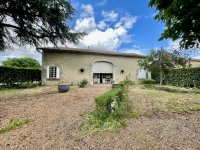
We've now completed on a lovely stone house in a pretty village in the Charente department (nearest medium size places are Ruffec and Mansle, nearest big place is Angouleme).

We managed to find somewhere with a decent roof and is watertight. Second big benefit is that it's on mains drainage so no need to replace a non-conforming septic tank (which was the case in most places we looked). Beyond that is really needs re-doing inside with new electrics and plumbing, moving the kitchen, and probably some general remodelling of where they've put stud walls. But it's ours and I'm very excited!

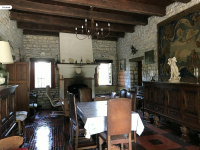
Couple of interesting photos:
IMG_5083.jpg
IMG_5101.png
 
Wow! Well done, BM. Enjoy.
We are 40 minutes north of Limoges. Pop in some time.
We are a bit stuck at the moment, language-wise. Our wonderful, lovely, funny, French conversation teacher has decided to call it a day on teaching. Our class has dwindled from 10 or 12 to just the two of us. She's had enough and, at 79, she has other priorities, like family. Who can blame her?
So we need to find an alternative source of French learning. SWMBO is not bothered about becoming French, but I would like to. The Maskery family has French roots (a very long time ago, admitedly) and I've been European all my adult life. I don't take lightly to others telling me I can no longer be so.
There is, however, a fly in the ointment, in that regard.
Our visas are granted on condition that we do no economic work in France. Why, I don't know, but that's the rule. But recently, the government has clamped down on Nationality applications on the grounds that the majority of income is from overseas! Catch22. It's actually being looked at by government ministers, so it might change, but as things stand at this point in time, you cannot become a French National if you are retired, no matter how well integrated you are.
They are happy to take my taxes, but I'm not allowed to vote.
We are into year 4 of our residency here so by the end of next year we should have the right to apply. I hope things change before then.
Come the Revolution, Comrade!
S
 
Last edited:
Beautiful house and beautiful room. Does it come with the furniture?
 
Wow! Well done, BM. Enjoy.
We are 40 minutes north of Limoges. Pop in some time.
We are a bit stuck at the moment, language-wise. Our wonderful, lovely, funny, French conversation teacher has decided to call it a day on teaching. Our class has dwindled from 10 or 12 to just the two of us. She's had enough and, at 79, she has other priorities, like family. Who can blame her?
So we need to find an alternative source of French learning. SWMBO is not bothered about becoming French, but I would like to. The Maskery family has French roots (a very long time ago, admitedly) and I've been European all my adult life. I don't take lightly to others telling me I can no longer be so.
There is, however, a fly in the ointment, in that regard.
Our visas are granted on condition that we do no economic work in France. Why, I don't know, but that's the rule. But recently, the government has clamped down on Nationality applications on the grounds that the majority of income is from overseas! Catch22. It's actually being looked at by government ministers, so it might change, but as things stand at this point in time, you cannot become a French National if you are retired, no matter how well integrated you are.
They are happy to take my taxes, but I'm not allowed to vote.
We are into year 4 of our residency here so by the end of next year we should have the right to apply. I hope things change before then.
Come the Revolution, Comrade!
S
Thanks Steve. We're approaching it as a 10year renovation, during which time it'll be a holiday home - but I very much have dreams of moving there once the kids have left home. From what I've seen, and you've described, the process of getting visas to live there are just getting harder (which of course I support the French people's choice to make) so I don't know how viable that will ever be... although I can but dream of a Re-BrEntance referendum 😁

At some point popping in on you @Steve Maskery or @AndyP would be lovely! And vice versa if you're ever in my neck of the wood.
 
Beautiful house and beautiful room. Does it come with the furniture?
Thanks Dave :)
Yes we bought everything in the house too. It was used a second home by a Parisienne family so has got everything we need to get up and running straight away - from kitchen utensils to bedding! Unfortunately they hadn't been there for a number of years it's all damp and musty, and my review of the wiring doesn't inspire me to want to plug in the 30year old fridge that they left 😬
 
my review of the wiring doesn't inspire me to want to plug in the 30year old fridge that they left 😬
Welcome to France!
The previous owner told me that the diagnostic chappie had described the wiring as "impeccable", which I rather niaivelyt hought meant Impeccable, instead of the true translation of Lethal. We've yet to find an earth rod...
S
 
That looks lovely...and very curious. Is it a converted agricultural building?
It's totally curious isn't it @Mike G !
The agent told us that it was built by the municipality at some point around 1910, so I don't think it was strictly agricultural although the huge opening was clearly for bringing in big things. I wondered about the central area being for horse&cart and then the side windows, which you can tell were once doors, might have been for human use like offices?

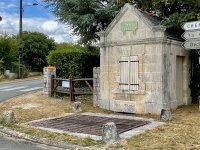
You'll like this as well though: just outside the property boundary, but included within the sale, is a historic public weighbridge! I've not got any photos of the inside with the weighing scales mechanism but here's the outside. This links with my thoughts that the building was for official use relating to horse and carts.
Weighbridge.jpg
 
Welcome to France!
The previous owner told me that the diagnostic chappie had described the wiring as "impeccable", which I rather niaivelyt hought meant Impeccable, instead of the true translation of Lethal. We've yet to find an earth rod...
S
Haha, similarly I've found a cable that goes outside as if to an earth rod but not the rod! Not helped by the consumer unit being cartridge fuses and not MCBs, so there are definitely no 30mA RCDs that might save you're life.
Bizarrely the Linky meter and main isolator are three phase devices. You can't tell from the outside of the distribution board whether it is actually three phase so I'll be doing that investigation on my next trip in March.
 
Haha, similarly I've found a cable that goes outside as if to an earth rod but not the rod! Not helped by the consumer unit being cartridge fuses and not MCBs, so there are definitely no 30mA RCDs that might save you're life.
Bizarrely the Linky meter and main isolator are three phase devices. You can't tell from the outside of the distribution board whether it is actually three phase so I'll be doing that investigation on my next trip in March.
If 3 phase that opens up the possibility of some serious wood working toys and a ridiculously fast charger if you go down the electric car route
 
Back
Top