Mike G
Petrified Pine
Is QC quality control?You can tell Mike didn't work in caravan QC !!

Is QC quality control?You can tell Mike didn't work in caravan QC !!
Yes caravan QC was very poor from the days I owned a caravan!Is QC quality control?
Are you putting a small skylight in. Nothing fancy just enough to ventilate.Thanks, Mike. Agreed, a conventional mattress would be an absolute bear to remove and air and yes, it would seriously affect your kerb weight and possibly, axle position.
Yes too, condensation underneath can be an issue. Lons, I am sure will weigh in here, he has more experience than I have, but in 15 years trailer-tenting, I saw slatted bed supports, "circulation mats" (remarkably like router mats and they weren't marketed for long), "wicking layers" and solid under-surfaces like yours. With a self-inflater, moisture travel to the lower surface should be nil, the mattress topper will 'take the strain' and need the ventilation. Quechua is a respected manufacturer; seen a lot of their stuff over the years, it should serve you well - but make emphatically sure, you are provided with a decent-sized patch and a more than adequate supply of glue!! That mattress is only as good as the first puncture, or manufacturer's pin-hole, or slightly leaky seam! DAMHIKT!
The presence of your tank underneath, unless you take care to isolate (as opposed to insulate? pedantry!) the tank's top surface, there is a possibility of condensate from the tank's top surface moving upwards into the floor under the bed and - possibly - the bed under surface. I hope you've provided for air flow over the tank. I see this as the only (possibly) problematic area in what you have published so far, and I'd agree with Bob (Lons) re the attraction of a lug-a-round water barrel and drop-in Whale pump.
Speaking of ventilation, the camper a relatively small volume and - if I read you right - will shelter three bodies at night? Yourselves and Mabel? Have you got a good passive ventilation route thought up? You could be looking at circum 2.5L of moisture released per noctem.
Finally, when you do get it on the road, maybe next month at the rate you're knocking it out, may I please wish all three passengers many happy miles, views, and chill-outs in it?
S.
Precisely that. A 500x500 pop-up rooflight, which will probably be cracked open at night.Are you putting a small skylight in. Nothing fancy just enough to ventilate.

.......I saw slatted bed supports, "circulation mats" (remarkably like router mats and they weren't marketed for long), "wicking layers" and solid under-surfaces like yours.
......Quechua is a respected manufacturer; seen a lot of their stuff over the years, it should serve you well - but make emphatically sure, you are provided with a decent-sized patch and a more than adequate supply of glue!!
The presence of your tank underneath, unless you take care to isolate (as opposed to insulate? pedantry!) the tank's top surface, there is a possibility of condensate from the tank's top surface moving upwards into the floor under the bed and - possibly - the bed under surface. I hope you've provided for air flow over the tank.
Speaking of ventilation, the camper a relatively small volume and - if I read you right - will shelter three bodies at night? Yourselves and Mabel? Have you got a good passive ventilation route thought up? You could be looking at circum 2.5L of moisture released per noctem.
Finally, when you do get it on the road, maybe next month at the rate you're knocking it out, may I please wish all three passengers many happy miles, views, and chill-outs in it?
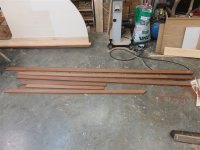
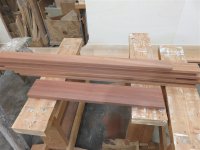
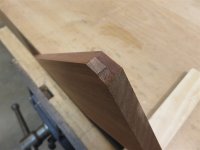
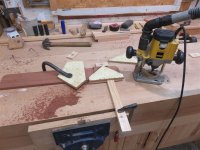
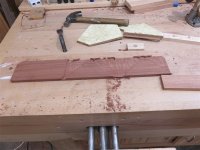
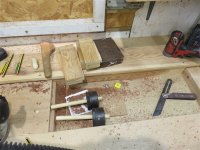
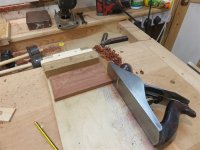
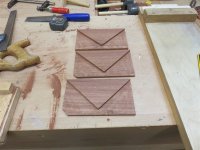
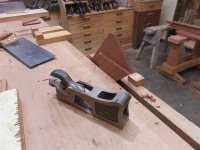
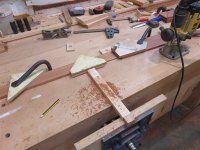
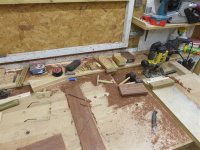
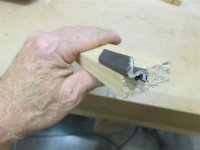
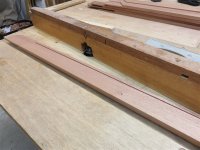
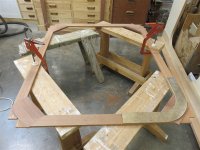
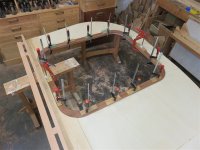
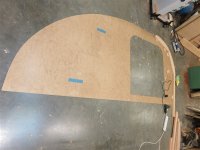
 Time for a trial fit: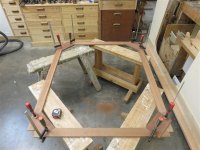
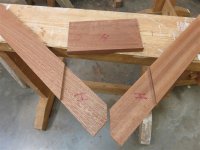
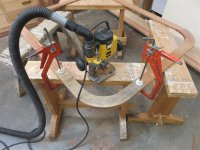
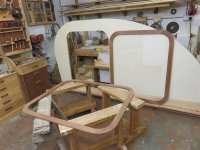
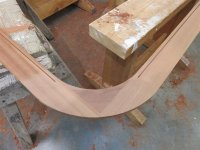
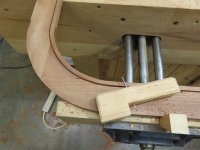
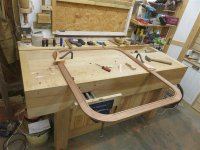
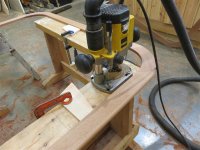
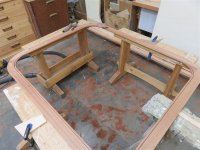
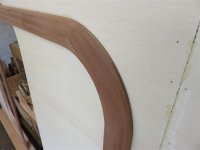
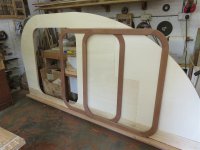
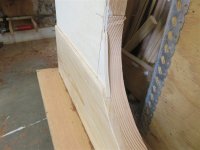
Mehhh...probably! The roof vent is the important one, as freshly breathed out air (with moisture) will rise.At the moment, I am think of 2 low-level vents, permanently open, and then the two windows and the roof vent. Do you think that will be enough? I also have in mind a high level vent with a small computer fan ticking over when we're on board, but will probably suck-it-and-see on that one

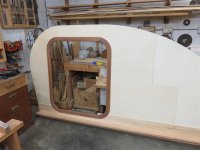
Are you going to line the door opening so that no moisture can get near the poplar plywood. Whilst it is light and suitable for the interior. It is hopeless in any circumstance where it can get wet. I once went to look at a job where the owner was complaining that new doors and windows had rotted in 3 years despite a very good quality paint system. Turned out the wood was poplar. It is not durable. So take care to keep moisture away from the plywood.
......You would find a palm router far easier to handle btw......

 Long tenon jig by Pete Maddex, on Flickr
  Long tenon jig by Pete Maddex, on Flickr
I like that Pete. I thought my days of router jigs were long gone........Mike a version of my long tenon jig might speed your halflaps up, I have used it for big tenons at the bottom of draws and bed rails.
Pete
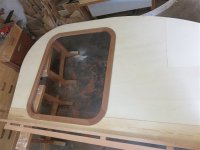
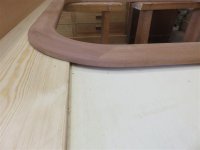
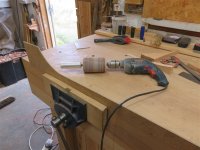
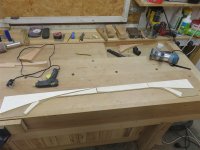
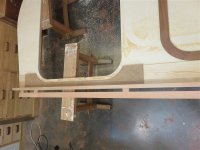
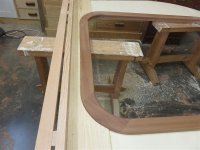
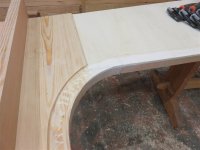
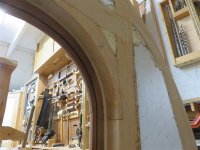

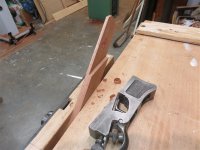
Thanks Dave. Yep, I love that shoulder plane. It's not needed often, but when it is, it's spot on.I am just catching up with what is going with this.
It's good to see that old shoulder plane being put to good use.
Good progress, in a few weeks I will be able to come over and view in person.

If using led lights you could power them using a car jump starter power pack which are light and compact.The electrics is the thing I look forward to the least, Kirk.
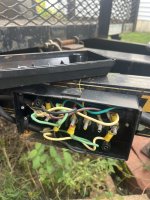
I've got the trailer road-lights already. These are single-unit lights with running light, brake light, and reverse lights built in (I think that's right). I had hoped to mount them on the chassis below the body, but they will now be mounted on the galley hatch, with an access panel behind. These will be the only wires which run inside the bodywork. Everything else will be surface-mounted, so that when I stuff the wiring up, or it shakes itself to bits, I can access it easily to fix. These lights, plus the number-plate lights and the forward-facing marker lights, will run off the car battery in the normal way via a 13 pin plug. I will also be doing a high-level brake light, and possibly a high level reverse light. All the under-body cable runs will be in conduit.
I took an early decision not to use the chassis as neutral. That's where a lot of trailer electrical issues arise, I think. I will run two wires to everything.
The other lights will run off the trailer's leisure battery. These will be internal lights, galley lights, and some external lighting for the awnings ("porch" lights, over each door). The galley will have the choice of both red and white lights to light it, because red attracts fewer insects after dark.
No, I'm going to have a leisure battery (100 -120AH) because there's a fridge to run, and a water pump, plus any internet-related stuff.If using led lights you could power them using a car jump starter power pack which are light and compact.

Get a lithium if you can afford it as you pay twice the price but you'll get twice the capacity....No, I'm going to have a leisure battery (100 -120AH) because there's a fridge to run, and a water pump, plus any internet-related stuff.
Better than lead acid but they used to have a shorter life due to less charging cycles, that may have changed though I never had an issue with mine. Lithium are better imo. Lighter, smaller but you would need to look at the charger you use and ensure your solar panel controller is rated for lithium.What about an AGM battery?
Yes, I now run a ground wire to each light to ensure a good circuit too.The electrics is the thing I look forward to the least, Kirk.
I've got the trailer road-lights already. These are single-unit lights with running light, brake light, and reverse lights built in (I think that's right). I had hoped to mount them on the chassis below the body, but they will now be mounted on the galley hatch, with an access panel behind. These will be the only wires which run inside the bodywork. Everything else will be surface-mounted, so that when I stuff the wiring up, or it shakes itself to bits, I can access it easily to fix. These lights, plus the number-plate lights and the forward-facing marker lights, will run off the car battery in the normal way via a 13 pin plug. I will also be doing a high-level brake light, and possibly a high level reverse light. All the under-body cable runs will be in conduit.
I took an early decision not to use the chassis as neutral. That's where a lot of trailer electrical issues arise, I think. I will run two wires to everything.
There are other considerations that might affect choices. How are you going to recharge the battery? Do you want solar panels to do that (flexible ones are light weight)?
Do you want to power anything with mains voltage from the battery (100A from a single LiFePO4 battery will give you just over a kilowatt)?
How important is knowing the state of charge? (LiFePO4 has constant voltage during discharge so you'd need a shunt and monitor to count the amp hours in and out - about £60).
You can monitor voltage on lead acid to gauge state of charge but I've never found it reliable.