• Hi all and welcome to TheWoodHaven2 brought into the 21st Century, kicking and screaming! We all have Alasdair to thank for the vast bulk of the heavy lifting to get us here, no more so than me because he's taken away a huge burden of responsibility from my shoulders and brought us to this new shiny home, with all your previous content (hopefully) still intact! Please peruse and feed back. There is still plenty to do, like changing the colour scheme, adding the banner graphic, tweaking the odd setting here and there so I have added a new thread in the 'Technical Issues, Bugs and Feature Requests' forum for you to add any issues you find, any missing settings or just anything you'd like to see added/removed from the feature set that Xenforo offers. We will get to everything over the coming weeks so please be patient, but add anything at all to the thread I mention above and we promise to get to them over the next few days/weeks/months. In the meantime, please enjoy!

A bit of a head scratcher as it’s too hot to do real work.

Cabinetman

Sequoia
Joined
Oct 11, 2020
Messages
5,462
Reaction score
1,175
Location
Lincolnshire Wolds + Massachusetts
Name
Ian
So it’s mid afternoon back in Boston US it’s 36/96 degrees depending on your thermometer and humid.
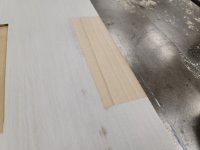
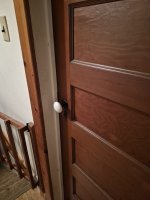
Time to puzzle out how to fit a uk mortice lock to a door that already has a bloomin great hole through it. It’s where the handle/knob fits that’s the real problem as the back plate is roughly the same size as the hole.
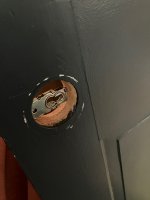
IMG_4576.jpeg
IMG_4577.jpeg
What think you all, do I rout out around the area and fit a couple of wood cheeks to screw to? But the lock needs 17mm and the door is only 35mm thick, so about 8 1/2 mil either side, I’ve bought the wrong type of handle, I am silly! Should have been one with a tall backplate which included the lock hole. Such things aren’t available here easily. I’ve also bought a couple of brass escutcheon plates.


Or do I just cut my losses and move the entire thing further up the door? But I’ve still got the problem of very short screws to hold the knob on with.
Or put the US knob arrangement back on and do without a lock till I can get the correct thing at the end of the year?

IMG_4578.jpegIMG_0328.jpeg
Ps, I have no faith whatsoever in the sort of locks fitted over here hence the Mortice lock.
 
You know the lock doesn't matter. The crook is just going to boot the door in. A large dog is much more effective.

Pete
 
Well my thinking is that they won’t be able to use the lock unpickers that are attached to a battery powered Multitool that can open the average lock over here in a few seconds, and that they probably haven’t come across an English Mortice lock.
But Gentlemen apart from waiting till I can get a door handle and lock all on the one plate, are there any good ideas to overcome my stupidity?
 
I'd be inclined to route out a square pocket on either side over the hole (only 1/4" deep or so) and glue in a Dutchman.
20240114_203759.jpg
20240103_211602.jpg


Some of us over here use mortise locks.
20240104_181100.jpg20240104_194030.jpg
 
Will plugging and a dutchman then fitting the lock leave a weak spot in the woodwork.

Would plugging and a dutchman but then fitting the lock in virgin wood be stronger? The door looks to be painted so repair wouldn’t show.
 
Last edited:
Will plugging and a dutchman then fitting the lock leave a weak spot in the woodwork.

Would plugging and a dutchman but then fitting the lock in virgin wood be stronger? The door looks to be painted so repair wouldn’t show.
Yes Andy, that’s the best other alternative.
BUT, sorry folks my Wife has come up with the answer.
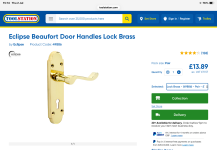
She’s reminded me we have friends coming over in 4 weeks who can bring one of these. Panic over!

IMG_0330.png
 
So it’s mid afternoon back in Boston US it’s 36/96 degrees depending on your thermometer and humid.
Time to puzzle out how to fit a uk mortice lock to a door that already has a bloomin great hole through it. It’s where the handle/knob fits that’s the real problem as the back plate is roughly the same size as the hole.
View attachment 55883
View attachment 55884
What think you all, do I rout out around the area and fit a couple of wood cheeks to screw to? But the lock needs 17mm and the door is only 35mm thick, so about 8 1/2 mil either side, I’ve bought the wrong type of handle, I am silly! Should have been one with a tall backplate which included the lock hole. Such things aren’t available here easily. I’ve also bought a couple of brass escutcheon plates.


Or do I just cut my losses and move the entire thing further up the door? But I’ve still got the problem of very short screws to hold the knob on with.
Or put the US knob arrangement back on and do without a lock till I can get the correct thing at the end of the year?

View attachment 55885View attachment 55886
Ps, I have no faith whatsoever in the sort of locks fitted over here hence the Mortice lock.
Make 2 plugs that fill the current holes in the door, glue them in. Door is now solid.
Mark and fit the new lock as per normal.
The square rod that goes through to activate the catch, is the key to this problem.
The door handles will have to be drilled and tapped to allow a grub screw to be fitted, clamping the rod inside the handle.
The rod could for extra security have dimples drilled to allow the grub screws extra purchase.
The handle screws being short have no real effect on the pulling open/shut of the door, the real strength is the square rod pulling on the far handle, the other side of the door.

Bod1
 
Yes Andy, that’s the best other alternative.
BUT, sorry folks my Wife has come up with the answer.
She’s reminded me we have friends coming over in 4 weeks who can bring one of these. Panic over!

View attachment 55898
I'd have offered to get what you needed and sent them on to you Ian, but, as you've got friends due to arrive in a few weeks, job done ✔️ 😉
 
Duke from what I’ve seen the first locks had a timber case , so guess originally it made no sense to let them in.
See some old ones by the Benedictine monks, they used them on their trunks.
Interesting, when was this style of lock first used? I guess to save time by not having to cut a mortised set?
 
I'd have offered to get what you needed and sent them on to you Ian, but, as you've got friends due to arrive in a few weeks, job done ✔️ 😉
That’s really thoughtful of you Frank! But yes problem solved thanks. And by 4 weeks time I’m doubtful if I shall even be needing the door to lock lol.
 
Interesting, when was this style of lock first used? I guess to save time by not having to cut a mortised set?
I don't know. Our own late Victorian house has plenty.
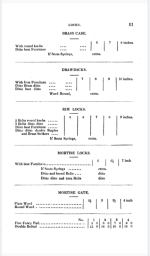
I don't know of many clearly dated sources, but Butler's Commercial List (1832), an early builders' price book, includes them:

Screenshot_20260703-104837.png
I find that lists like these always introduce new puzzles. What were the optional Scots springs and was it worth paying extra for them?
 
I know. "Scots springs" are heavier duty springs to bring a heavier lever handle back to horizontal and not droop.
My dad mentioned it once when I was trying to fix some heavy brass lever handles from a bank door to a home front door and droop they did.

Alex.
 
Interesting, when was this style of lock first used? I guess to save time by not having to cut a mortised set?

1830s was the first patented version but the general design is much older. My grandparents house had them (built late 1870s)
 
Back
Top