GaryR
Nordic Pine
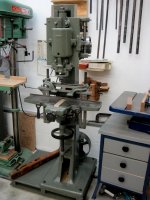
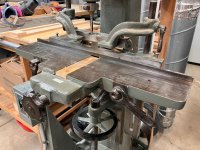
I had to do a bit of maintenance on this old flat belt driven girl today so I thought I would show her off. There is a good story behind her, too.
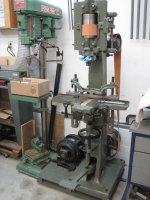
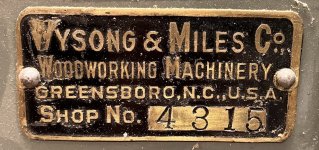
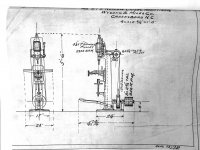
This is a Wysong and Miles #272, made in Greenesboro, North Carolina, USA in 1921. This was the first one they made, just before they switched to larger and direct drive morticers that they continued to make until the 1950's. They supported their legacy machines until about 1970 when they stopped making woodworking machines. Then a gentleman named Don Hege, who was the VP of operations, bought out their stock and machine manuals and records and set up a separate company dedicated to supporting all of the old W&M machines for as long as he could.
I bought my machine in 2013 from a millwork company that was having a sale of their no-longer used machinery. I met the man who ran the machine and he said he made hundreds of windows with it. As I was I leaving with the machine (for which I paid $125 USD) he stopped me and said, "Oh by the way, you might want these," and opened a box with several hundred dollars of chisels and bits.
There is more. The machine was complete with nothing broken or missing except the foot pedal. Broken long ago and replace with a hunk of oak. I knew about Don Hege and called him up hoping but not expecting he had a spare pedal for this machine that had not been made for almost 90 years. In a very thick southern USA accent he said, "Well, they made two different sizes. Which one do you want?" That shocked me into stuttering, "Ummm, I don't know!" He asked me to make some measurements, I did, and he said, "Let me go check in the back...." After awhile he returned to the phone and said, "No, I don't have that one." But then he said, "But I do have the pattern they used to cast it. Would you like me to cast you a new one?"
An original pattern, for a part of a machine made in 1921! Of course I said yes. I had the new part a few weeks later, with an apology that, "It took me awhile to find someone who could do it."
I did have to get a new flat belt made when I got the machine and swap a motor and some other minor updates. Here is what it looked like today after a change in pulleys.
https://www.youtube.com/shorts/7DWTQX0Xn28
This is a Wysong and Miles #272, made in Greenesboro, North Carolina, USA in 1921. This was the first one they made, just before they switched to larger and direct drive morticers that they continued to make until the 1950's. They supported their legacy machines until about 1970 when they stopped making woodworking machines. Then a gentleman named Don Hege, who was the VP of operations, bought out their stock and machine manuals and records and set up a separate company dedicated to supporting all of the old W&M machines for as long as he could.
I bought my machine in 2013 from a millwork company that was having a sale of their no-longer used machinery. I met the man who ran the machine and he said he made hundreds of windows with it. As I was I leaving with the machine (for which I paid $125 USD) he stopped me and said, "Oh by the way, you might want these," and opened a box with several hundred dollars of chisels and bits.
There is more. The machine was complete with nothing broken or missing except the foot pedal. Broken long ago and replace with a hunk of oak. I knew about Don Hege and called him up hoping but not expecting he had a spare pedal for this machine that had not been made for almost 90 years. In a very thick southern USA accent he said, "Well, they made two different sizes. Which one do you want?" That shocked me into stuttering, "Ummm, I don't know!" He asked me to make some measurements, I did, and he said, "Let me go check in the back...." After awhile he returned to the phone and said, "No, I don't have that one." But then he said, "But I do have the pattern they used to cast it. Would you like me to cast you a new one?"
An original pattern, for a part of a machine made in 1921! Of course I said yes. I had the new part a few weeks later, with an apology that, "It took me awhile to find someone who could do it."
I did have to get a new flat belt made when I got the machine and swap a motor and some other minor updates. Here is what it looked like today after a change in pulleys.
https://www.youtube.com/shorts/7DWTQX0Xn28