David_A14
Seedling
Readers of a previous project (diminished stile door in cherry, Feb '21) may remember that I received several exhortations to upgrade my B&D workmate into a proper bench. In order to create space for a proper bench I need some way of getting all of my tools out of boxes on the floor to rationalize some of the space. The good fortune of getting some reclaimed mahogany flooring, Dr Al's holiday toolchest project and previous posts on the Warrington toolchest inspired me to embark on building a traditional joiners toolchest.
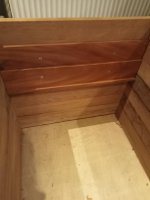
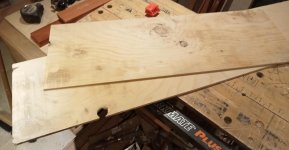
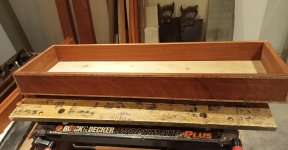
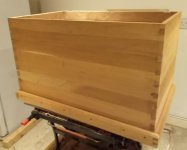
The mahogany came as 3" wide strips that were T&G jointed on the edges; these were glued up into panels, dovetailed together into a box and a skirt mitred around the base, like so:
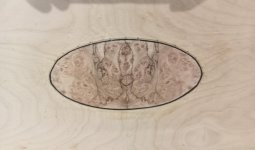
I wanted to have a bit more decoration on the inside of the chest lid, so sold a kidney to buy some birch ply as a ground and set to with the horse sauce and veneer hammer. Burr pepperwood with ebony and boxwood stringing:
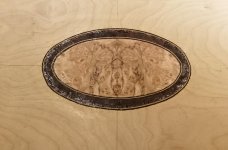
crossbanded with rosewood and more ebony/box stringing:
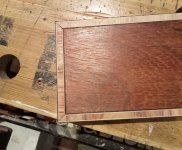
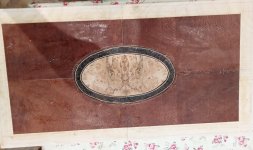
then quartered mahogany:
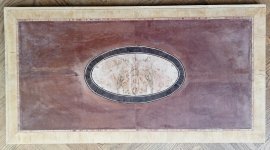
and a tulipwood inlay with satinwood banding:
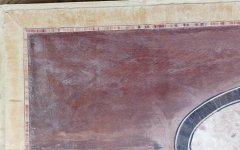
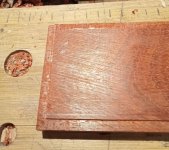
The top was then scraped
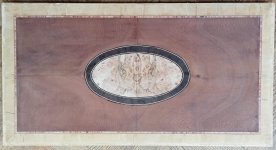
and finally french polished:
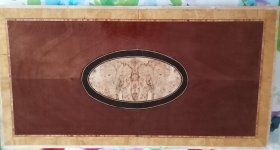
The polished top was framed-up to make the lid and morticed for hinges:
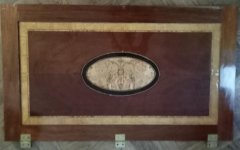
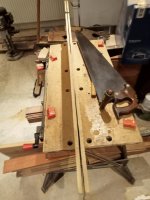
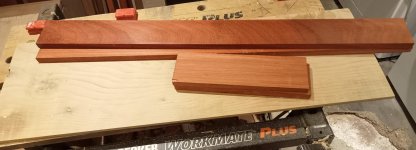
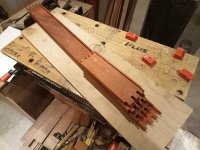
18th century joiners tried hard to keep their tools free from dust and grime when not in use and developed several types of shutting joint to that end. I'm using a hook joint here which entailed ripping the mahogany into thin strips, planing a rebate on one edge and then using a pair of no. 4 hollows and rounds to round over the edges of the rebates; like so:
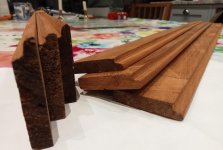
Reversing the faces of individual strip produces what was referred to as an air-tight case joint, which was mitred around the top and chest
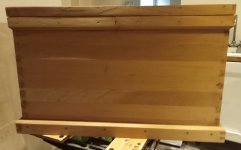
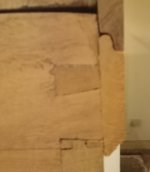
A close-up of the hook joint from the rear
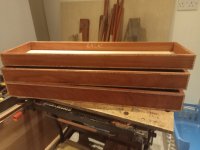
For the internal tills I worked up a pair of drawer runners from the solid. This will enable 3 tills of 75, 65 and 60mm height to be stacked on top of each other:
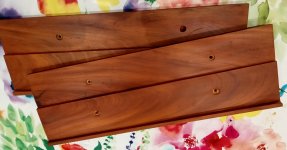
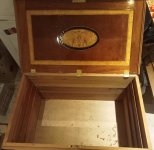
The runners were screwed to the inside of the chest, which finished the basic carcass
Onto the tills next.
David
The mahogany came as 3" wide strips that were T&G jointed on the edges; these were glued up into panels, dovetailed together into a box and a skirt mitred around the base, like so:
I wanted to have a bit more decoration on the inside of the chest lid, so sold a kidney to buy some birch ply as a ground and set to with the horse sauce and veneer hammer. Burr pepperwood with ebony and boxwood stringing:
crossbanded with rosewood and more ebony/box stringing:
then quartered mahogany:
and a tulipwood inlay with satinwood banding:
The top was then scraped
and finally french polished:
The polished top was framed-up to make the lid and morticed for hinges:
18th century joiners tried hard to keep their tools free from dust and grime when not in use and developed several types of shutting joint to that end. I'm using a hook joint here which entailed ripping the mahogany into thin strips, planing a rebate on one edge and then using a pair of no. 4 hollows and rounds to round over the edges of the rebates; like so:
Reversing the faces of individual strip produces what was referred to as an air-tight case joint, which was mitred around the top and chest
A close-up of the hook joint from the rear
For the internal tills I worked up a pair of drawer runners from the solid. This will enable 3 tills of 75, 65 and 60mm height to be stacked on top of each other:
The runners were screwed to the inside of the chest, which finished the basic carcass
Onto the tills next.
David