• Hi all and welcome to TheWoodHaven2 brought into the 21st Century, kicking and screaming! We all have Alasdair to thank for the vast bulk of the heavy lifting to get us here, no more so than me because he's taken away a huge burden of responsibility from my shoulders and brought us to this new shiny home, with all your previous content (hopefully) still intact! Please peruse and feed back. There is still plenty to do, like changing the colour scheme, adding the banner graphic, tweaking the odd setting here and there so I have added a new thread in the 'Technical Issues, Bugs and Feature Requests' forum for you to add any issues you find, any missing settings or just anything you'd like to see added/removed from the feature set that Xenforo offers. We will get to everything over the coming weeks so please be patient, but add anything at all to the thread I mention above and we promise to get to them over the next few days/weeks/months. In the meantime, please enjoy!

Guard for my Multico planer

DaveL

Old Oak
Joined
Jul 21, 2014
Messages
2,044
Reaction score
132
Location
Sudbury, Suffolk
I have a nice old multico 9" planer, bought second hand. I guess it may of had a guard when new but it was missing when the machine came to me. I saw a guard made by Frank Howarth on youtube for his huge old planer, he calls it a jointer!
Here is my scaled down version, the infeed bed has some studs still fitted.
Babergh-20130708-00192 by DaveL_, on Flickr
I cut a bit of beech to fit over them, counter boring the holes for the nuts to sit in, along with a off cut of broom handle as the pivot.
Babergh-20130708-00193 by DaveL_, on Flickr
Then a quadrant of ply for the guard.
Babergh-20130708-00195 by DaveL_, on Flickr
offered up to find the best place for the pivot, not here!
Babergh-20130708-00197 by DaveL_, on Flickr
But this works well
Babergh-20130708-00198 by DaveL_, on Flickr
I need to take another picture to complete this, I have fitted a couple of screw eyes with a bit of sting running down to a board with the old brake pads from a work mates bike to act as a counter balance to close the guard over the cutter head.
I know it probably does not meet any of the elfs requirements but it does provide some protection, which in my mind is better than none.
 
Dave:

What is it using for a pivot point? It looks from here like a tiny screw--are you sure that will last? If so, do you get much sag when it's pivoted all the way out?

As an aside, what are the grease zerks on the front of the table actually lubricating? If it's just the table raising mechanism, I'd wonder whether they'll get enough of a workout to require lubing more than once a decade or so.

Kirk
 
Kirk,
The guard pivots on the broom stick off cut, the screw was put to hold it together while the glue set.
qaguga3e.jpg

Here it is raised so the broom handle is more visible
na8yda9e.jpg

It all has a coating of wax to make it swing freely.
Yes the greasing points are for the rise and fall of bed, I have it set to take a 1/16" cut, I cannot remember when I last moved it
 
I've got the same planer in a lot rougher condition, I use it for dirty work. You get some good results from it. I had to make a guard as well.
 
Peter,
There is a hole just past the cutter head, you can see it in the second picture in the first post.
 
Peter Sefton":2x6z94m0 said:
These swivel boomerang guards always make me wince! I feel they are just not very safe.
Is there a hole just behind the cutter block for the mounting of a bridge guard on a post more in line with UK regs?
http://www.hse.gov.uk/pubns/wis17.pdf

I'm the exact opposite. I think our guards are silly, and the American/ Australian guards (as per Dave's DIY effort), are much more sensible and safe, so long as they are sprung to close when the workpiece has passed through.

What do you see as the problem with them, Peter?
 
Mike G":irake3pg said:
Peter Sefton":irake3pg said:
These swivel boomerang guards always make me wince! I feel they are just not very safe.
Is there a hole just behind the cutter block for the mounting of a bridge guard on a post more in line with UK regs?
http://www.hse.gov.uk/pubns/wis17.pdf

I'm the exact opposite. I think our guards are silly, and the American/ Australian guards (as per Dave's DIY effort), are much more sensible and safe, so long as they are sprung to close when the workpiece has passed through.

What do you see as the problem with them, Peter?

Mike the concerns on the Boomerang guards are two fold.

If you fall on the machine the guard pushes out of the way rather than protecting you from the cutter block.

This design allows you to pass your hands over the top of the cutter block, if you ever get kick back you have to hope that you didn't have your hand over the cutters. When kick back does happen it is very quick.

The regs state that

The bridge guard should be:
■ strong and rigid (to support heavy timbers) and made from a material such as wood or aluminium, so that in the event of contact with the cutter block, neither the guard nor the cutter block will disintegrate;
■ constructed so that it is not easily deflected, which would expose the cutter block;
■ long enough to cover the table gap with the fence at maximum adjustment. For large machines telescopic guards are available;
■ wide enough (at least equal to the cutter block diameter); and
■ easily adjustable horizontally and vertically without the use of a tool.


You may notice that the HSE make particular note that the Boomerang guard is illegal, the HSE and Europe have done a fair amount of testing with pigs trotters of the safety of guards and from historical data of accident reports have come up with their advice and Acops.


http://www.hse.gov.uk/woodworking/planer.htm
Guarding must also be adequate, note illegal “boomerang” guard that fails to adequately cover cutters.

I hope this explains my concerns but we will all have our own favourites.

Cheers Peter
 
Thanks for that considered response, Peter.

I have no doubt that the HSE has looked at the accident figures for both types of guard, but let me ask you this..........How many times have you seen the traditional British guard adjusted wider open than is necessary? Someone planes the face of a bit of 4" timber, and then shoots the edge. I'll bet that 9 times out of 10 that guard is 4-1/2" or more open when planing that edge, leaving 3 inches plus of unprotected spinning blade. Who turns their machine off between doing the faces and the edges of a bit of timber.......because turning it off is necessary to safely adjust the guard. It is silly to even think that people do that as a matter of routine. I certainly don't, and nobody who I have watched machining timber does. This means that the guard isn't properly adjusted for every pass.

As for passing the timber under the guard.......well, that leaves the whole blade open for a start, (think of the gap if you are planing something 4" thick), but worse than that, it means you can't apply pressure at the very place you want to apply pressure to the timber: the leading edge as you feed the work in. You end up holding the work 6 inches back, and so it is more likely to chatter, and more likely to kick back. If something is a nuisance and and inconvenience, it means people won't use it properly, so I am planning on converting my guard to the type my dad worked with his whole life, the American style pivoting guard as per Dave's photos. I'll live with the risk of falling onto the machine when the blade is spinning (how often does that actually happen?). Frankly, if it is good enough for a hand-held circular saw, it is good enough for a planer.

Mike
 
Mike this is an interesting argument but I am with peter. I hate HSE and think most of they say is rubbish and strongly disagree with much of the new euro legislation but when it comes to planer guards I am very pro bridge guard which all the world use (except north america) because its the best way to protect ones self. I agree with all you say regarding people not setting up the guard and my self am guilty of it as you are but the point peter is making is it is fixed, even badly adjusted it still covers most of the block, the pork chop moves around, it also does not allow the operator any vision of what is going on, it also changes the way it works by size of timber or position of timber on the bed. The bridge guard is a british invention and best in my opinion.

Having said all that they are your fingers and you should do what ever you feel the safe for your self.
Just my two pennys worth.

thanks mark.
 
Since I posted a picture of the Surty guard over on another thread recently, I'll repost it here with more information:
face_jointing.jpg


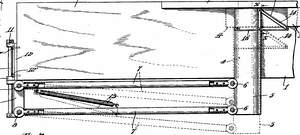
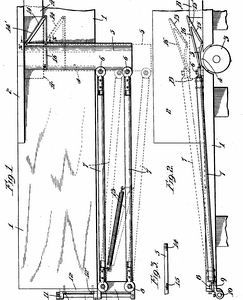
Here are some patent images:
5592-2.jpg


5592-1.jpg


For edge jointing, the guard swings out of the way, like the porkchop. For face jointing it rides over the top, but unlike the bridge guard it doesn't have to manually adjusted. For wider machines like mine, it telescopes so it doesn't stick out when the fence is move forward. And if you need to get it out of the way, such as to hone the knives or something, the whole guard is mounted on a pivot at the outfeed end of the jointer and you can tilt it up and out of the way.

The drawback are, of course, is that it undoubtedly cost more than the other options. And nobody seems to make it today. You could make your own of course--the patent is a hundred years old this year and long expired. And, for Mark, it's not British.:)

Kirk
 
Kirk, That is a great idea and I can see it working well . The cutter block would always be covered and the user can still see whats is going on, those long arms could be annoying but I would have one. I cannot see it being that expensive to make, what is the history of this guard, please tell us more.

thanks mark.
 
There isn't much out there on the company:
http://vintagemachinery.org/mfgindex/detail.aspx?id=1682&tab=0

The guards are common on old jointers. I haven't found the long arms to be in the way, but maybe that's because my jointer is pretty big. Here are a few other examples:
1497-A.jpg


4461-A.jpg


2878-A.jpg


Note that they bolt on to the back edge of the outfeed table, so you have to have a pretty decent casting there.

Kirk
 
Mike G":2yh53eal said:
....Who turns their machine off between doing the faces and the edges of a bit of timber.......because turning it off is necessary to safely adjust the guard. ...
I do.

Mike G":2yh53eal said:
You end up holding the work 6 inches back, and so it is more likely to chatter, and more likely to kick back.
But it's more like a couple of inches..not 6". I never have any problem with chatter as I always make sure I apply sufficient downward pressure.

Mike G":2yh53eal said:
Frankly, if it is good enough for a hand-held circular saw, it is good enough for a planer.
Mike

A lot of circular saws that I've seen have stiff guards that don't always drop back leaving the still spinning blade exposed.
 
RogerS":11p07ydo said:
......But it's more like a couple of inches..not 6"........

So as soon as you push the wood 2" you have to move your hand. And at that point, it hasn't emerged from under the guard onto the outfeed table, so for a split second you have only only one hand on the workpiece, at the back of the infeed table. Whereas with the swing-away type guard, your hand position doesn't have to change at all.
 
Mike G":34aeoh07 said:
RogerS":34aeoh07 said:
......But it's more like a couple of inches..not 6"........

So as soon as you push the wood 2" you have to move your hand. And at that point, it hasn't emerged from under the guard onto the outfeed table, so for a split second you have only only one hand on the workpiece, at the back of the infeed table. Whereas with the swing-away type guard, your hand position doesn't have to change at all.


Mike:
Since you're trying to get a single flat surface, the real place to be holding the wood down is just after, not just before, the cutterhead. I realize you have to start in front of the head, but even when I had a machine with a porkchop guard it always made me nervous to have my hand directly over the cutterhead when face jointing. So I always shoved the first part though while holding the wood 6 or 8 inches behind the leading edge. Maybe I'm usually using thicker and thus stiffer wood, but I've never had a problem with kickback or starting the cut.

Kirk
 
That's a good point, Kirk, re thickness. I can well imagine that a piece of stock, say, 2" square ( see what I did there ? ;) ) will have more chance of chattering.
 
I would say if your timber is chattering you need to sharpen or change your cutters or the cutters are to high.
Putting downward pressure over the cutter block is a recipe for disaster.
The way the produce flat timber is to move your hands onto the out feed table as soon as sufficient timber allows and use your hands to walk the timber through the machine.

The video here shows the approved code of practice Acop

http://www.hse.gov.uk/woodworking/planer.htm

In your own workshop you are free to use machines as you wish. In industry or a training environment we have to comply to the regulations. This is point of law, but as a teacher I would never wish a student under my supervision to suffer the accidents that do make the woodworking industry one of the most dangerous with 25% of all major accidents and two deaths in the past year.

I think the Surety guard looks even better than our Bridge guards and only wish I had one, My Felder does drop to cover the block if you fall on it.

Cheers Peter
 
Yes, I understand that these finer points of safety are significant within our industry, but I cant help feeling that driving to work on a busy road or motorway is far more dangerous (how many road deaths in, say, the UK, in the last 12m ?) and sometimes we get these things a bit out of proportion. :eusa-think: :eusa-think:
 
chataigner":jx0iiwrt said:
Yes, I understand that these finer points of safety are significant within our industry, but I cant help feeling that driving to work on a busy road or motorway is far more dangerous (how many road deaths in, say, the UK, in the last 12m ?) and sometimes we get these things a bit out of proportion. :eusa-think: :eusa-think:


1730 uk road deaths in the 12 months to June 2013 apparently.

Bob
 
chataigner":204npoeh said:
Yes, I understand that these finer points of safety are significant within our industry, but I cant help feeling that driving to work on a busy road or motorway is far more dangerous (how many road deaths in, say, the UK, in the last 12m ?) and sometimes we get these things a bit out of proportion. :eusa-think: :eusa-think:

Wrong argument. You have to factor in the millions and millions of miles driven by everyone in a year and then work out what the death rate is per mile. It vanishes to zero probability.

Then look at how long you are spent over a planer in a day/week etc.

Kind of mixing my arguments but I hope you get my drift.
 
Looks very good and very typical of US cutter block covers.
On another topic regarding the Multico jointer, I have just moved shop and the infeed table is raised at the end furthest away from the cutter head by about 1mm. Do you have any idea how to adjust this as I can make head nor tail of how to make this adjustment!
Cheers,
David
Custom Wood
 
Hi David
What machine do you have ???,is it a multico? maybe if you tell us and include a photo I am sure we can help,
 
Davidakky":2zeld3jt said:
Looks very good and very typical of US cutter block covers.
On another topic regarding the Multico jointer, I have just moved shop and the infeed table is raised at the end furthest away from the cutter head by about 1mm. Do you have any idea how to adjust this as I can make head nor tail of how to make this adjustment!
Cheers,
David
Custom Wood


I'm not familiar with your particular model but as the problem has surfaced after a workshop move, it rather looks like the tables have been used as convenient handles when lifting :o

Next time only move the machine on two lengths of timber attached to the central section of the machine in the manner of a sedan chair.
Depending on the design, there maybe scope for adding shims to correct the error or it maybe that some fixing bolts holding the cutting depth adjustment to the main body can be slackened and the adjustment done that way. What ever you do only make small movements at a time and understand the effect of each change before making another one. Furthermore make sure the tables stay coplanar across the width of the cut as well as end to end.
Lots of patience needed!
Good luck
Bob
 
Back
Top