• Hi all and welcome to TheWoodHaven2 brought into the 21st Century, kicking and screaming! We all have Alasdair to thank for the vast bulk of the heavy lifting to get us here, no more so than me because he's taken away a huge burden of responsibility from my shoulders and brought us to this new shiny home, with all your previous content (hopefully) still intact! Please peruse and feed back. There is still plenty to do, like changing the colour scheme, adding the banner graphic, tweaking the odd setting here and there so I have added a new thread in the 'Technical Issues, Bugs and Feature Requests' forum for you to add any issues you find, any missing settings or just anything you'd like to see added/removed from the feature set that Xenforo offers. We will get to everything over the coming weeks so please be patient, but add anything at all to the thread I mention above and we promise to get to them over the next few days/weeks/months. In the meantime, please enjoy!

Old texts on glazing

Windows

Old Oak
Joined
Jan 25, 2022
Messages
1,433
Reaction score
433
Location
Cumbria & West Kent
If anyone recalls where they have read about the traditional processes of glazing a window, book titles or links would be most appreciated (also online only references). “Traditional” is probably anything 1970s or earlier I guess. I’m particularly interested in whether there’s any that describe applying wooden beading, but putty-only descriptions also welcome.
 
If anyone recalls where they have read about the traditional processes of glazing a window, book titles or links would be most appreciated (also online only references). “Traditional” is probably anything 1970s or earlier I guess. I’m particularly interested in whether there’s any that describe applying wooden beading, but putty-only descriptions also welcome.
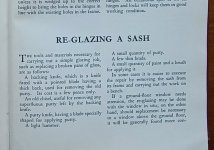
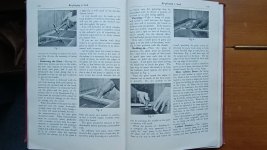
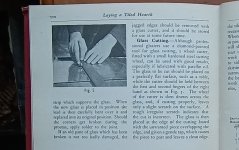
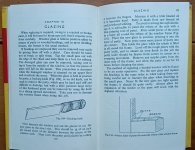
Ok, here's a few from my shelves. These are all from the 1950s.

The Handyman and Home Mechanic, Odhams Press.

IMG_20250408_102730710.jpg

IMG_20250408_102754922.jpg

IMG_20250408_102807350.jpg

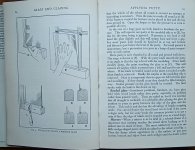
Handyman's How to Do It in Pictures, Odhams Press.

IMG_20250408_102103778.jpg

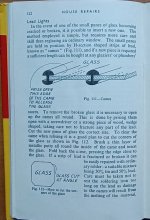
Teach Yourself House Repairs
Malcolm Stuart, English Universities Press.

IMG_20250408_102240428.jpg

IMG_20250408_102258042.jpg
 
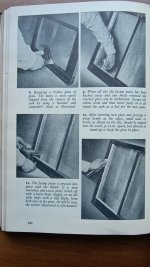
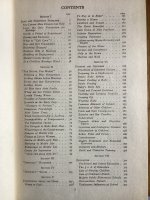
And here's Charles Hayward, remembering to include the details on wooden beads, in The Complete Handyman, Evans, 1960:

IMG_20250408_105507244.jpg
 
It's occurred to me that all those books are a bit brief and a bit modern.
If you don't mind a few hours reading to distract you from your projects, may I recommend "Every Man His Own Mechanic"?

It was tremendously popular in the 1880s and 90s and deserves (to my mind) some sort of award for the highest proportion of rambling verbiage to useful content. (But his digressions can be charming too.) The author, Francis Young, was also the editor of the periodicals "Work Illustrated" and "Amateur Work Illustrated" . The overall theme is that the careful householder, armed with a magazine subscription or a copy of the book, can see through the wily ways of deceitful tradesmen and do all sorts of jobs himself, for a fraction of the cost.

Here's the beginning of 16 pages on glazing, which even if it doesn't quite answer all your questions, will answer some you never thought of asking :)


You can also download the whole book as a pdf from that link.
 
About the only thing I can add is that sometimes on exterior doors that might slam in a wind they put a strip of chamois leather all the way around the glass, (bit like fitting a U section of plastic to a tenon saw blade). The glass panel was then held in place with a wood moulding and pins, quick wizz round with a blade to trim the leather back, presumably the leather gave just a bit of cushion to the glass as the door slammed.
Ian
 
I have a very similar tome from the same era which includes illustrations on the correct attire for the home workshop:)
View attachment 32882
I do thoroughly approve.

I started buying books like that one about 45 years ago, wanting to revise the basic, hand tool woodworking I learned at school. Now I feel I we are ahead of the curve and at risk of becoming fashionable!
 
Mine is a hand-me-down probably from maternal grandfather. From a similar era I also have Everyman’s Lawyer and Everybody’s Best Friend, just look at some of the subjects covered in that one.:)IMG_3990.jpeg
 
Lovely thread. My grandfather (who fought on the Somme!) Showed me how to putty in glazing on the farm when I was very little. I loved handling the putty and it was very tempting to leave a finger impression in the soft putty after it had been smoothed.
 
Handling putty....All I get is a sticky gluey mess. Shown by a painter and decorator, he could get the smooth handful, ready to "thumb" into the rebate, less than 20 seconds in my hand, stickly unusable mess!
Whats the secret?

Bod1
 
Three secrets that I know:
1. stick it in the fridge
2. wet your hands
3. mix it in the tub

In more detail:

Putty is sticky when it’s too oily. It can get too oily because the oil migrates to the surface. You can mix the oil back into it using a putty knife before you take it out of the tub.

Putty is temperature sensitive and softens with heat. If it is sticky or too loose because it’s too hot, stick it in the fridge for a bit.

Oil and water don’t mix, so you can prevent putty sticking to your hands by dipping them in water. The thin film of water will keep your hands cleaner. This is also a useful property for smoothing putty: dip your finger in water and use the slightly wet finger to smooth the surface of the putty.
 
Last edited:
Another secret:

Pass it to the nearest child and tell him to knead it until it's ready.
Then wait 50-60 years until he can enjoy reminiscing about the experience!
 
Last edited:
I once got caned at school for nicking the newly fixed putty from the classroom windows and lobbing it across the playground.
Thanks for the memories:)
 
Back
Top