• Hi all and welcome to TheWoodHaven2 brought into the 21st Century, kicking and screaming! We all have Alasdair to thank for the vast bulk of the heavy lifting to get us here, no more so than me because he's taken away a huge burden of responsibility from my shoulders and brought us to this new shiny home, with all your previous content (hopefully) still intact! Please peruse and feed back. There is still plenty to do, like changing the colour scheme, adding the banner graphic, tweaking the odd setting here and there so I have added a new thread in the 'Technical Issues, Bugs and Feature Requests' forum for you to add any issues you find, any missing settings or just anything you'd like to see added/removed from the feature set that Xenforo offers. We will get to everything over the coming weeks so please be patient, but add anything at all to the thread I mention above and we promise to get to them over the next few days/weeks/months. In the meantime, please enjoy!

Vintage tool collection - dating

Don McDermott

New Shoots
Joined
Nov 16, 2024
Messages
114
Reaction score
147
Name
Don McDermott
LOCATION
Bourne End
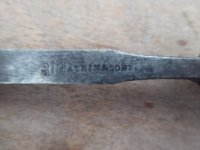
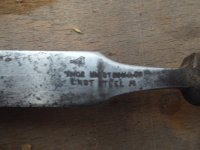
Hello everyone, new member here. I just bought a large collection of vintage woodworking tools, and I'm trying to get rough dates for when the tools are from. I've done a lot of internet research, and found dates for some, but there are still quite a few which have me stumped!
Some notes below on a few of them... Any help greatly appreciated!
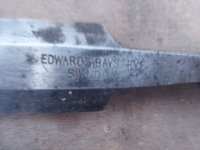
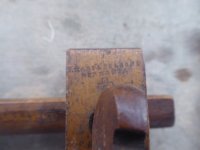
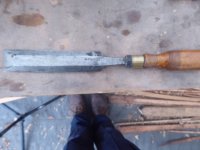
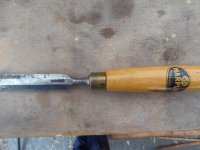
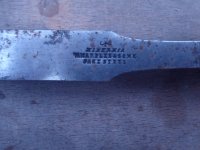
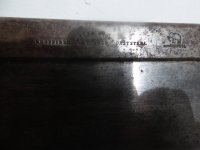
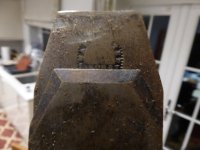
1 and 2. Information found elsewhere states: "Edwards, Bays & Rye – Ironmongers, founded in 1855 as Edwards & Thompson in Wood Street, and passing through several differently named partnerships becoming the above by 1903 and splitting into Bays & Co and Rye & Co by 1911." So since my chisel is marked Edwards, Bays and Rye, am I right to assume it must date between 1903 and 1911?
5. Marples chisel - According to a website about Marples, the green coloured shamrock in that design existed between 1958-1967, but possibly a few years after that as well, any confirmation of this?
7. From the same site, Marples chisel with Hibernia and triple Shamrock dates from between 1875 and 1943, any change of narrowing that down at all?
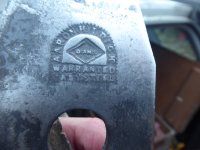
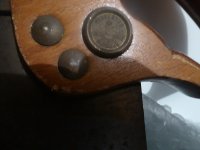
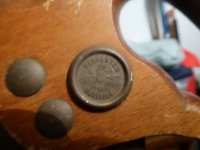
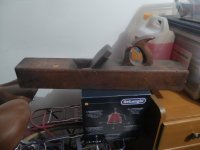
18 and 19. Aaron Hildick took over another company, Henry Taylor, in 1948. The Diamic trademark is still used today by Henry Taylor, but I don’t know if tools after 1948 would have said Aaron Hildick? I have emailed the company but if anyone here knows, that would be great.
Cont. in reply as I can't exceed 20 photos per post!
 

Attachments

  • 1 Edwards Bays and Rye - Swindon closeup.JPG
    1 Edwards Bays and Rye - Swindon closeup.JPG
    104.2 KB · Views: 12
  • 12 Possible Marple but what is it.JPG
    12 Possible Marple but what is it.JPG
    190 KB · Views: 14
  • 13 Another Marple with Hibernia and triple shamrock.JPG
    13 Another Marple with Hibernia and triple shamrock.JPG
    153.3 KB · Views: 14
  • 14 Another Marple with Hibernia and triple shamrock reverse.JPG
    14 Another Marple with Hibernia and triple shamrock reverse.JPG
    136.7 KB · Views: 14
  • 15 I Sorby.JPG
    15 I Sorby.JPG
    178.7 KB · Views: 13
  • 16 Yet another Marple chisel.JPG
    16 Yet another Marple chisel.JPG
    135.5 KB · Views: 14
  • 17 I cannot make out the trade name.JPG
    17 I cannot make out the trade name.JPG
    117.6 KB · Views: 15
  • 18 Aaron Hildick plane.JPG
    18 Aaron Hildick plane.JPG
    152.8 KB · Views: 15
  • 19 Aaron Hildick plane 2.JPG
    19 Aaron Hildick plane 2.JPG
    79.3 KB · Views: 12
  • 11 Marple marking Gauge closeup.JPG
    11 Marple marking Gauge closeup.JPG
    73.2 KB · Views: 9
  • 10 Marple marking gauge.JPG
    10 Marple marking gauge.JPG
    136.7 KB · Views: 11
  • 2 Edwards Bays and Rye chisel 1903-11.JPG
    2 Edwards Bays and Rye chisel 1903-11.JPG
    99.6 KB · Views: 10
  • 3 I and H Sorby chisel.JPG
    3 I and H Sorby chisel.JPG
    50.6 KB · Views: 10
  • 4 I and H Sorby closeup.JPG
    4 I and H Sorby closeup.JPG
    121.3 KB · Views: 9
  • 5 Marples chisel.JPG
    5 Marples chisel.JPG
    145.8 KB · Views: 8
  • 6 Marples chisel - Hibernia and triple shamrock.JPG
    6 Marples chisel - Hibernia and triple shamrock.JPG
    172.6 KB · Views: 9
  • 7 Marples chisel -Hibernia and triple shamrock closeup.JPG
    7 Marples chisel -Hibernia and triple shamrock closeup.JPG
    139.1 KB · Views: 10
  • 8 Atkin and Sons chisel.JPG
    8 Atkin and Sons chisel.JPG
    81.2 KB · Views: 10
  • 9 Thos Ibbotsen and Co chisel.JPG
    9 Thos Ibbotsen and Co chisel.JPG
    123.3 KB · Views: 12
25. From the internet, Charles Nurse & Co were at 182 Walworth Road in London from 1887-1949. Again, any change of narrowing that down? If more info/photos needed, let me know. Again, thanks in advance, literally any information on any of these would be great!
 

Attachments

  • 25 C Nurse and Co dovetail saw.JPG
    25 C Nurse and Co dovetail saw.JPG
    81.9 KB · Views: 6
  • 24 W Tyzak and Sons gents saw.JPG
    24 W Tyzak and Sons gents saw.JPG
    111.9 KB · Views: 6
  • 23 Another look at the saw.JPG
    23 Another look at the saw.JPG
    91.3 KB · Views: 8
  • 22 Saw which I cannot read looks Latin.JPG
    22 Saw which I cannot read looks Latin.JPG
    88.2 KB · Views: 8
  • 21 I Sorby Plane 2.JPG
    21 I Sorby Plane 2.JPG
    100.1 KB · Views: 8
  • 20 I Sorby plane.JPG
    20 I Sorby plane.JPG
    130.4 KB · Views: 7
Good morning Don and welcome to the forum. That’s quite a weighty first post.
Are these all additions to your existing workshop tool set ? What sort of wood bashing floats your boat?
 
Welcome, Don. Luckily, one of Britain's experts on hand tool history is a member here, and will no doubt be along shortly. When AndyT speaks, take note!! :)
 
And welcome Don from me too. Mike's good at flattery - "expert" is a bit strong, but I'll do what I can to help.

For now, I'll just say that my entire knowledge of old ironmongers in Swindon is in this thread, from a couple of years ago:


I'll pick up on some of your other questions after breakfast. :)
 
Good morning Don and welcome to the forum. That’s quite a weighty first post.
Are these all additions to your existing workshop tool set ? What sort of wood bashing floats your boat?
Thank you for the welcome! These are indeed additions to my current tool set, which is a mix of modern and vintage. "Floats your boat" was a well-chosen phrase, because boatbuilding is the kind of woodworking I do, both as a profession and hobby! I work at a boatyard on the Thames, and in my spare time, I'm about to start building myself a 48 foot clinker sailing boat.
 
I hope you will be able to share some photos, we do like photos, of your projects. Boatbuilding on the Thames not only sounds interesting but in many ways romantic.
 
Thank you for the welcome! These are indeed additions to my current tool set, which is a mix of modern and vintage. "Floats your boat" was a well-chosen phrase, because boatbuilding is the kind of woodworking I do, both as a profession and hobby! I work at a boatyard on the Thames, and in my spare time, I'm about to start building myself a 48 foot clinker sailing boat.
Not a Norfolk trading wherry, perchance?
 
Welcome from Northumberland Don.

That little weekend project looks interesting, will it be done in your shed, garage, garden or at the boatyard? I'm in awe, I started a model sailing ship nearly two years ago and haven't got the hull finished yet but that's only 2 1/2 feet long not 48. ;)
 
I started a model sailing ship nearly two years ago and haven't got the hull finished yet but that's only 2 1/2 feet long not 48.

I must have missed your thread. Got a link? ;)
 
Ok Don, I'll take your questions in order and add some general tips.


5. Marples chisel - According to a website about Marples, the green coloured shamrock in that design existed between 1958-1967, but possibly a few years after that as well, any confirmation of this?
7. From the same site, Marples chisel with Hibernia and triple Shamrock dates from between 1875 and 1943, any change of narrowing that down at all?

I hope the website you found is this one - Roger Ball's site here:


It's a long, detailed exploration of the history of Marples, starting from someone much like us, who has a range of their tools and wants to know more about them. It can be hard to follow, as the history is so long and complicated, but I'm not aware of anyone who has done a better job. I can't add any detail to what he has done there on deducing dates from catalogues.

Catalogues are a great resource for identifying tools and finding out possible dates when they were offered for sale. But a few caveats:
- In early catalogues (late 19th/early 20th century) it was very common for printers to hold blocks for printing the pictures, which were not specific to any one maker. This was fine for a long time, when tools were highly standardised and illustrations were expensive. But it does mean that subtle details of design or branding were of no concern to the companies or their customers.

- Establishing a brand is nothing new. Tool companies were very good at it, pioneering the use of simple to reproduce images and made-up trade marks. The successful ones were valuable as intellectual property, and could be traded independently of any production capacity. So if a firm went bust, or was bought out by a competitor, acquiring the brands mattered a lot. Thus old brands, initially reflecting an owner/maker, stayed in use for many decades after their original maker was dead and buried.

- With families such as Marples, whose companies absorbed a bewildering number of other companies, old trade marks could continue in use just because some markets or territories preferred them. I don't have a copy, but I have seen a copy of the 1938 I Sorby catalogue. Page by page, it's identical to my 1938 Marples catalogue, except that every tool is shown marked "Sorby" instead of "Marples".

- Even big manufacturers such as Marples didn't make all the tools they sold. The Sheffield trade was a web of sub-contracting, where a host of small businesses could specialise in making a narrow range of tools or doing just one or two processes in their manufacture. Those specialists often had an assortment of maker's marks. (Just like the same few companies make all the different pre-packed sandwiches for supermarkets today.)

Thousands of old catalogues have been scanned by tool collectors and are available to all, through the International Tool Catalogue Library, at the Internet Archive. This link will take you to the top of the collection


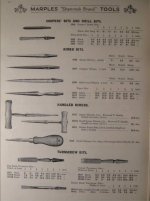
and here is an image from there, of my 1938 Marples catalogue, to help identify the reamer/rimer in your second photo:

https://archive.org/details/wm-marples-and-sons-1938/page/43/mode/1up?view=theater
Wm Marples and Sons 1938_0065.jpg


18 and 19. Aaron Hildick took over another company, Henry Taylor, in 1948. The Diamic trademark is still used today by Henry Taylor, but I don’t know if tools after 1948 would have said Aaron Hildick? I have emailed the company but if anyone here knows, that would be great.

This is the sort of tangle that is hard to sort out, and I think you have done the right thing if you want to know for sure.

But I will just mention that the online register of UK Trade Marks at the IPO is quite useful. Start here for research on records going back to 1876 (but I'd be surprised if all the historic records were ever digitised.)


If you search for the keyword Diamic, you'll see that it was first registered in 1899, was owned by Aaron Hildick (not necessarily from that date) and was later owned by Henry Taylor (Tools) Limited. (As far as I can see from the register though, it expired in 2014, so maybe they no longer use it.)


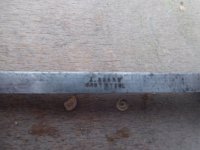
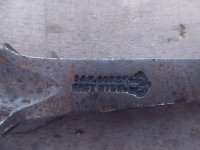
I can't help much on your hard to read mark, presumably on a chisel. It looks to me as if the name ends in ORTSAL and the line below has two place names, one ending in D and the other LONDON. I think it was commoner to find a reseller in two places rather than a manufacturer, so it may be a long-disappeared ironmonger.

25. From the internet, Charles Nurse & Co were at 182 Walworth Road in London from 1887-1949. Again, any change of narrowing that down? If more info/photos needed, let me know. Again, thanks in advance, literally any information on any of these would be great!

With Charles Nurse, there is good information in their catalogues about their prestigious London shops. You can read/download their 1902 catalogue from the ITCL here - https://archive.org/details/c-nurse-and-co-price-list-12th-ed-1902
and when I get round to scanning it, their 1920 catalogue too.

But the good news is that planemakers have already had years of research by collectors and there are excellent reference books available. The most relevant here is "Goodman's British Planemakers 4th Edition" by Jane Rees, published in 2020 by the Astragal Press. http://astragalpress.com/books/9781931626446

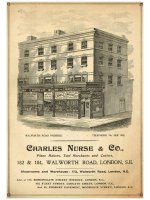
Jane is a very thorough, careful historian. In compiling the book, she consulted the available records, including catalogues and trade directories, so the easiest way to confirm Nurse's addresses is to look at what she lists (on page 485). She has them at 181 & 183 Walworth Road from 1909 to 1937 and 182 & 184 Walworth Road (ie on the opposite corner) from 1887 to 1908.

Here's the 182-184 shop, from the 1902 catalogue:

C Nurse and Co Price List 12th Ed 1902_0002.jpg


Finally, the words on your Warranted Superior saw are "DIEU ET MON DROIT" which you may kick yourself for not recognising ;)

Do show us more of what you have and ask more questions. My own interest in old tools started a few decades ago when I bought a nice old vice on eBay which 'just happened' to come with a small chest of old tools. I wasn't familiar with them all, and wanted to know more about how they worked and who made them, when. With a bit of a nudge, who knows where you might get to!
 
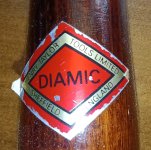
I've just realised that I can contribute one data point to answer your Hildick question - this is the sticker on a bowl gouge I bought in the early 1990s:

IMG_20241117_115042821.jpg
 
Finally, the words on your Warranted Superior saw are "DIEU ET MON DROIT" which you may kick yourself for not recognising

Don is American. They don't have the French as neighbours, and fought a war with us to remove the rule of our king/s who might have had it as their motto.
 
Don is American. They don't have the French as neighbours, and fought a war with us to remove the rule of our king/s who might have had it as their motto.
Sorry! Not sure how I would have guessed that, but no offence meant.
 
Andy, wow, that's a lot of information, thank you so much! So following on from a few points:
1. Edwards, Bays and Rye - I now realise that it was your post that I was quoting! I assume, if the company split in two in the early 1900s, that neither of the new companies (Bays & Co and Rye & Co) would have used "Edwards, Bays and Rye" on any of their tools, so I can assume that chisel is from the early 1900s, before the split?
2. Yes, it was Roger Ball's site I was using, amazing wealth of detail on there!
3. That is very helpful on Charles Nurse, since my saw clearly says 182 Walworth Road, then the saw must be between 1887 to 1908, before they moved, or someone switched the street signs, whichever it was. 4
4. I will let you all know, as a matter of interest, if I hear back from Henry Taylor. I think it's quite interesting that it was Hildick that bought out Taylor, and yet the company name going forward was Henry Taylor. Makes one wonder if Taylor's name was more highly regarded than Hildick's at the time...
5. Mike is partially right. I used to be American, but am now British, so no excuses for me not knowing that phrase! However, I can recite the wives of Henry VIII in order if anyone wants, and most of the monarchs (not in order) since 1066, so... swings and roundabouts.
6. I already can tell I have fallen down the rabbit hole of vintage tool identification/collection, and I doubt I will ever recover! :) Some of the tools, particularly saws, have a lot of rust, so once I clean them up, I might be able to spot some names/trademarks which I will have more questions about.
 
Not a Norfolk trading wherry, perchance?
Rather good guess, that! ;)
Welcome from Northumberland Don.

That little weekend project looks interesting, will it be done in your shed, garage, garden or at the boatyard? I'm in awe, I started a model sailing ship nearly two years ago and haven't got the hull finished yet but that's only 2 1/2 feet long not 48. ;)
Thank you! I've come to an arrangement with the boatyard to rent some space to build the wherry. It's going to be quite a project! Model making is a skill that I admire, because of all the fine little details, which are in many ways more difficult than doing them full size.
I hope you will be able to share some photos, we do like photos, of your projects. Boatbuilding on the Thames not only sounds interesting but in many ways romantic.
Of course! Is there a specific thread for posting project photos? I am progressing nicely on a nine foot dinghy, which will be the tender for the larger boat, and I have quite a few photos showing the progression.
 
I suggest you start your own thread on something like that on the Projects and Wip Board.

Posting images can something curfuddle people not used to the way forums work. There is a guide here:-
Or just shout as they are plenty around who can help.
 
I must have missed your thread. Got a link? ;)
OOPS. it was 3 years ago, I can't believe that.
You actually posted on the thread Mike saying it would likely take me longer than you with your house project and it looks as if you're right. https://www.thewoodhaven2.co.uk/threads/large-model-sailing-ship.6607/

I haven't done a WIP, just as well but did take various photos and made notes so will eventually when there's more to show. The hull is assembled with deck and first layer of planking but the more intricate and important top layer is next to be done. I found that some of that was missing so had to cut down mahogany into thick veneer strips which took ages, then life got in the way. I've just sold our motorhome so will have more faffing about time going forward.
 
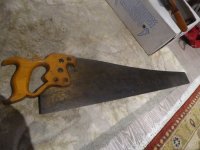
Looking closer at some of the saws, anyone know anything about "Majestic" 249 saw (photo 921), online research indicates that this is an E.T. Roberts and Lee saw, although that wording, being lower down, has been completely rubbed off the one I've got.
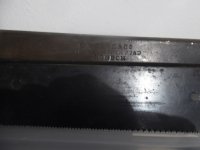
Also have a Buck and Hickman saw (photo 924), lots more wording on it that I can't read because of rust/etc, what's the best way to clean that off without rubbing off the faint wording?
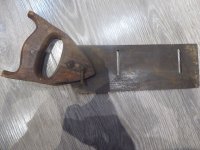
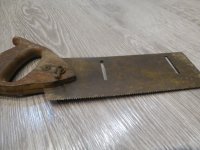
There's a third saw which is such a mess (photos 928 and 929), I can't see any wording at all, but thought because of the design, someone might recognise it, or have a vague idea of what sort of era it might be from?
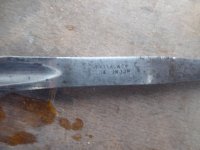
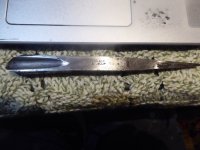
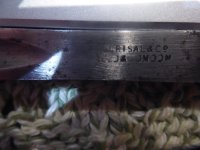
Also, Andy, I've cleaned up the one you thought ended in ortsal. It now might be surtsal or surisal and co, and it looks like it's some place ending in D, along with, you are quite right, London.
 

Attachments

  • P1000923.JPG
    P1000923.JPG
    146.1 KB · Views: 13
  • P1000922.JPG
    P1000922.JPG
    114.5 KB · Views: 14
  • P1000929.JPG
    P1000929.JPG
    201.9 KB · Views: 13
  • P1000928.JPG
    P1000928.JPG
    159.6 KB · Views: 9
  • P1000924.JPG
    P1000924.JPG
    163.9 KB · Views: 9
  • P1000921.JPG
    P1000921.JPG
    86.1 KB · Views: 10
Last edited:
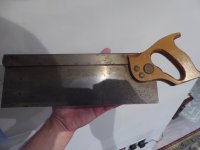
Is that one with the reversable handle and the slots in the plate possibly a kerfing saw (I know some people call them kerfing planes)? The slots are obviously for some sort of guide or depth stop.
 
So many directions to go in at once!

To start with the easiest question - how to clean the rust off non-destructively and reveal an etch.

The UK's most knowledgeable expert on saws and their history is Dr Simon Barley. He has written two essential books. "British Saws A History and Collector's Guide" published by Amberley in 2016 at £14.99, ISBN 978 1 4456 4974 0, a general introduction to lure new collectors in, and the monumental "British Saws and Sawmakers from c1660, 2014, Choir Press, ISBN 978 1 909300 74 3. This is a 700+ page print on demand title, and has had extensive revision since it first appeared. See https://www.taths.org.uk/reading/member-publications/193-barley-saws for more info.

Simon's advice on cleaning is to use physical removal, rather than acids or rust converters. He recommends garnet paper, used dry, because it is harder than rust but softer than steel, so won't make scratches on the surface, working through the grits from 60 or 80 to 240. If there is only light rust, start at 120.

He acknowledges that plenty of us have used fine wet&dry with plenty of WD40 and got on ok. I've also had some success with scrunched up aluminium foil and a few spots of Autosol polish. For awkward parts eg around the handle, he says to use a glass fibre eraser pen (widely available online) - I can confirm that these are good for all sorts of small rust removal jobs.

His book confirms that "Majestic" was a trade mark used by London sawmakers Roberts and Lee for their second quality line and that the company (with its trade marks) was acquired by Thomas Flinn (now our only mainstream maker of hand saws) in 1980.

More later after tea!
 
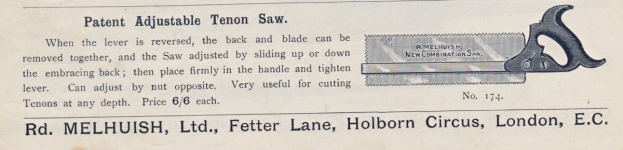
I've been looking for your adjustable saw. I thought I had seen it somewhere, but as far as I can tell, Simon doesn't mention it (!). The nearest I can find is this one, from the 1905 catalogue issued by Richard Melhuish. They definitely targeted the "gentleman woodworker" with some of their odder offerings and I think that might be what this is, a tool that looks useful to someone inexperienced.
My guess is that yours could be a near copy without those essential teeth on the end but maybe with a more robust fence, held in place with a pair of wingnuts.

It was still offered in their 1925 catalogue, but in the troubled post-war economy it had gone up to 13s 6d.


1731959695524.png

Apparently, makers of tools sold as 'patent' designs didn't always go to the expense of taking out a patent, but you could have fun trying to find one. US patents are much easier to research online, especially if you use the very helpful datamp.org website, which just covers tools. (I did find one there with slots in the blade, but it was for making evenly spaced grooves, with a second blade clamped on to the first one, and had no need of two sets of teeth.)

I think the fad for 'kerfing saws' is a recent fad promoted by online woodworkers, and doesn't have a precedent in commercial patterns.
 
Looking at the Majestic in your picture 921, I'd date it at somewhere in the 60s or 70s - the handle is very simply machined, probably with a template-guided overhead router. The teeth look quite fine, which might make it useful for dovetails.

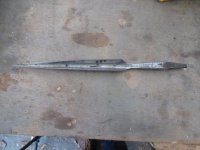
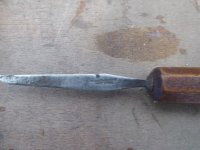
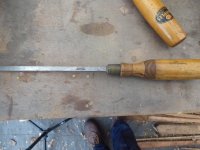
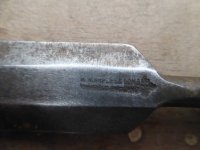
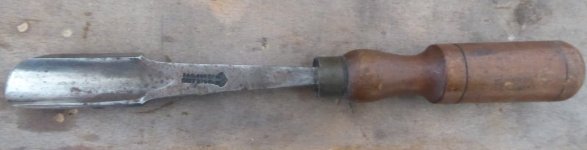
And your odd little gouge type thing from surtsal or whoever, I'm out of ideas altogether. I don't have a searchable list of UK towns to find all those ending in D - but someone else might have. Plenty of places end in -FORD or -END - could it be either of those?
The tool itself is odd - it's much thicker than an ordinary joiner's gouge, and it has no bolster. Maybe it's an old carbon steel turning gouge shortened by repeated grinding and lacking its long wooden handle? I'm just guessing on this one.
 
Looking at the Majestic in your picture 921, I'd date it at somewhere in the 60s or 70s - the handle is very simply machined, probably with a template-guided overhead router. The teeth look quite fine, which might make it useful for dovetails.

And your odd little gouge type thing from surtsal or whoever, I'm out of ideas altogether. I don't have a searchable list of UK towns to find all those ending in D - but someone else might have. Plenty of places end in -FORD or -END - could it be either of those?
The tool itself is odd - it's much thicker than an ordinary joiner's gouge, and it has no bolster. Maybe it's an old carbon steel turning gouge shortened by repeated grinding and lacking its long wooden handle? I'm just guessing on this one.
Sheffield & London?
Cheers, Andy
 
That's what so good about a forum like this - the collective wisdom is more than the sum of the parts. I think Andy must be right - which other two places would be worth mentioning in the same breath, as it were.

What's more, he's probably got a gouge like that somewhere, and one of those fancy adjustable two-edged saws!
 
Andy, I just happened to Google "fount of information" and all that came up was your name. ;) I will look into getting some garnet paper, and then maybe I can find out more details on the Buck and Hickman saw. Thanks for the Majestic dating, good to have a general idea. Interesting that it's their secondary line, from what I've seen I guess Dorchester was their top-end line? That seems to be what Thomas Flinn sells.
That ad for the adjustable saw does indeed look a lot like mine. The handle is "simpler" which might suggest a lower-quality copy. Or could it be a later version of the Melhuish saw, perhaps after 1925, slightly different design? Presumable, copy or not, it's pre-WW2, unless somebody saw the Melhuish saw 50 years later and thought it was so grand they had to copy it... Surprised they would have left off those teeth at the end, how's the saw going to function without them. ;)
We always yearn for what we do not have, so my life's ambition is now, of course, to find out everything about that gouge thing.
 
Just to save anyone else's time - I thought a good move at this point would be to go to the Sheffield Indexers site at http://sheffieldindexers.com/DirectoriesIndex.html to search 13 old trade directories and more... I tried searching for *SAL in the surname/company field, which should find any ironmongers, tool makers etc or even just private individuals with a name ending in those letters - and got nothing. (I did test the search on some easy ones like *PLES, to prove that the search function does work as advertised - and it did.)

Never mind, it's a very useful site for other Sheffield/tool related info.
 
Sheffield & London?
Cheers, Andy
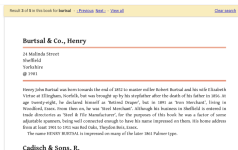
Got it! It's Henry Burtsal and Co, Sheffield and London. Thank you both, that was really getting frustrating! Now... anyone know anything about Henry Burtsal?
 
Brilliant! I see from presumably the same sort of search that you just did that they made nice, clearly-marked adjustable spanners for railway companies. So I turned immediately to my copy of Ron Geesin's book "The Adjustable Spanner, History, origins and development to 1970" only to find that they are not mentioned in it! Never mind, I think the other Andy has a copy of Volume 2, which might be what we need. There's nothing at Grace's Guide, but maybe it's the same outfit who made the rather nice lathe here:


img1.jpg
 
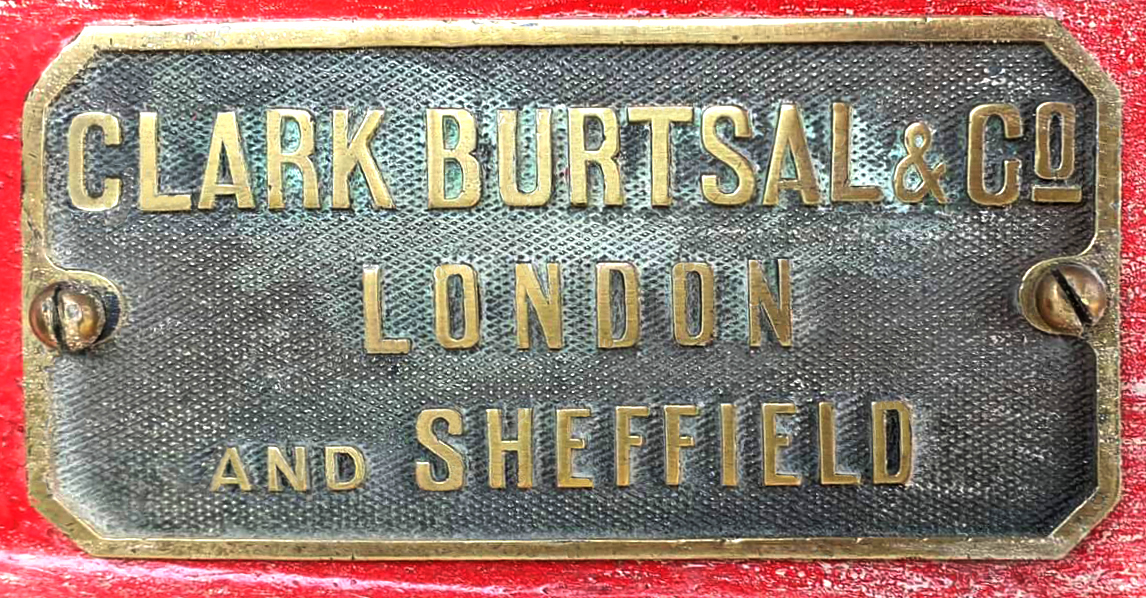
Yes, I just spotted that lathe as well. Hard to believe there could be two unrelated companies called Henry Burtsal & Co London & Sheffield and Clark Burtsal & Co London & Sheffield, but I suppose stranger things have happened.
 
I need to go and do other things for a while... but when you have a minute, go to archive.org and search the text contents of their text collection for the conveniently rare name Burtsal. You should get a few hits from Kelly's and other old trade directories. The 1921 issue, for example, lists Henry Burtsal in with the steel makers of Sheffield at Belinda Street, and in London as Edge Tool Makers at 116 Hamilton House, Bishopsgate. In the 1969 issue they are at the same addresses but the London entry puts them in the Engineer's Tool Makers category. I think that explains the dual location and how they put their name to adjustable spanners and a gouge, two different markets.
 
The saw with slots maybe referred to as trenching or staircase?
I think the "teeth" (notches) on the end of the Melhuish one are the depth locaters for the adjustable depth stop and possibly locked into by a cam on the lever shaft. I can't remember if I have one...:unsure::LOL:
Cheers, Andy
 
The saw with slots maybe referred to as trenching or staircase?
I think the "teeth" (notches) on the end of the Melhuish one are the depth locaters for the adjustable depth stop and possibly locked into by a cam on the lever shaft. I can't remember if I have one...:unsure::LOL:
Cheers, Andy
That would make more sense... I think I have a stash of photos of stair saws from when Ted was deeply interested in them.
 
Link worked for me as well, thanks AndyT! Using that info, looks like he died in 1933 from online records, which is also the final year the company showed up in the few Kelly's on Internet Archive that name his company. Pending evidence to the contrary, I'll assume that the company ceased to exist with his death, and date the gouge late 1800s-early 1900s. Not sure how often I will use it, but I reckon it's interesting enough to make a new wooden handle for it, anyway.
 
Back
Top