Steve Maskery
Old Oak
I used to have a wonderful workshop. Big, airy, light and above all, DRY.
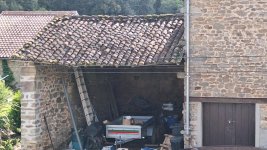
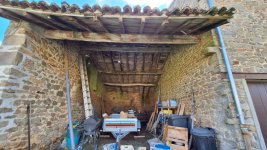
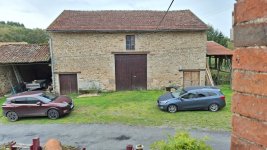
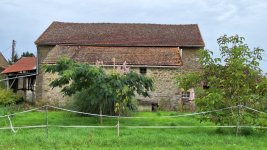
I now have a 200-year-old barn...
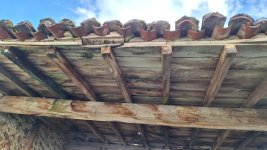
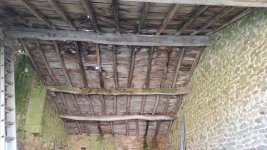
The roof has more holes than a pair of fish-nets.
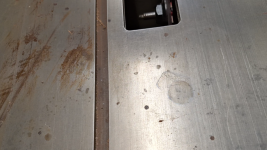
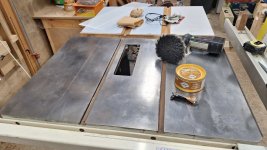
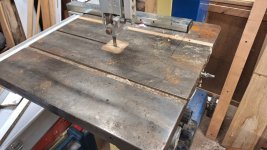
I've been away for a couple of weeks and since then we have both been poorly, so not much has been done. I went into the barn yesterday to find my tablesaw covered in little rust spots and some smeared rust. It was't like that a month ago, but we have had some absolute deluges in that time, so I'm not surprised that some of it has found its way onto my saw.
I've cleaned the rust off as best I can, but some of it has etched the cast iron, so I can't get rid of it completely without cutting into the casting and risking losing the flatness (which is pretty good).
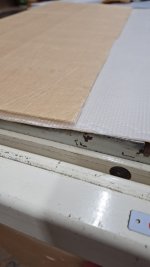
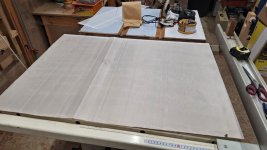
I have a roll of anti-rust paper (there is a proper name for it, but I've forgotten what it is), which I plan to stick to a thin board (twin-wall masking board) to cover the table. The paper has a shiny side and a matt side. Does it matter which side goes in contact with the casting?
Many thanks
Steve
I now have a 200-year-old barn...
The roof has more holes than a pair of fish-nets.
I've been away for a couple of weeks and since then we have both been poorly, so not much has been done. I went into the barn yesterday to find my tablesaw covered in little rust spots and some smeared rust. It was't like that a month ago, but we have had some absolute deluges in that time, so I'm not surprised that some of it has found its way onto my saw.
I've cleaned the rust off as best I can, but some of it has etched the cast iron, so I can't get rid of it completely without cutting into the casting and risking losing the flatness (which is pretty good).
I have a roll of anti-rust paper (there is a proper name for it, but I've forgotten what it is), which I plan to stick to a thin board (twin-wall masking board) to cover the table. The paper has a shiny side and a matt side. Does it matter which side goes in contact with the casting?
Many thanks
Steve
Last edited: