• Hi all and welcome to TheWoodHaven2 brought into the 21st Century, kicking and screaming! We all have Alasdair to thank for the vast bulk of the heavy lifting to get us here, no more so than me because he's taken away a huge burden of responsibility from my shoulders and brought us to this new shiny home, with all your previous content (hopefully) still intact! Please peruse and feed back. There is still plenty to do, like changing the colour scheme, adding the banner graphic, tweaking the odd setting here and there so I have added a new thread in the 'Technical Issues, Bugs and Feature Requests' forum for you to add any issues you find, any missing settings or just anything you'd like to see added/removed from the feature set that Xenforo offers. We will get to everything over the coming weeks so please be patient, but add anything at all to the thread I mention above and we promise to get to them over the next few days/weeks/months. In the meantime, please enjoy!

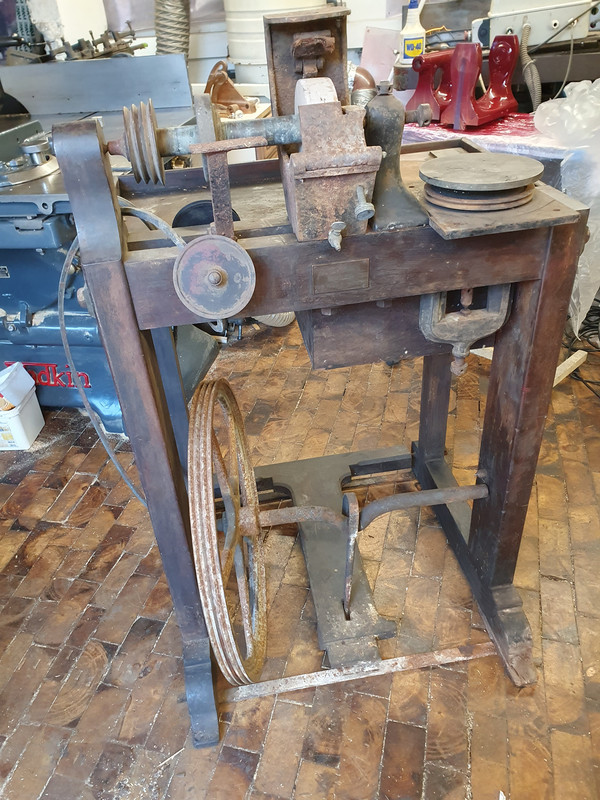
Ornamental lathe restoration

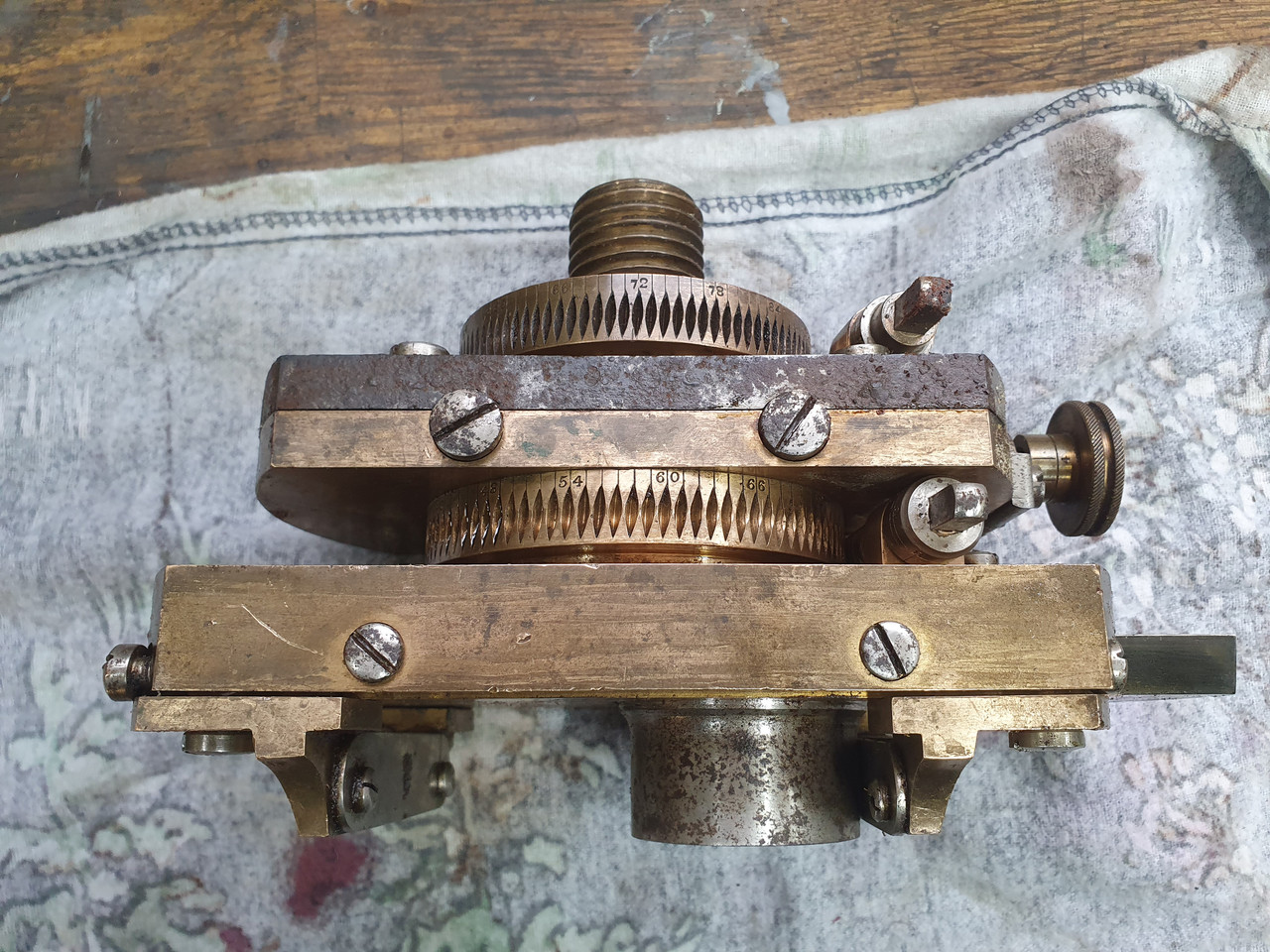
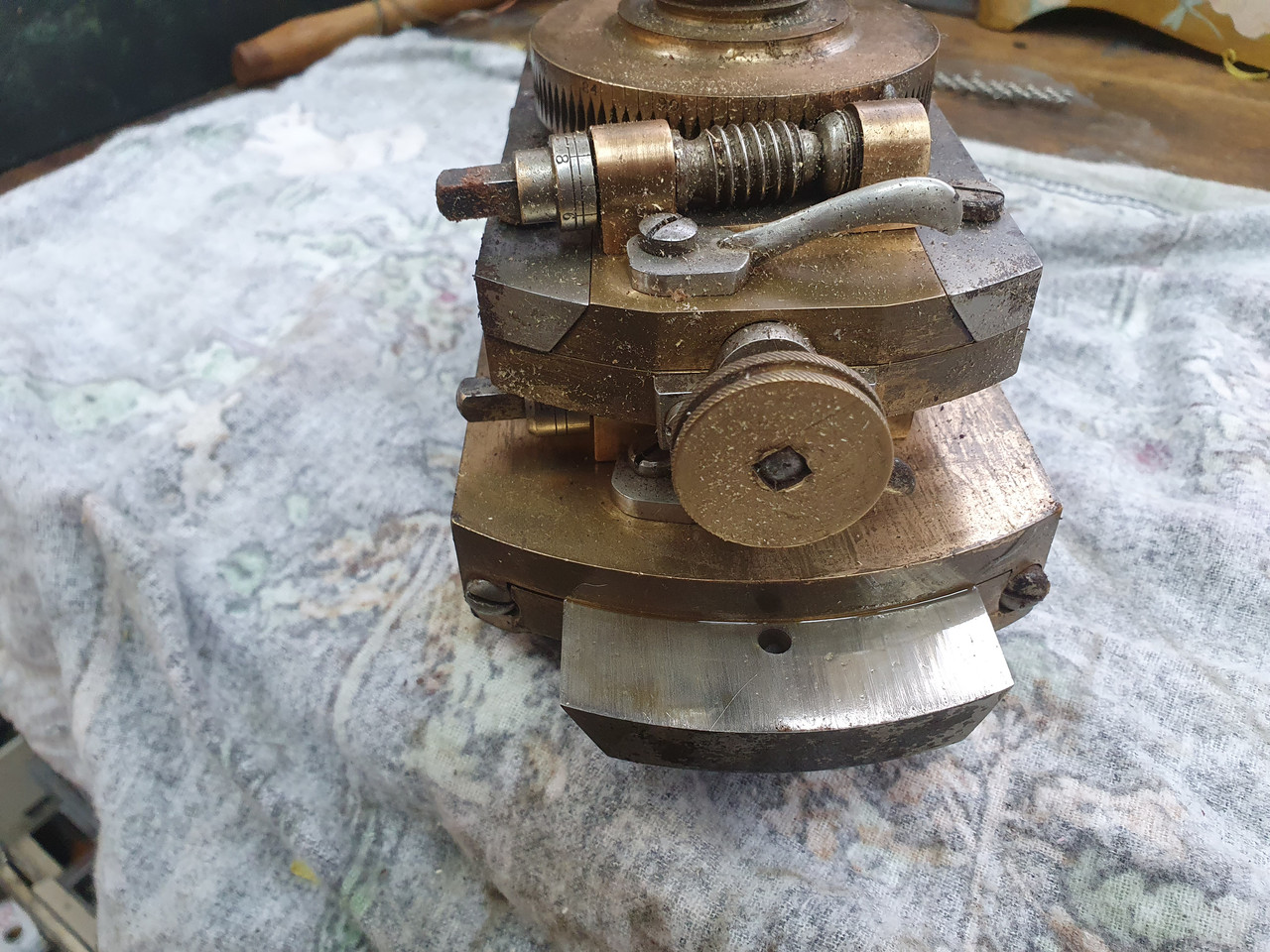
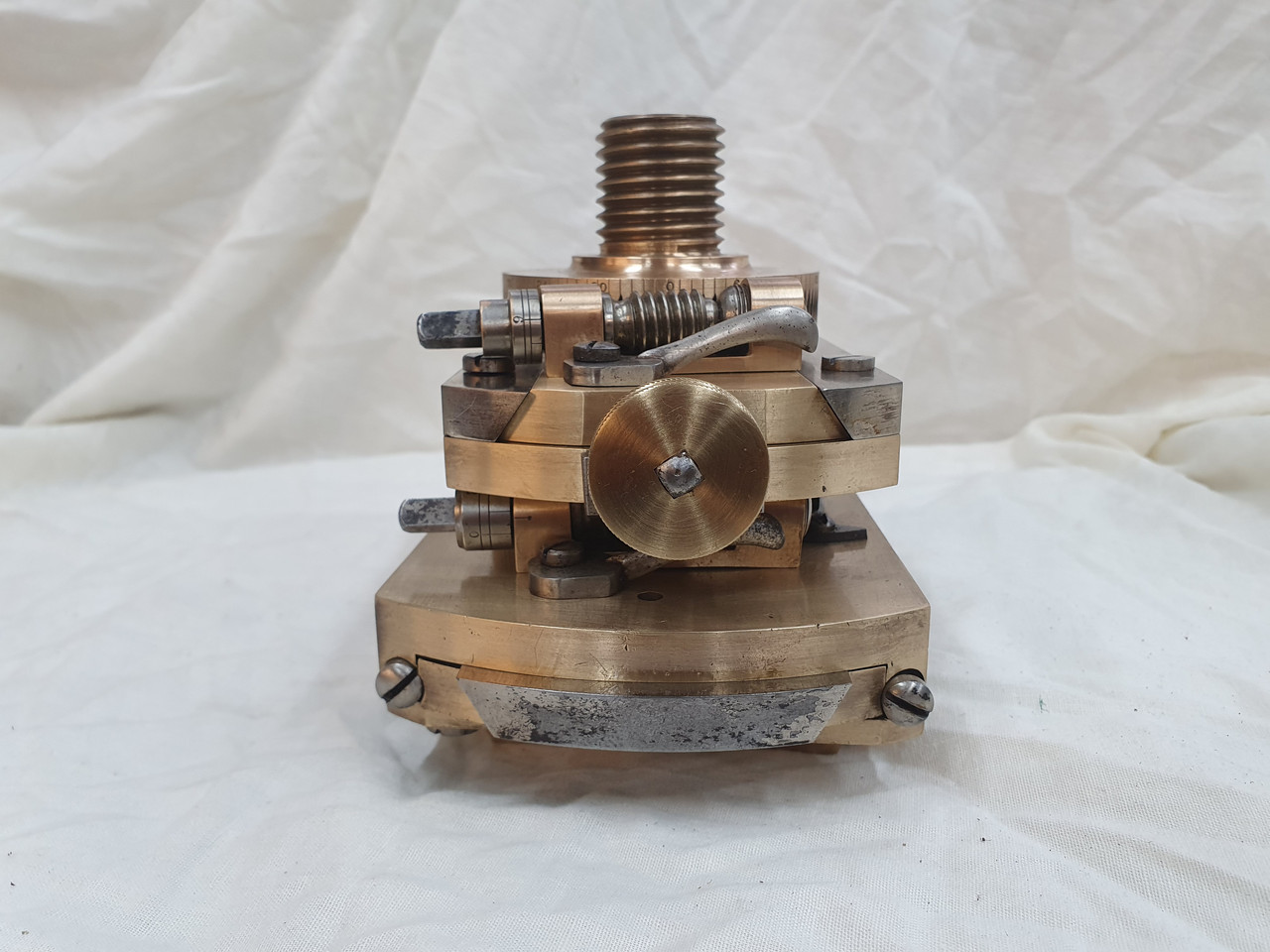
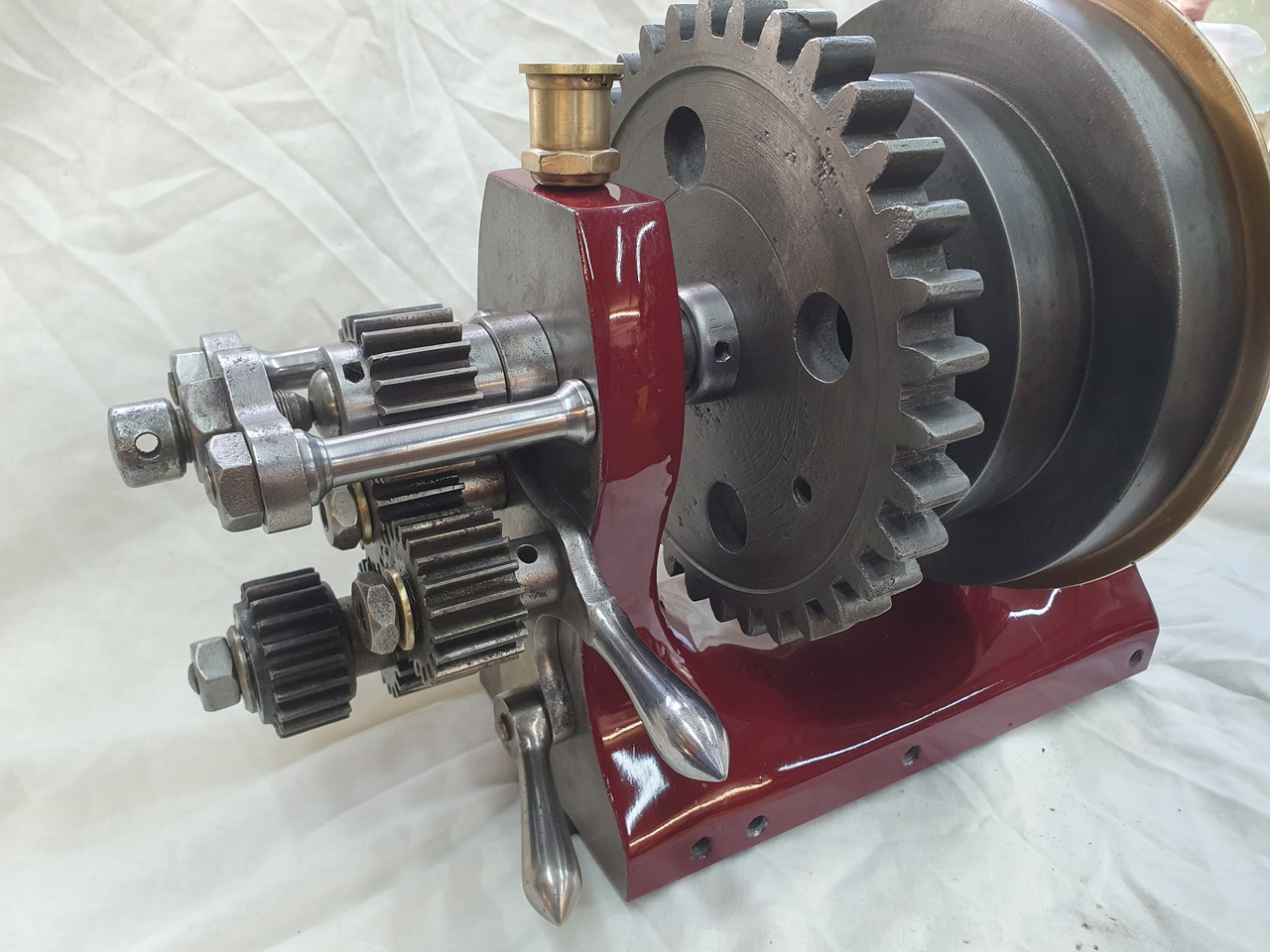
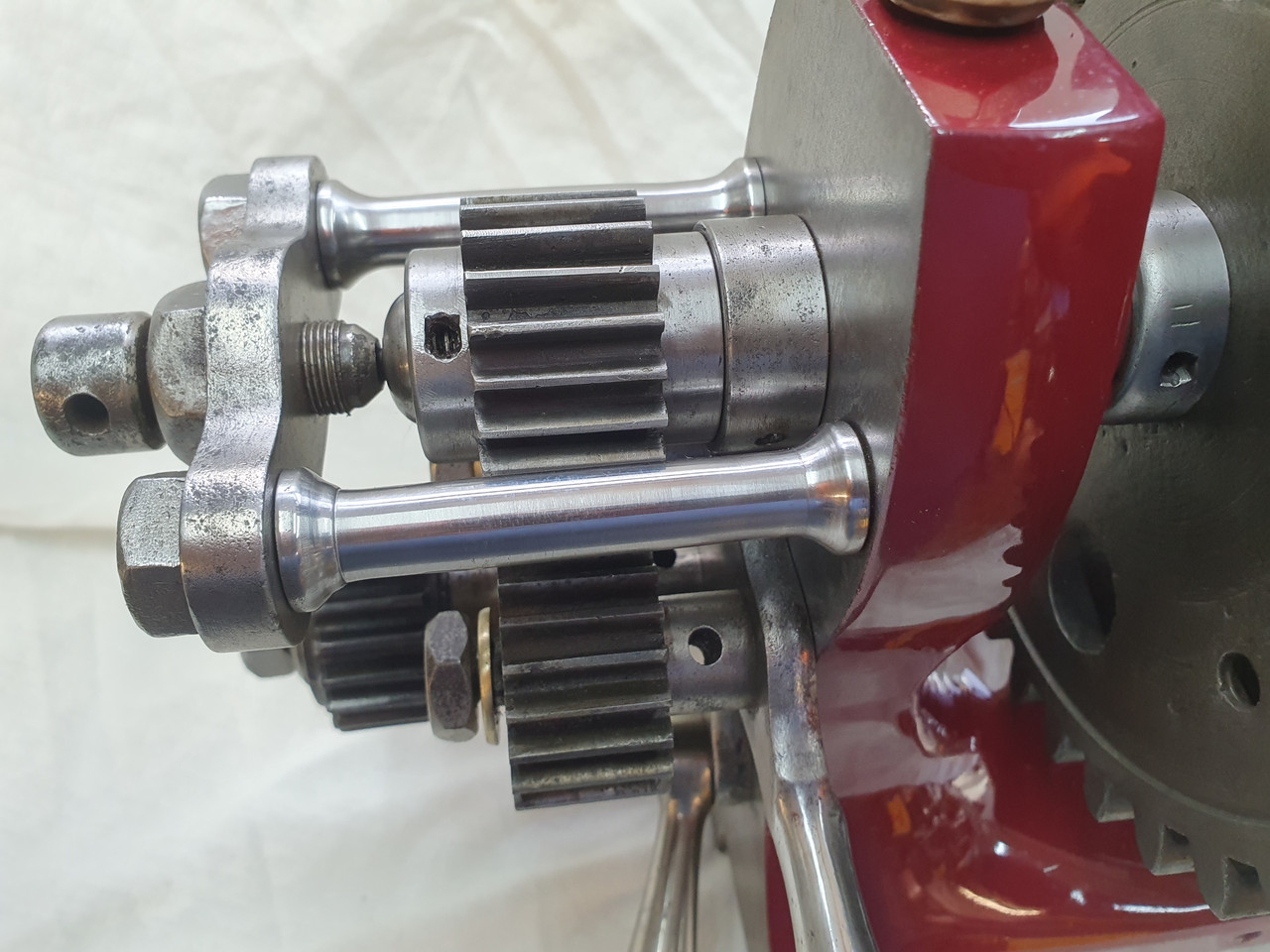
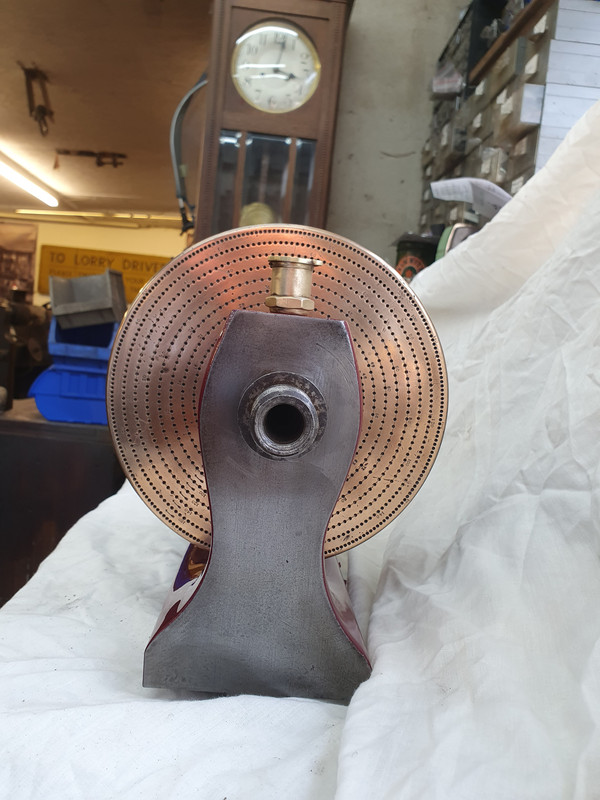
I'm just looking again at the details of the worm gear in this photo
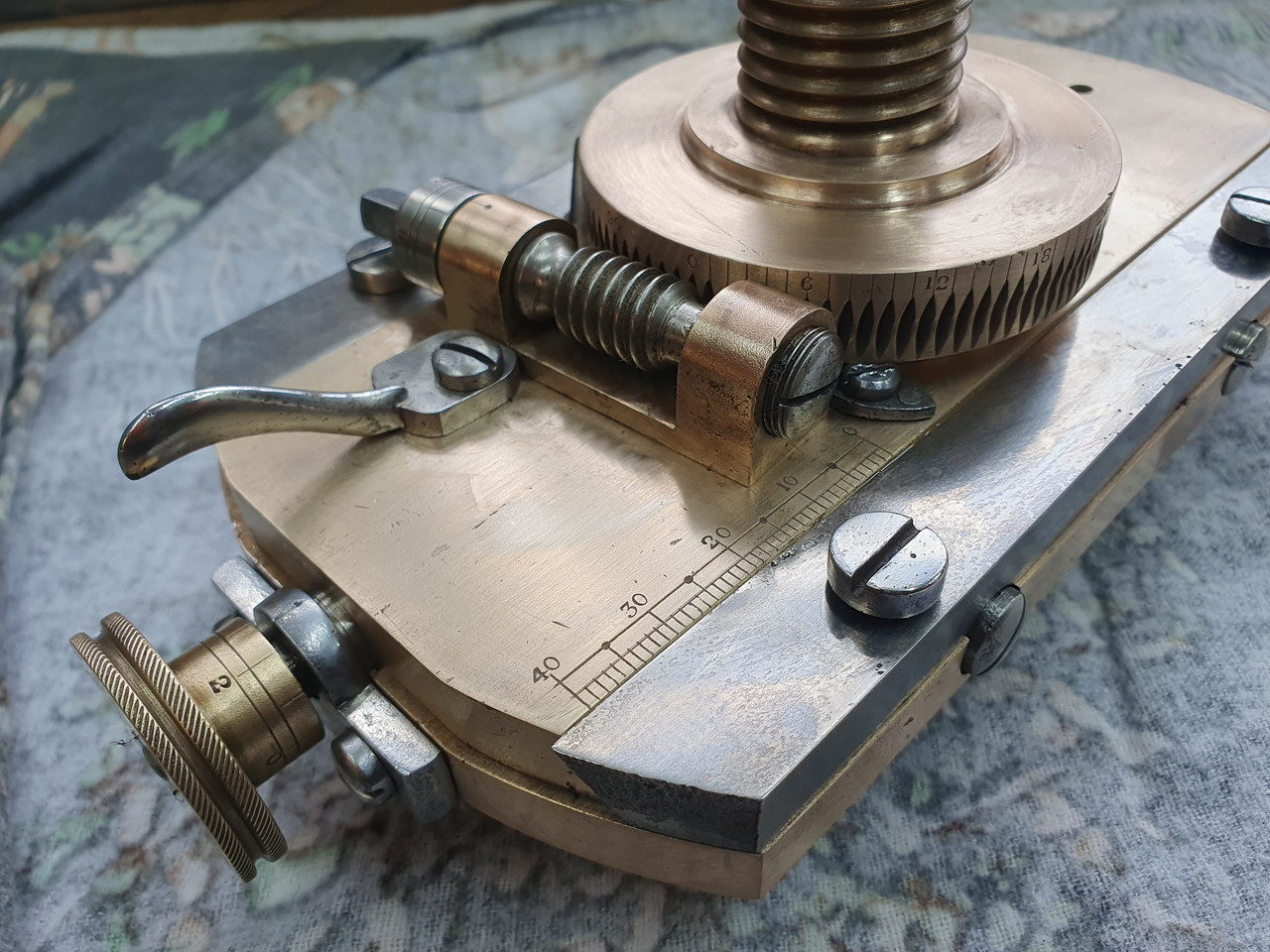


Am I right in thinking that the big screw in line with the worm works on a cone, to adjust/minimise end float on the worm gear itself?

And that the elegant little curved lever lets you swivel a cam, to make the worm mesh more or less tightly against the big brass gear?

And that the cam has a flat on it to provide a 'normal' position?

It does look like a lot of expensive, fiddly detail - which is what you expect on a lathe like this and a lot of the pleasure in having one, I imagine. Once you get it operational, I predict that you'll be spending much more time carefully adjusting all the options than cutting any metal!
 
Last edited:
I'm just looking again at the details of the worm gear in this photo


Am I right in thinking that the big screw in line with the worm works on a cone, to adjust/minimise end float on the worm gear itself?

And that the elegant little curved lever lets you swivel a cam, to make the worm mesh more or less tightly against the big brass gear?

And that the cam has a flat on it to provide a 'normal' position?

It does look like a lot of expensive, fiddly detail - which is what you expect on a lathe like this and a lot of the pleasure in having one, I imagine. Once you get it operational, I predict that you'll be spending much more time carefully adjusting all the options than cutting any metal!
Yes that is correct, theres a spring behind the worm to help disengage the drive.

Materials like ivory and tropical timbers would of been the choice for the discerning gentleman who could afford this type of lathe back in the day
 
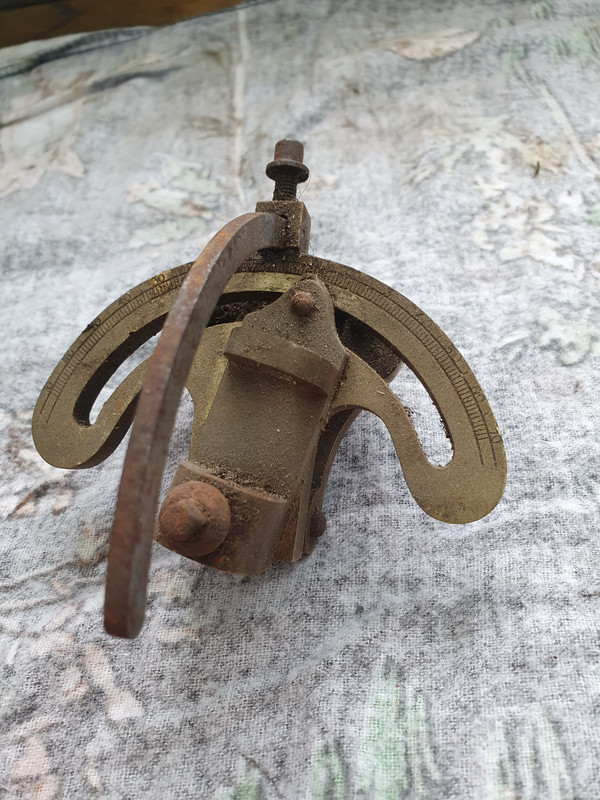
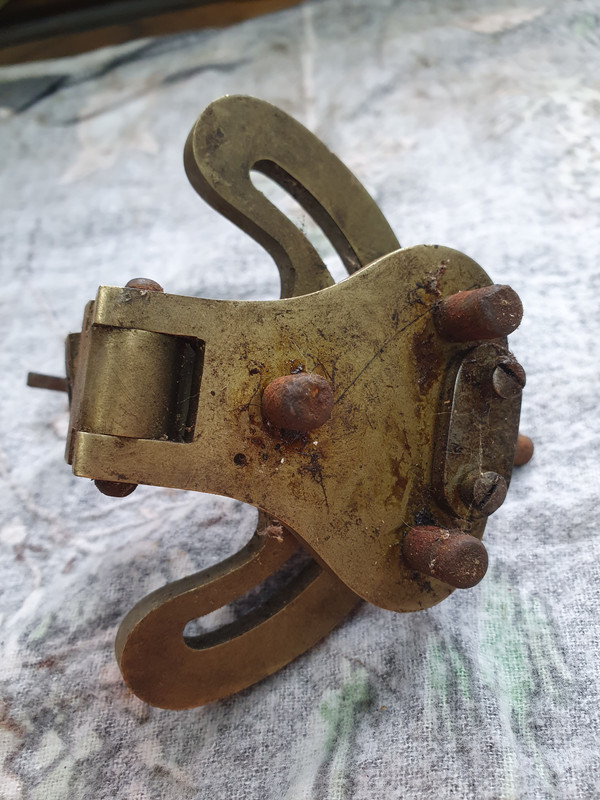
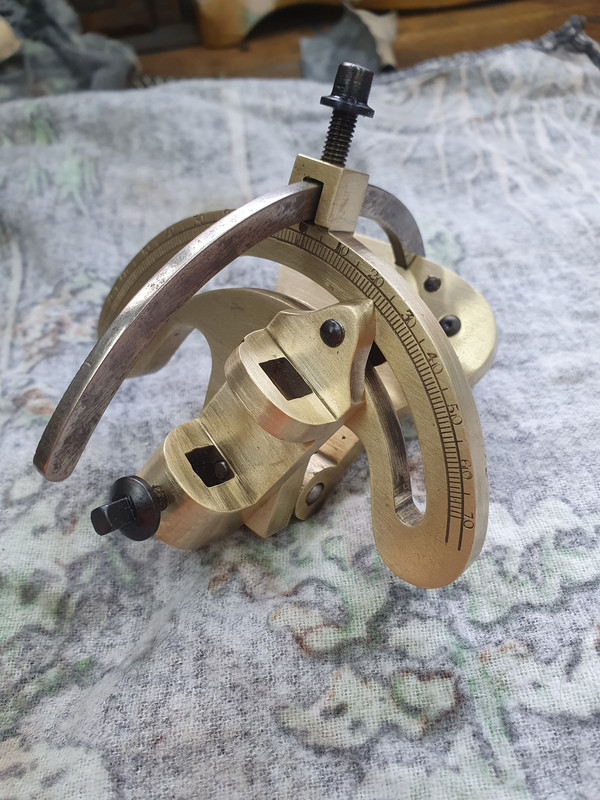
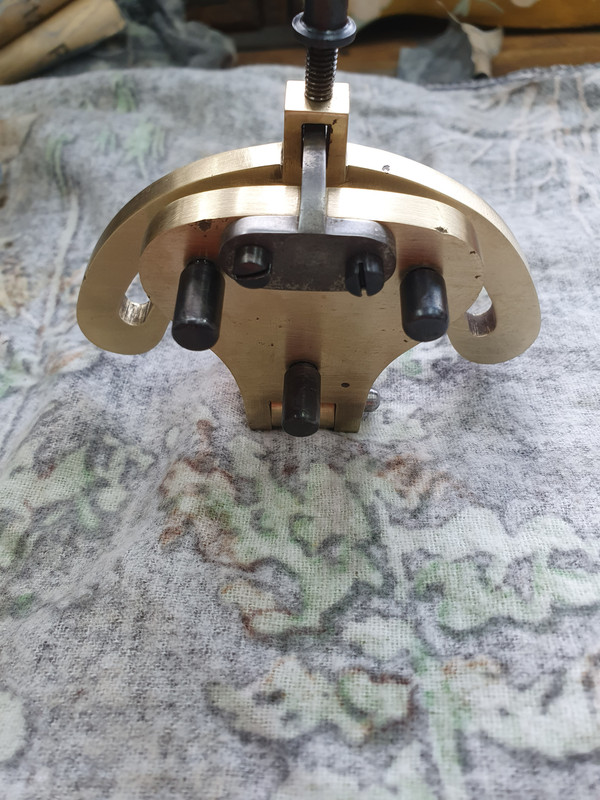
This is a crusty goneostat it is used to hold a cutter at the desired angle for sharpening


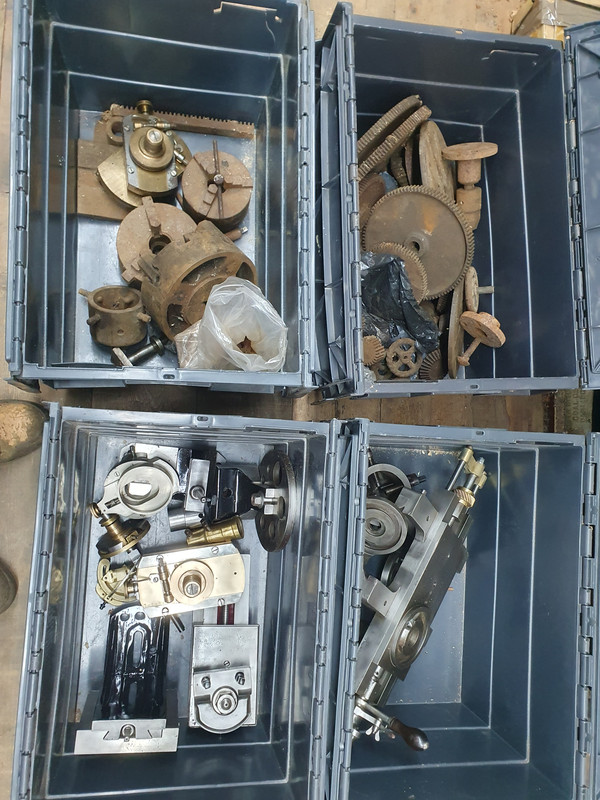
I did think I was getting near the end of this project then found these


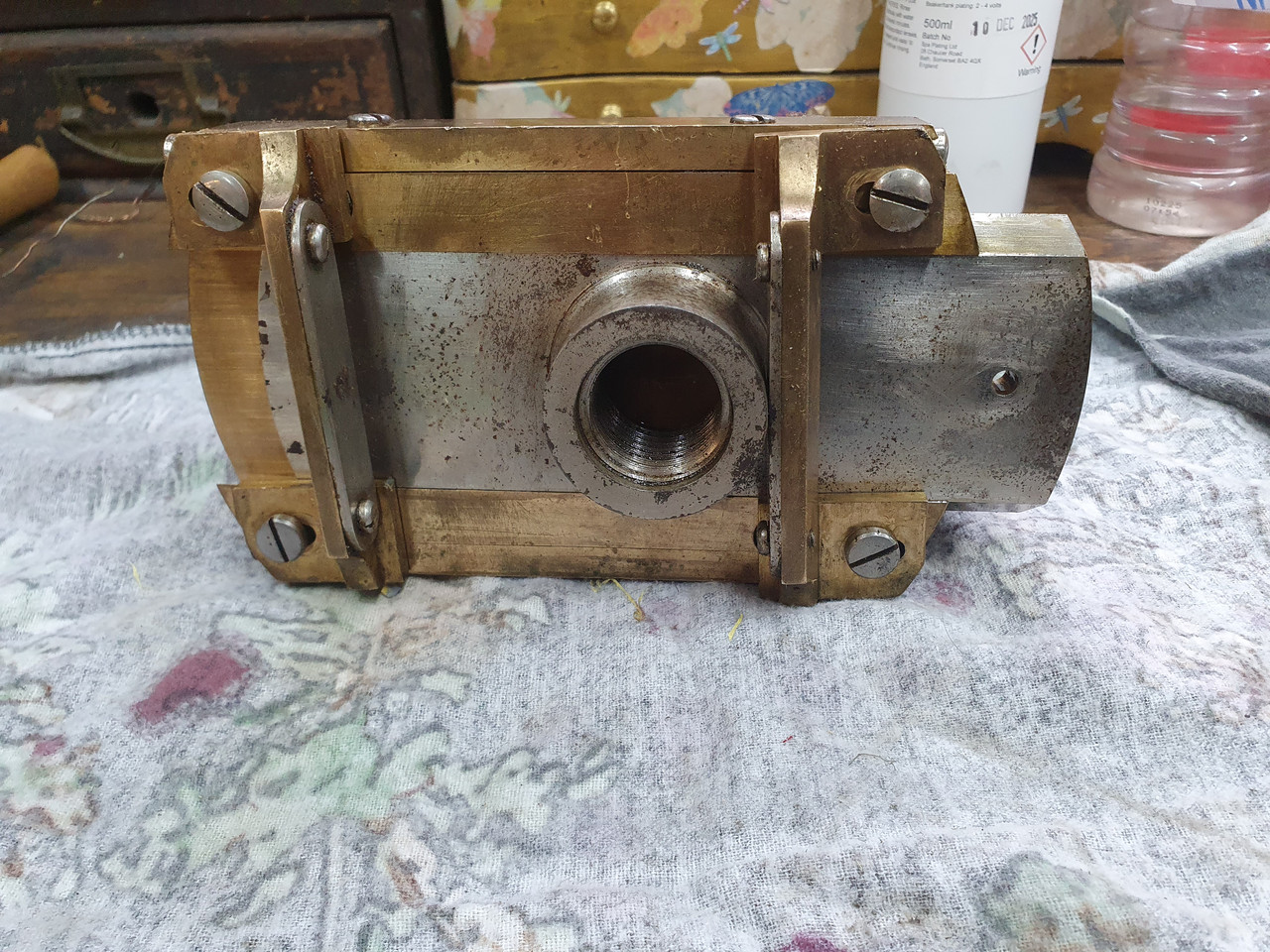
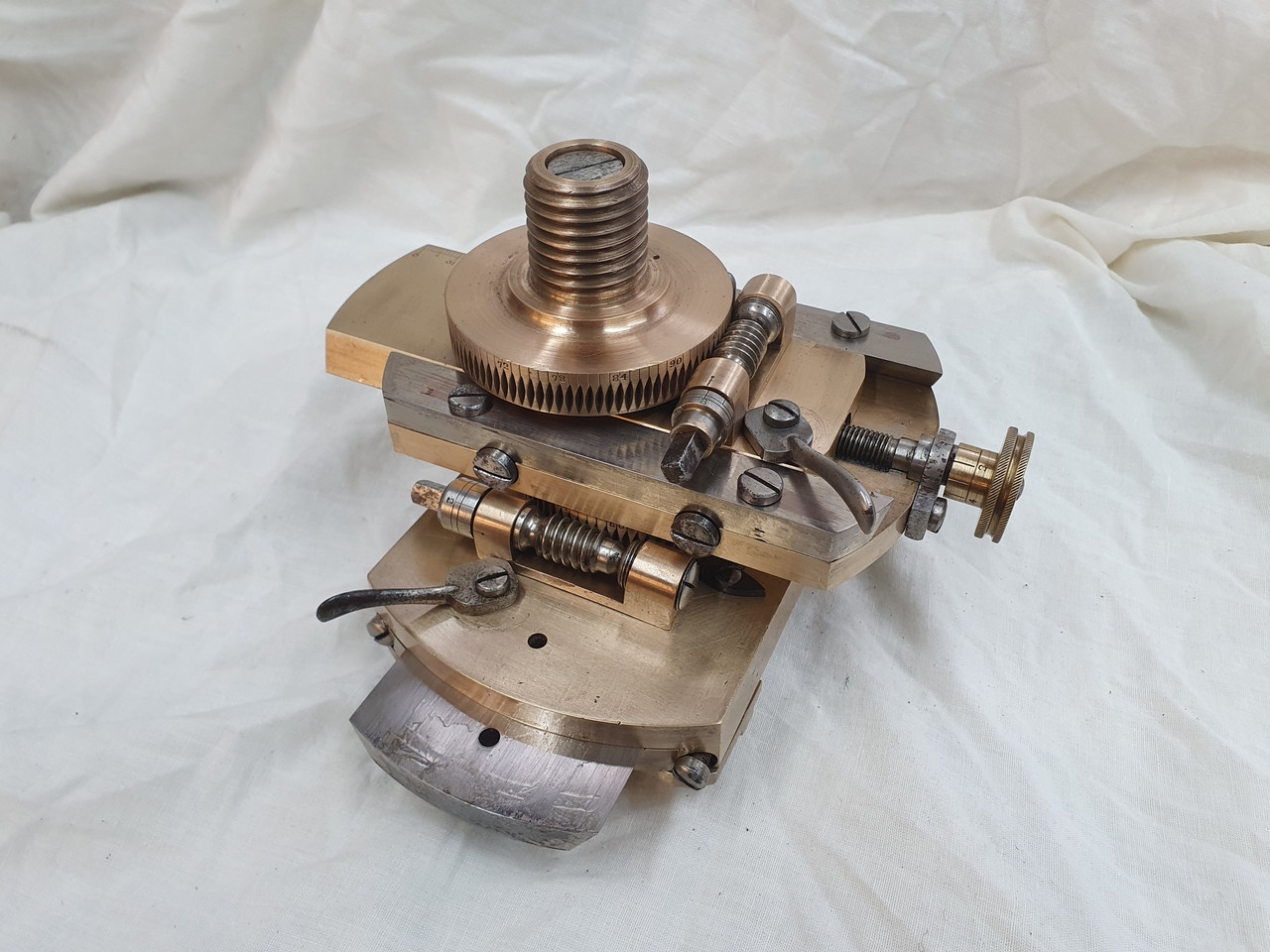
Not sure what this is supposed to do, it has a smaller eccentric chuck but I'm lost with the other bit.


That center portion with the threads moves freely with no way to keep it in a position


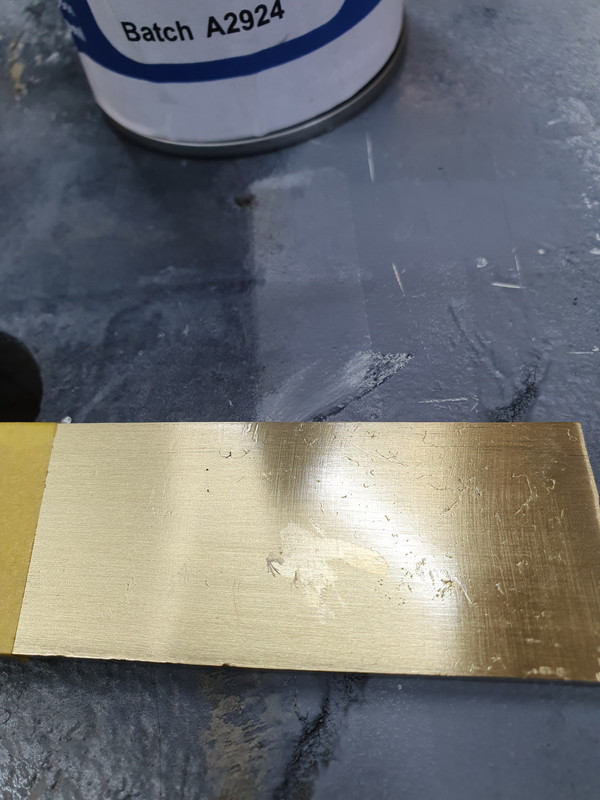
You can see where the lacquer has been worn off

 
I'm way out of my depth with this sort of thing, but I have had a quick virtual flip through Holtzapffel Volume 5 and found a couple of pages with diagrams of chucks which resemble yours. (Is yours a Holtzapffel or an Evans?) Note that your mystery bit has a thread on one side which would presumably fit the headstock and another threaded part on the outside which I guess then has another chuck mounted on it.

I don't need to understand these lathes, and haven't read all the words, but you could look at the relevant bits of the book and see if they make any sense.

This is a "straight line chuck"

holtzapffel-vol-5-1884-0300rgbjpg-dmm_0466.jpg

(see https://archive.org/details/HoltzapffelVol5_1884/page/n466/mode/1up )

This is a "rectilinear chuck"

holtzapffel-vol-5-1884-0300rgbjpg-dmm_0472.jpg


Later parts of the book describe various chucks used in combination, to produce wild and wacky effects. You can, in theory, even make scale models of gothic buildings with one of these lathes!

I hope this helps.
 
Mark, that goniostat is simply a thing for beauty. Well done.

As to your chuck-on-a-chuck, I don't think it is either of Andy's guesses ( respect to our Bristolian archivist). It does ring a faint bell, though. I think I've seen one like it in Evans' tome; off to a funeral now, will check later.

Sam
 
Mark, that goniostat is simply a thing for beauty. Well done.

As to your chuck-on-a-chuck, I don't think it is either of Andy's guesses ( respect to our Bristolian archivist). It does ring a faint bell, though. I think I've seen one like it in Evans' tome; off to a funeral now, will check later.

Sam
Andy was almost right, its a oval chuck by all accounts. there is another bit that attaches to the headstock which secures that free moving section. I have that also, just didnt know it was part of this bit.

20260207_144903.jpg

Andy the maker of this lathe is unknown as yet, it was listed as possible Goyen which if confirmed would be quite the find.
 
Jim Hendricks made a proper brass copy of the Holtzappfel design of goniostat.
You can see photos and read all about it on Instagram. He said it was one of his most challenging builds. 😀
 
Andy the maker of this lathe is unknown as yet, it was listed as possible Goyen which if confirmed would be quite the find.
I hope you realise if it's an Evan's the accompanying device needs to obtained for doing the cutter sharpening ;)
Reliably restored to it's present assemblage by a trustworthy and dedicated group of chaps.....
Messers Brown, Smith, Tuckwell and Arnold
 
Last edited:
I hope you realise if it's an Evan's the accompanying device needs to obtained for doing the cutter sharpening ;)
Reliable restored to it's present assemblage by a trustworthy and dedicated group of chaps.....
Messers Brown, Smith, Tuckwell and Arnold
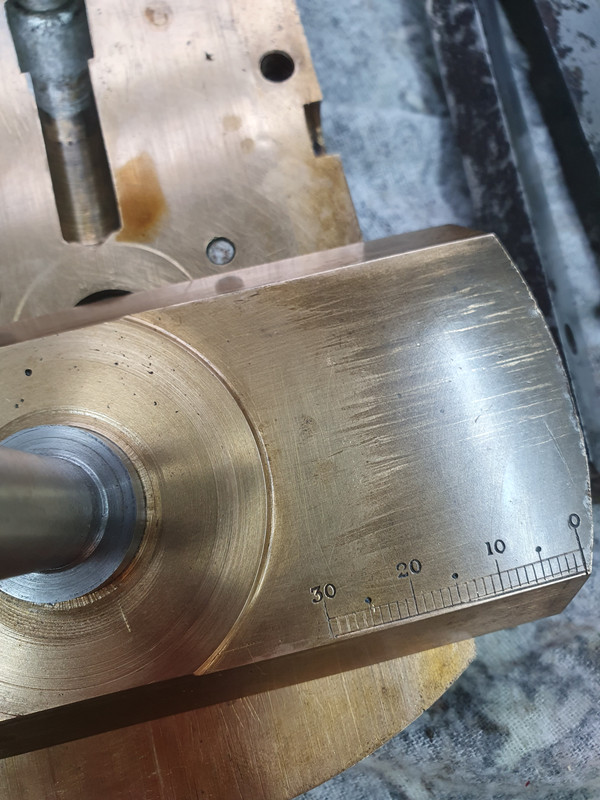
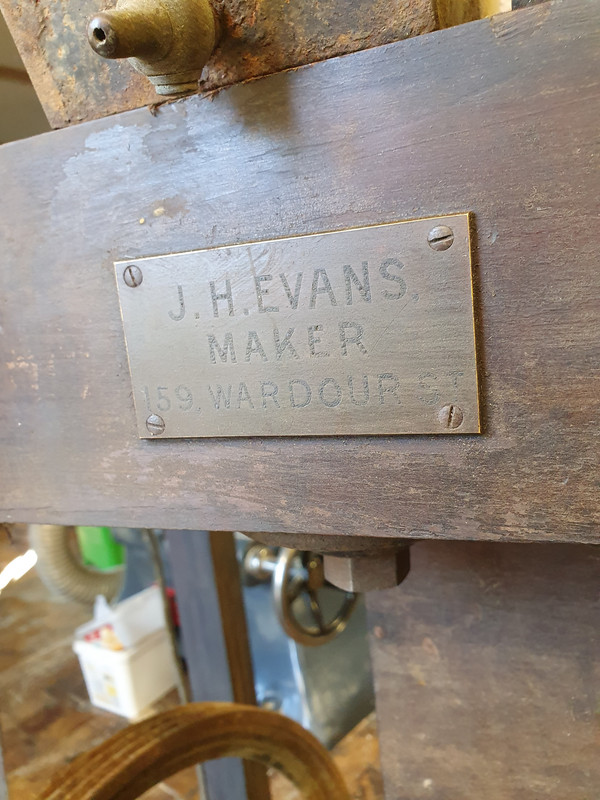
Do you think someone has got their inches and cm mixed up
 
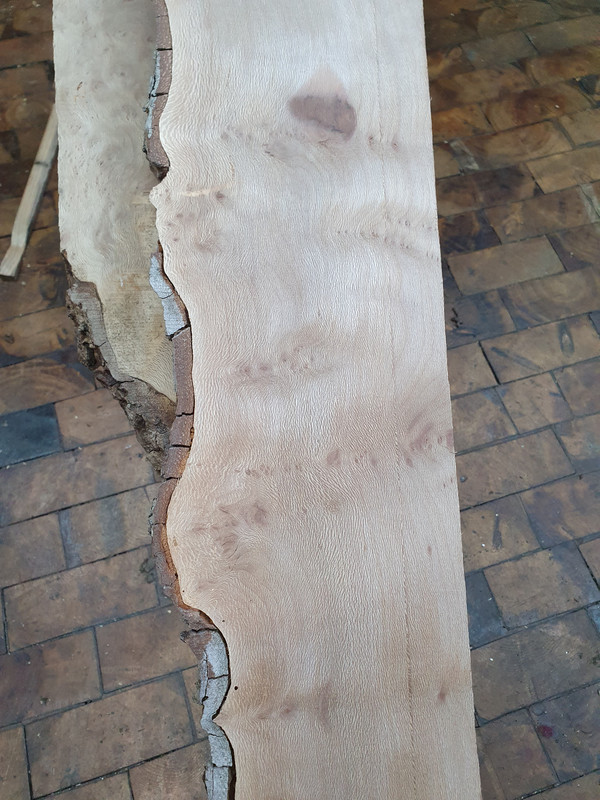
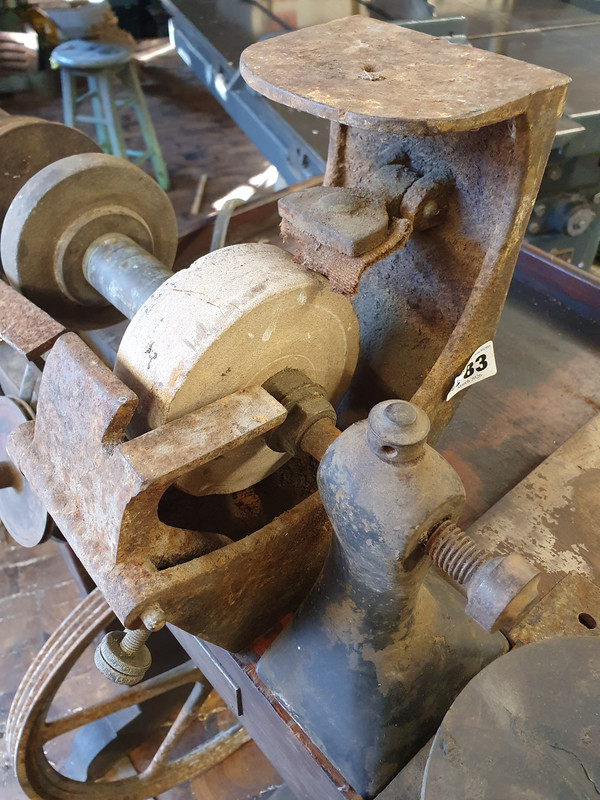
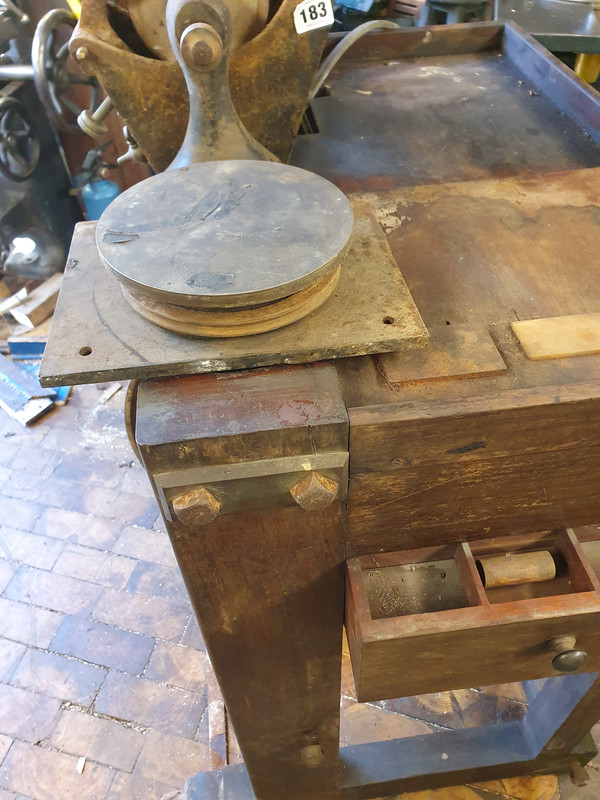
Due to the Andy's pointing out a lovely little grinding lathe I felt obliged to buy said lathe. I also felt the need to buy some london plane timber and big wooden clamps.


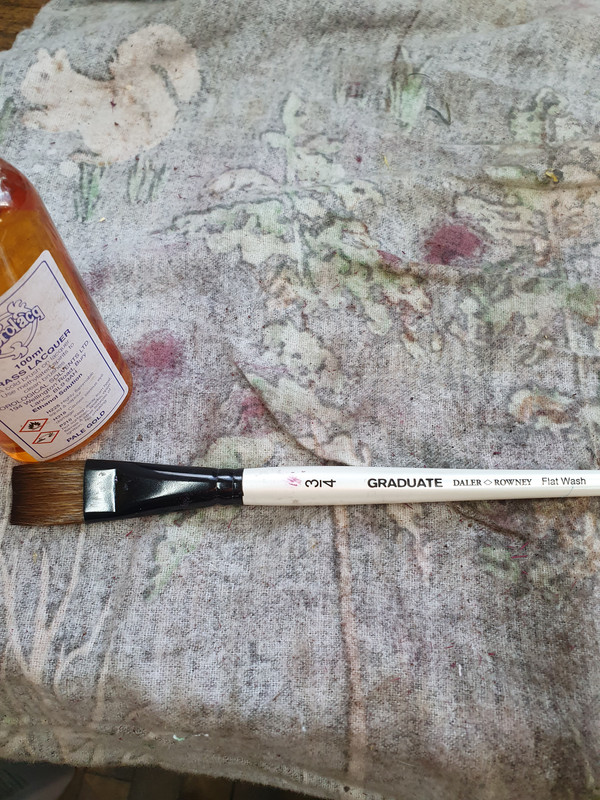
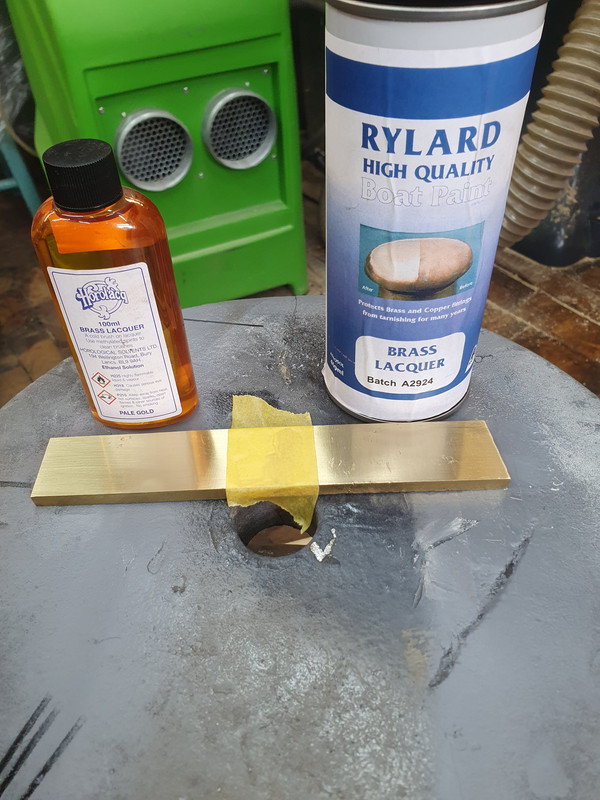
I bought a couple of laquers a while back to refinish the brass.


The spray one is just a basic laquer with a custom label and sold for twice the price. It easily scraped off with my nail. The brush on one is the real deal and seems hard wearing. I couldnt scrape it off.


I borrowed one of the wifes paint brushes


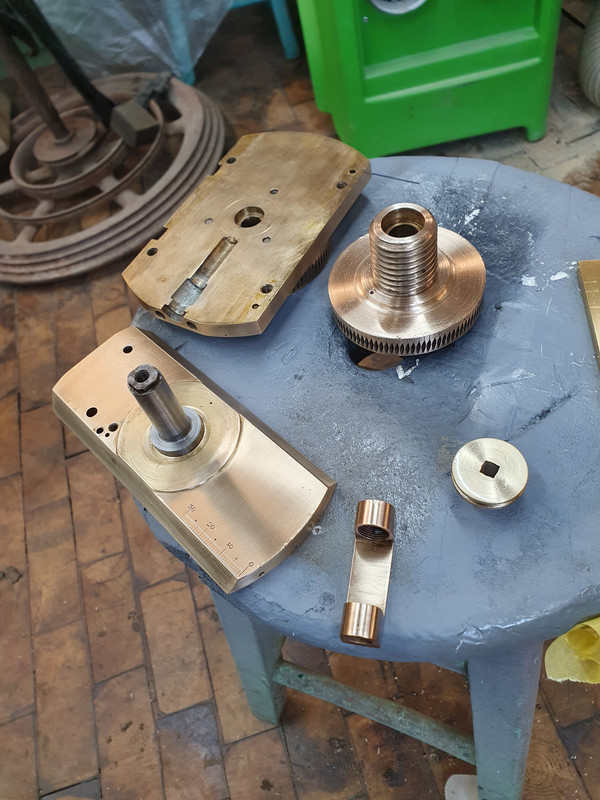
I got the chuck put back together, ideally I would of liked to re nickel some more of its parts but I'm not happy with my results so just cleaned


To help speed up the curing I made brought them indoors, wife really enjoyed that.


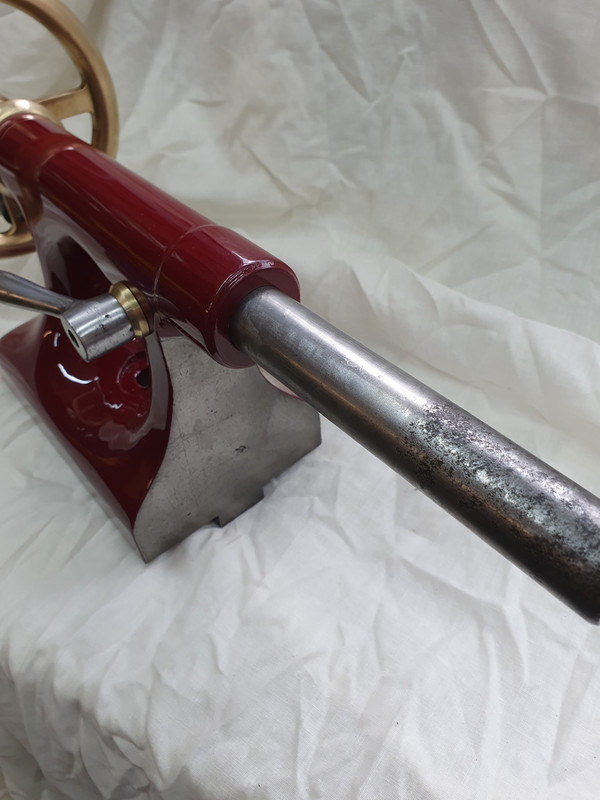
Shame the quill was left exposed wherever the lathe was stored


I'm so happy you got the accessories you need and am sure the grinding station will soon look as beautiful as the lathe.

And that chuck and tailstock are decorative enough for anyone's living room! 😀👍
 
I am so jealous of your tool restoration skills. Top quality professional work.
Thanks Adrian, most of it is just tedious cleaning which I quite like. I am disapointed by the nickel plating, I've spent about £150 on various solutions/annodes, power supplies to get better results. They are still nothing flash.

I spent about an hour putting the headstock together and then noticed I forgot to put the gear on.


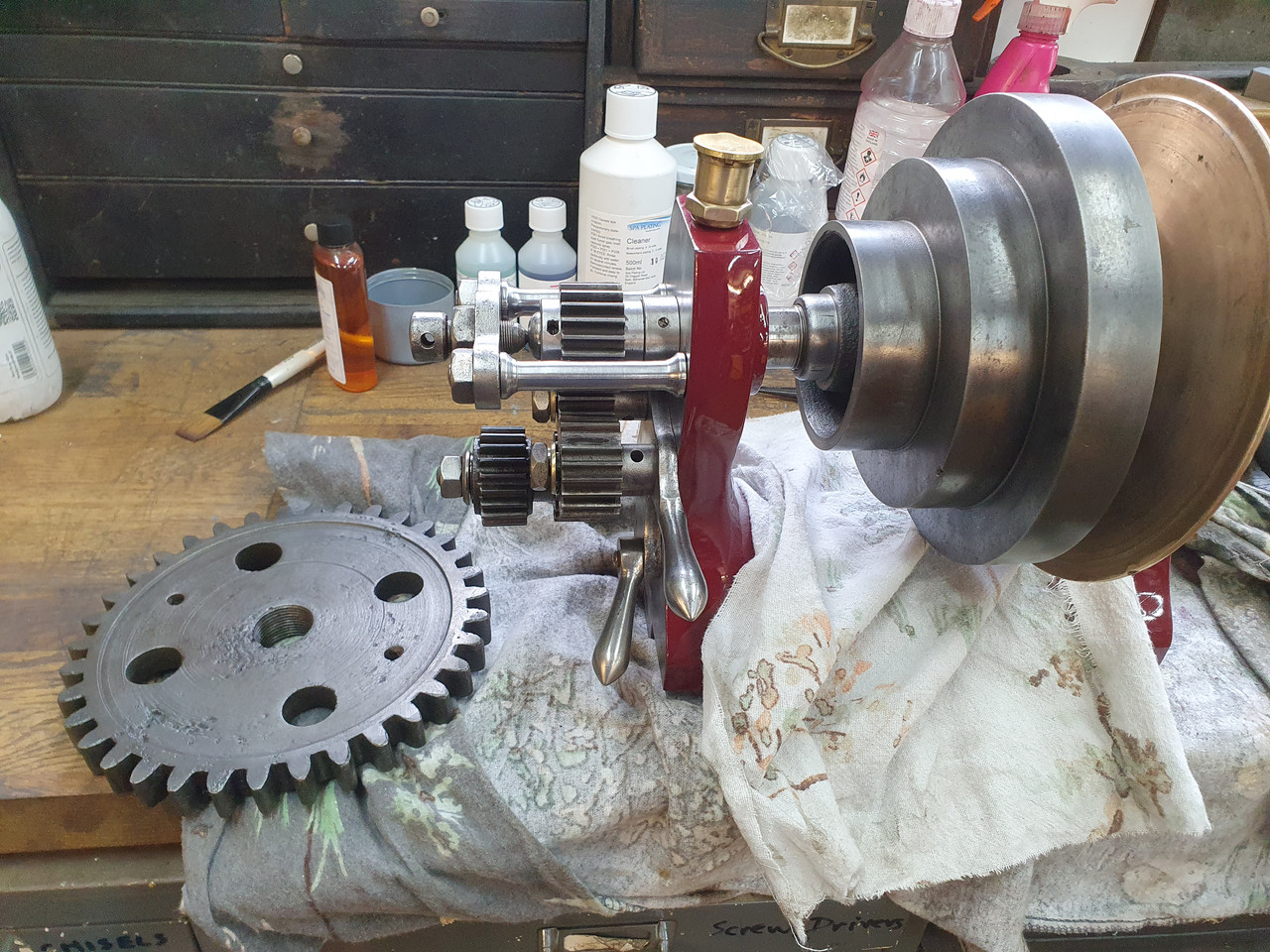
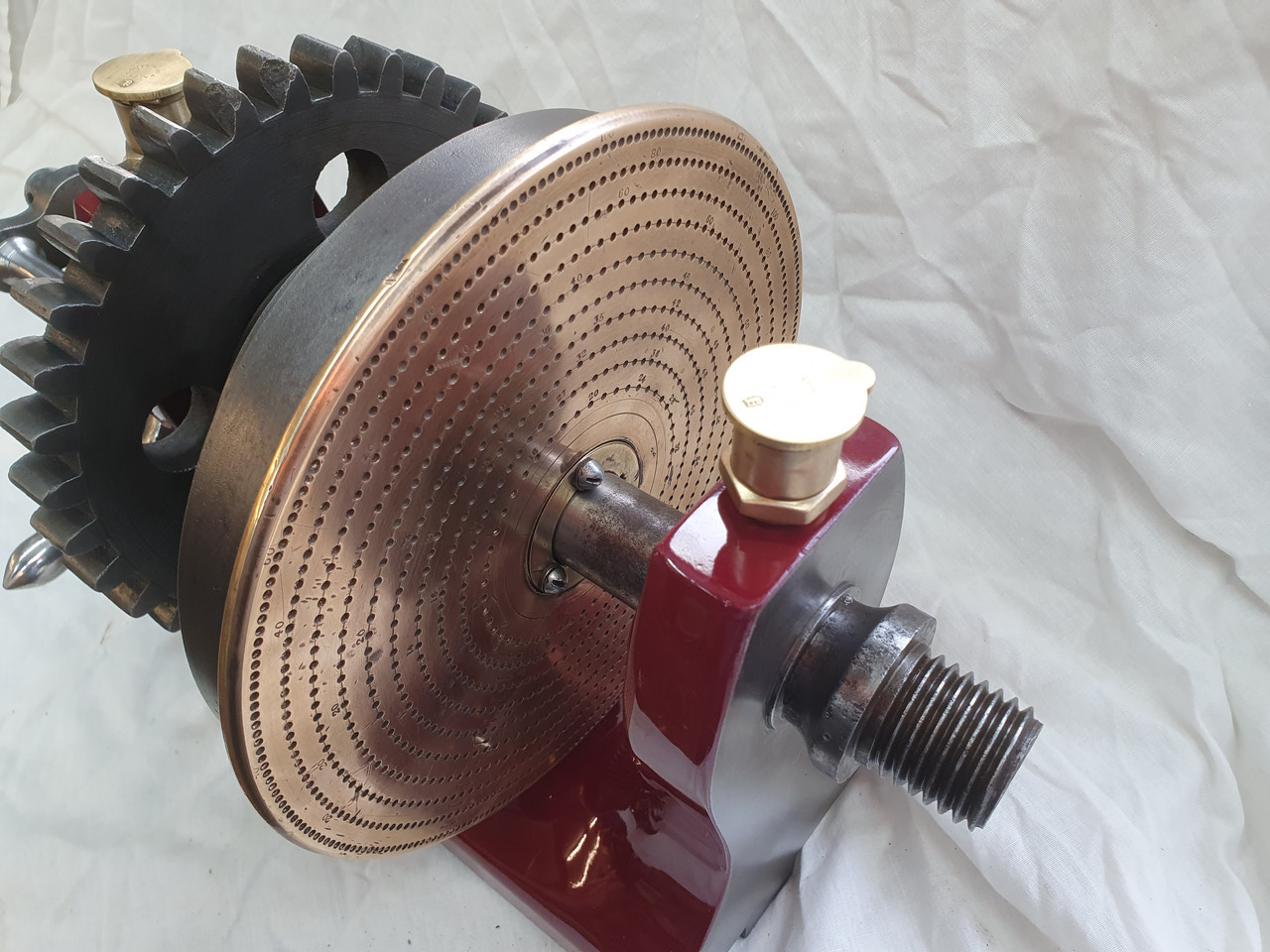
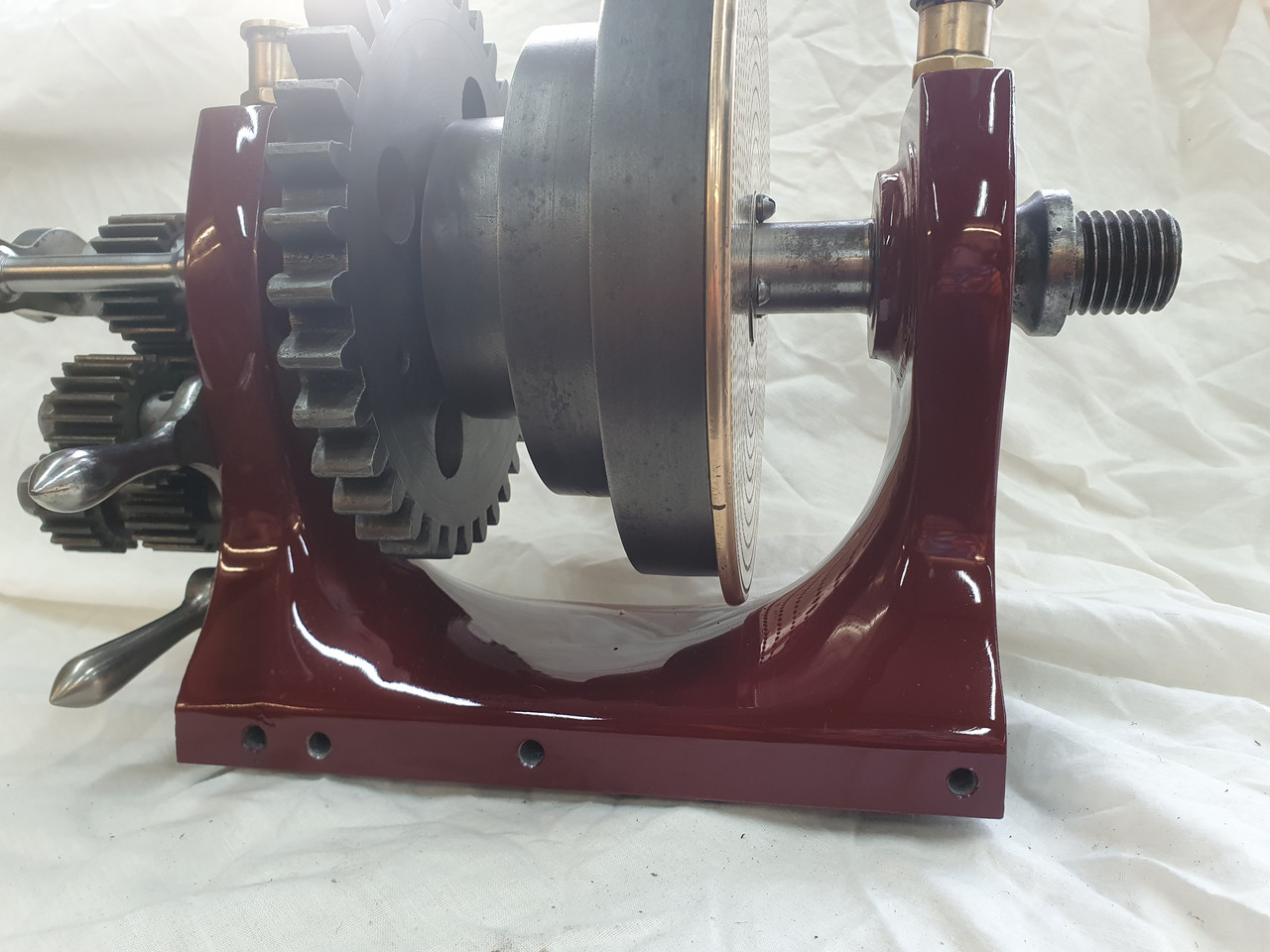
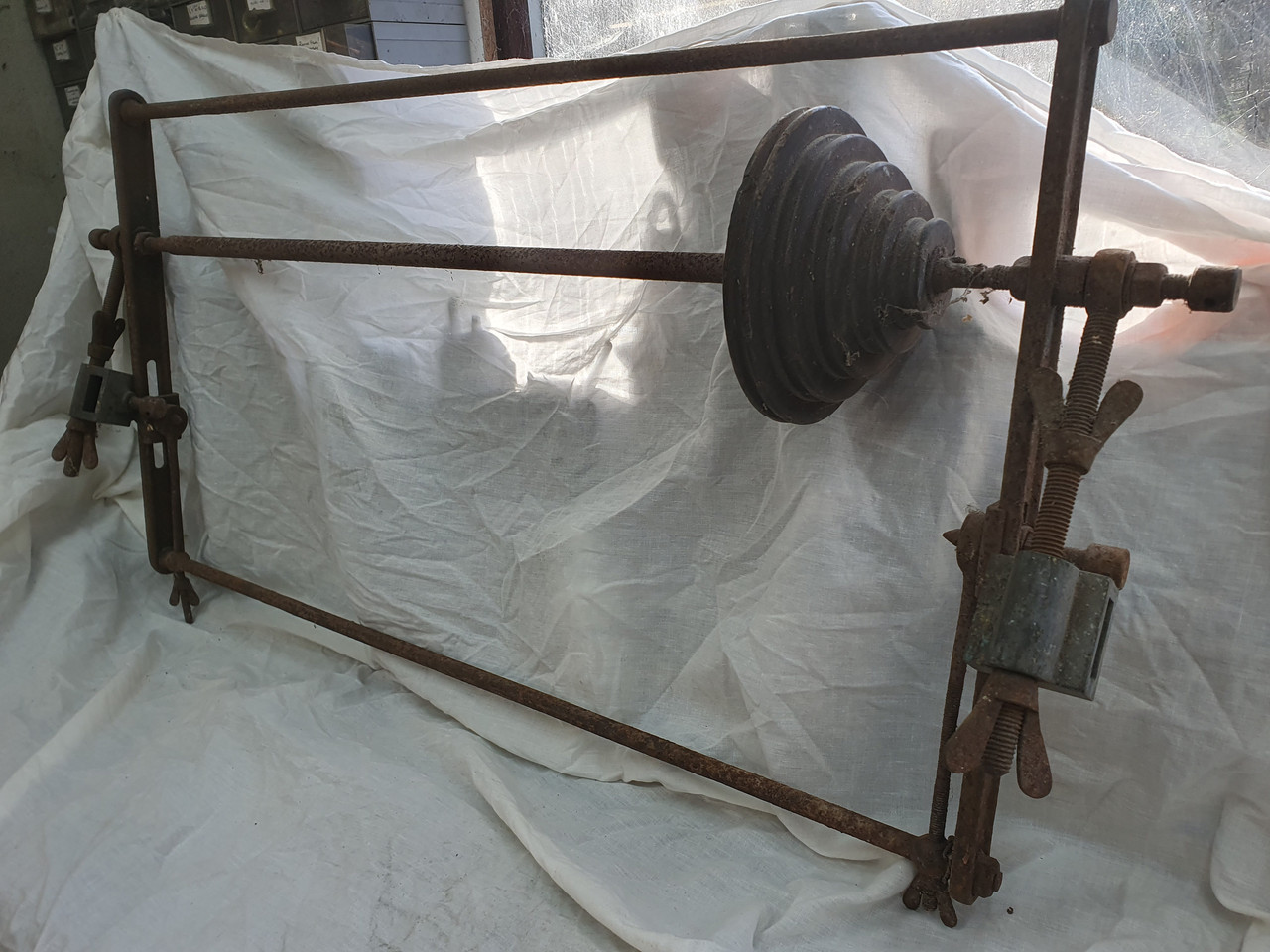
Next bit is the 'head gear' not sure what its proper name is. This transfers power to not only the headstock but to any accessories that might be being used on the cross slide

 
Next bit is the 'head gear' not sure what its proper name is.
James Lukin, in "Turning Lathes" (1890) called it the "Overhead Driving Apparatus" or just "The Overhead".

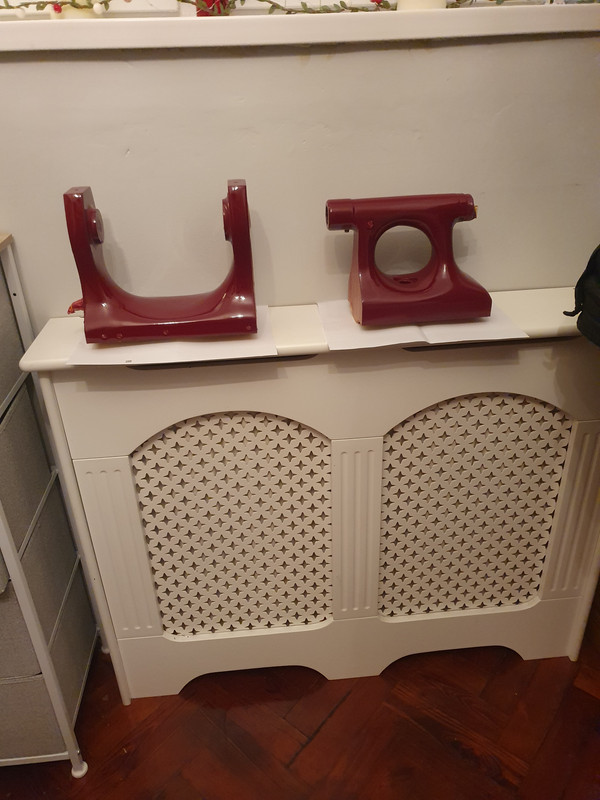
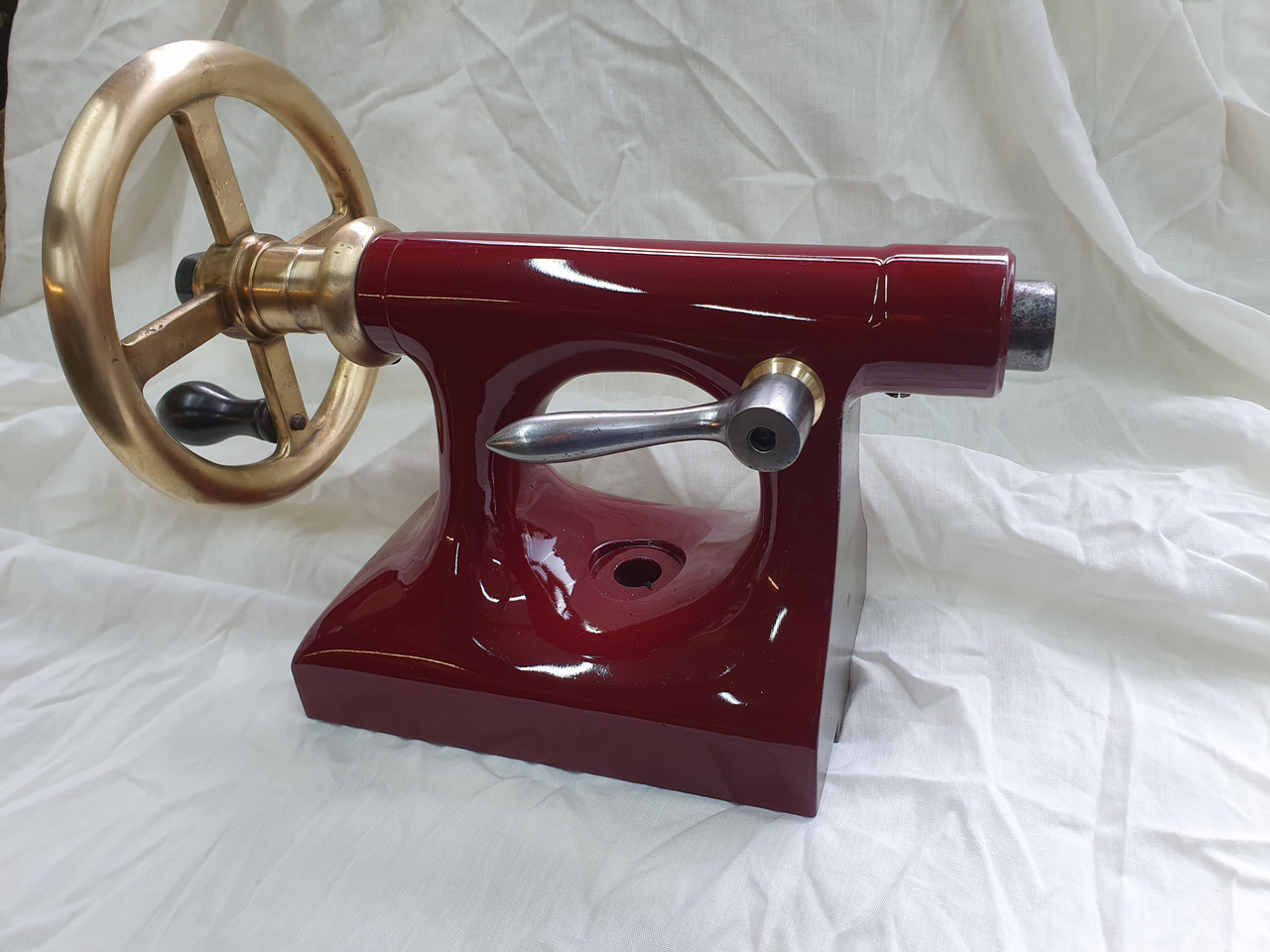
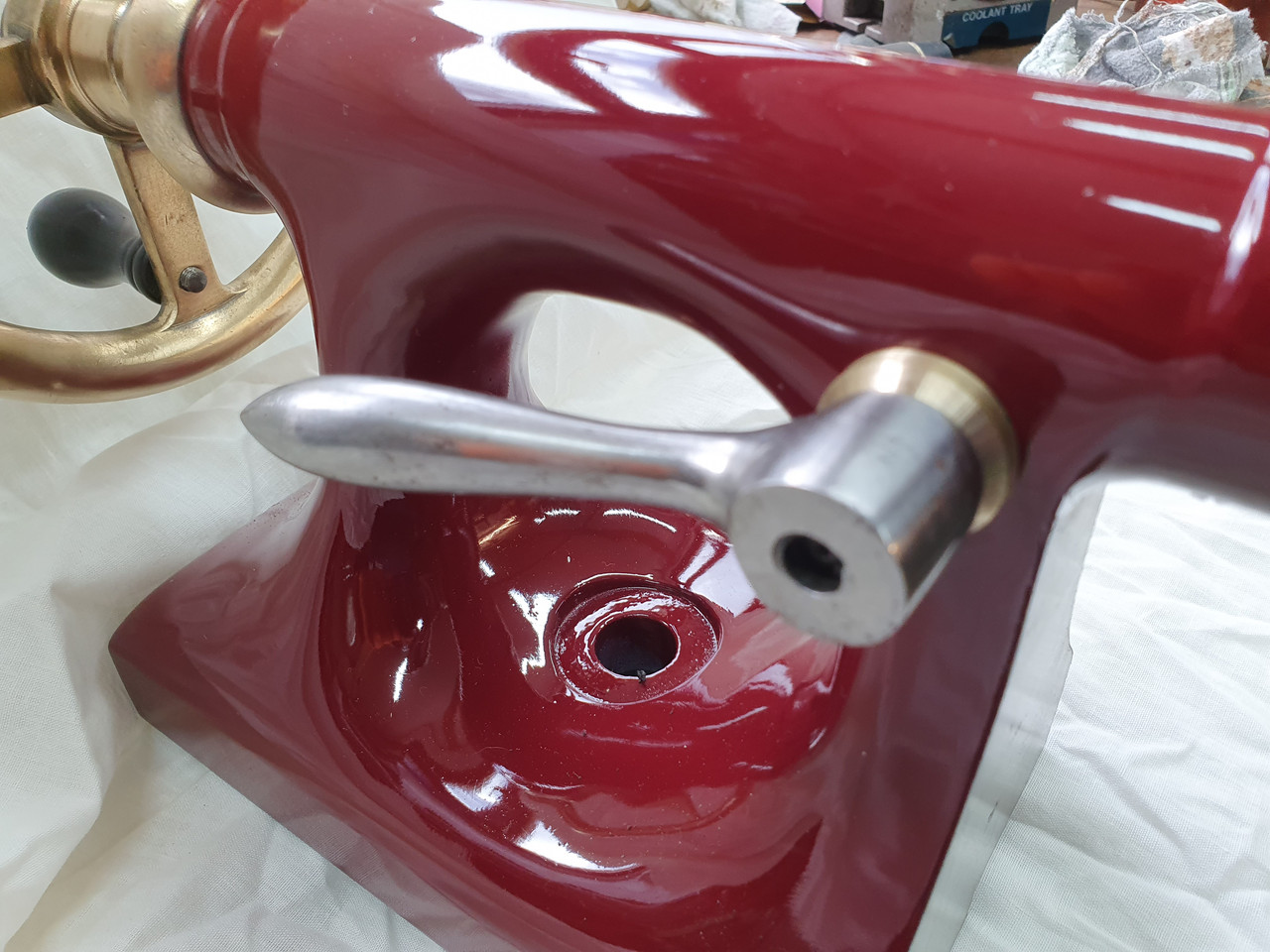
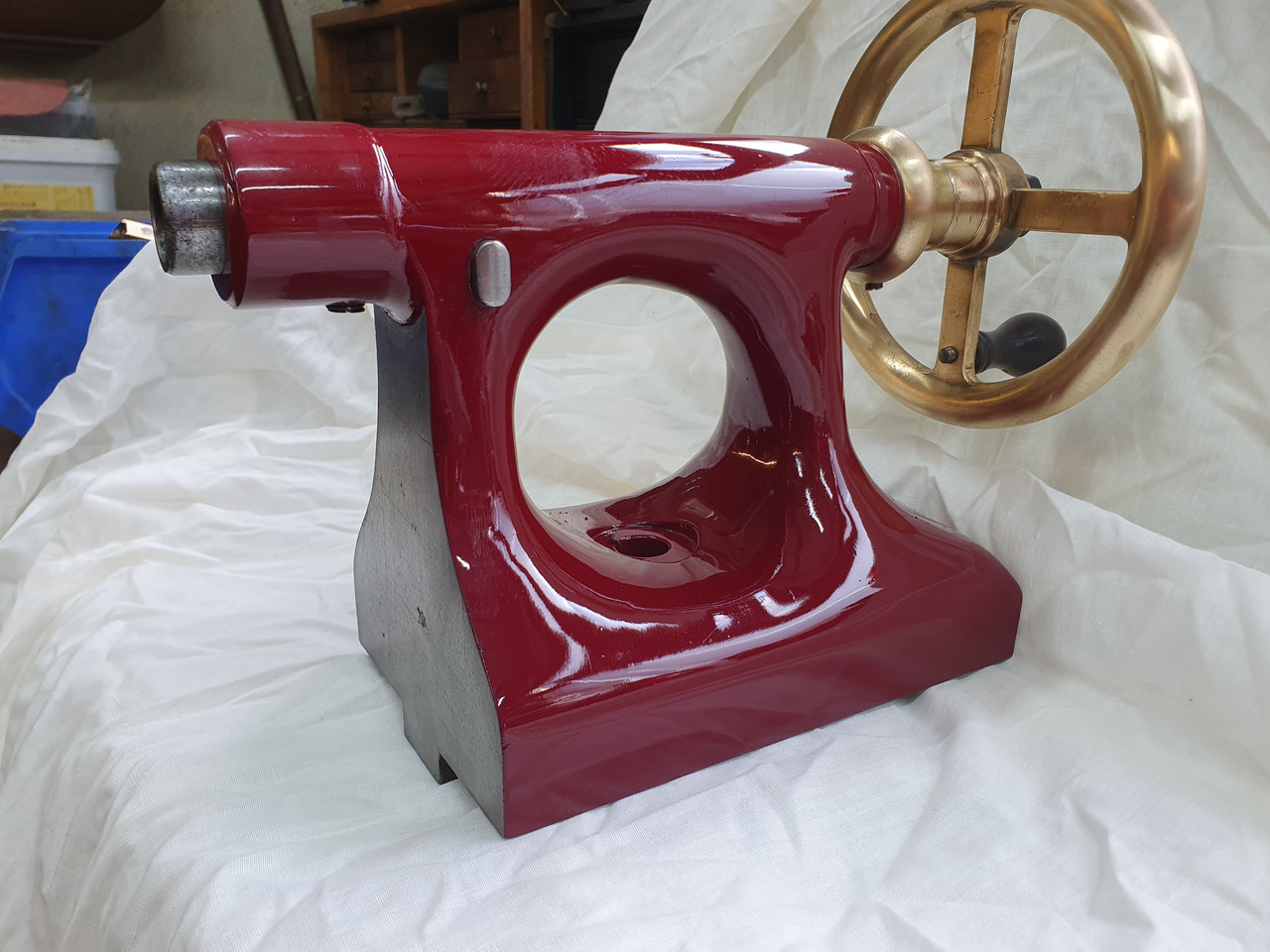
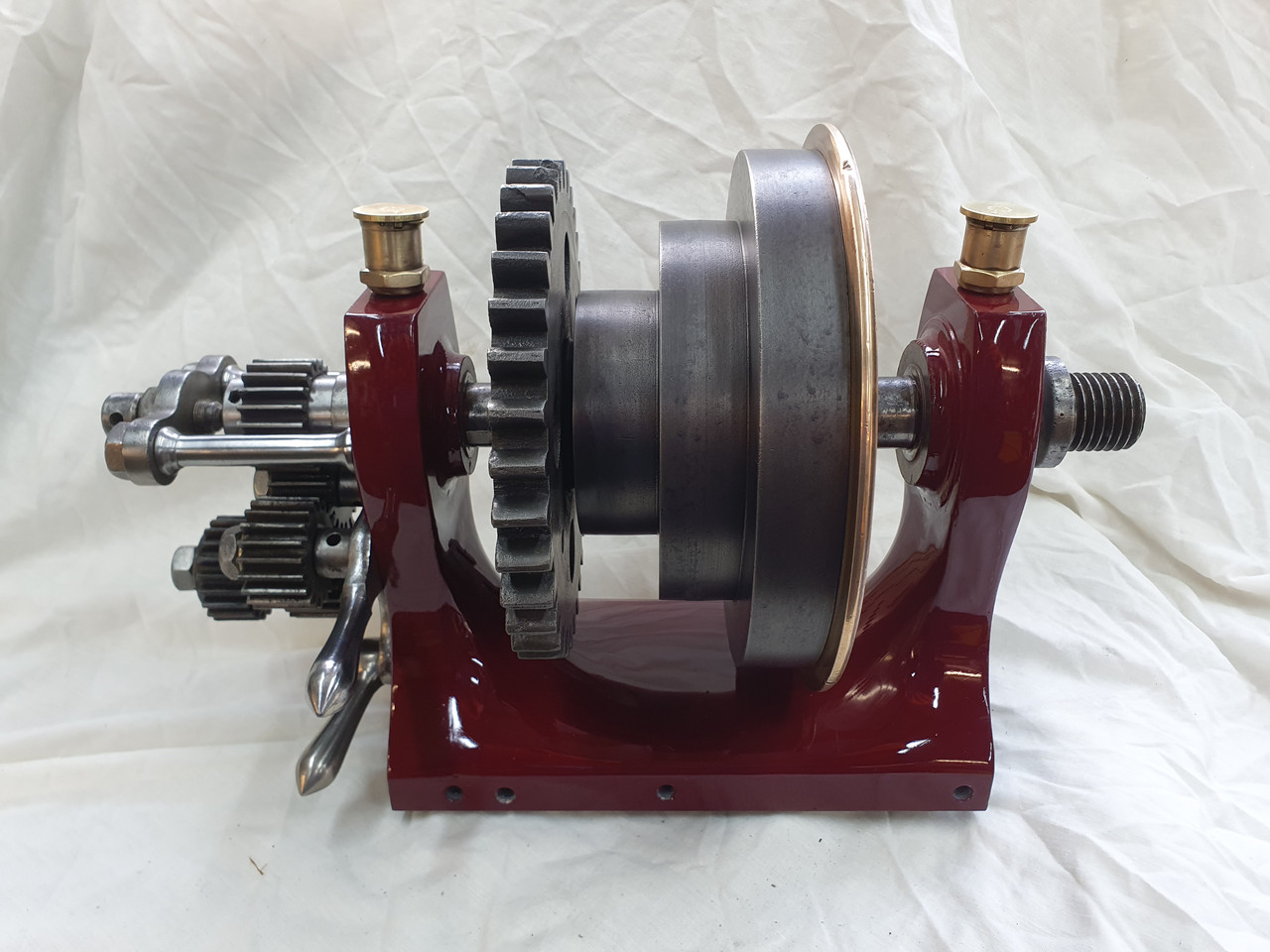
That red paint job is looking really gorgeous alongside the polished steel, brass and bronze. Like a cherished old steam loco.
 
Last edited:
Judging on what I've seen so far I am not sure if this should end up in a museum or an art gallery:)

Only joking of course I can't wait to see a video of it in motion and to see what it does.
 
I'm enjoying this thread. Thank you.

On the weekend I came across a gent in a model engineering club with some ornamental chucks. He was displaying them only and told me they were from an ornamental lathe he had bought. From his pictures it is fairly complete, including two glass cases with all the accessories and cutters so I asked him nicely how much he paid. He said $125,000Cad. He did say in an unhappy voice that the previous owner had a buffing wheel. I've always wanted an OT lathe but it will never be, at least not an original.

Pete
 
Andy I'm not even sure if all the bits are here, the original seller said it had a leadscrew missing.

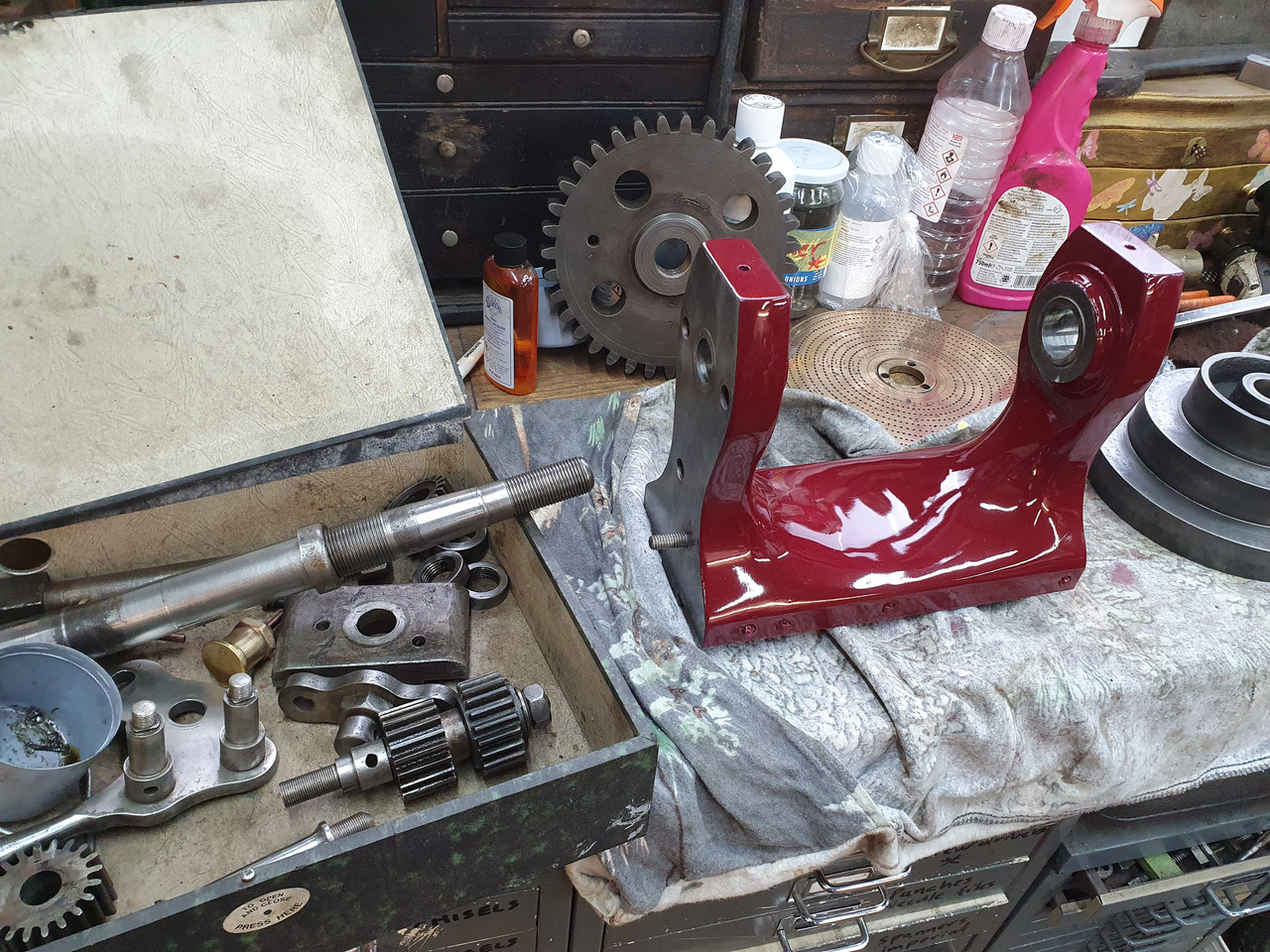
Pete I think there is always the risk of going too far with a rebuild. The reason I painted this was because it had already been repainted and the previous owner had stripped a load of bits down to bare cast. Ideally I like things in working clothes but clean.

Screenshot 2026-03-19 082815.jpg
This was at an auction a while back, obviously got carried away with polishing. It made very little money. There are some very expensive accessories like epicycloidal or geometric chucks. There are some really nice lathes for sale on the ornamental turners site ranging from £3k to £28k. One of the society members passed away recently and his collection is being auctioned off by one of the big auction houses, christys I think.
 
Spendy little toys unfortunately. I have no problem with your cleanup and reconditioning since the "patina" isn't from time and use but more from some neglect and abuse. I'll never be able to afford any of the auctioned lathes unless I can find several more wives to take care of me and that is pretty much impossible. They don't seem to believe I'm a messiah or whatever. Go figure. 🤷‍♂️ There is an Australian that is 3D printing a three stage geometric chuck and once he has the bugs worked out it might be within my reach. 3D printing might be the answer for some of the OT chucks as they don't need to spin fast. Not as pretty as brass and steel but functional for some playtime with the hobby.
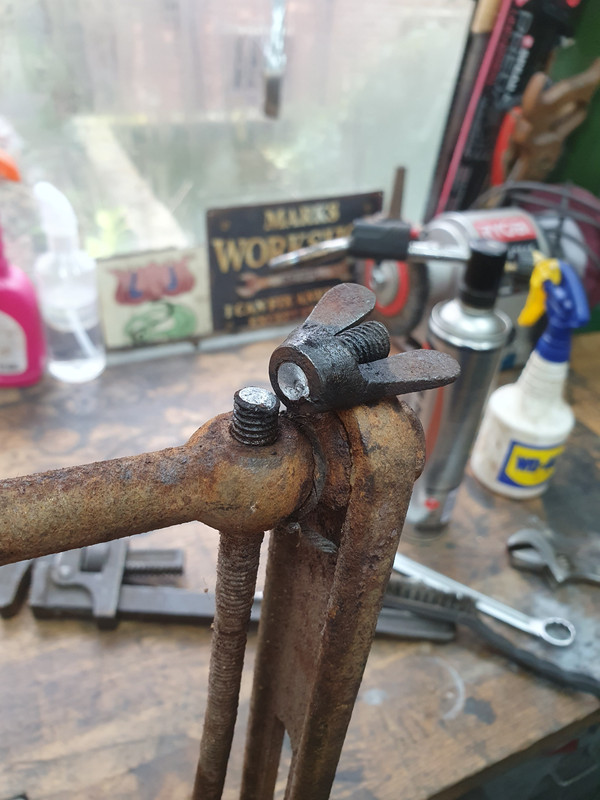
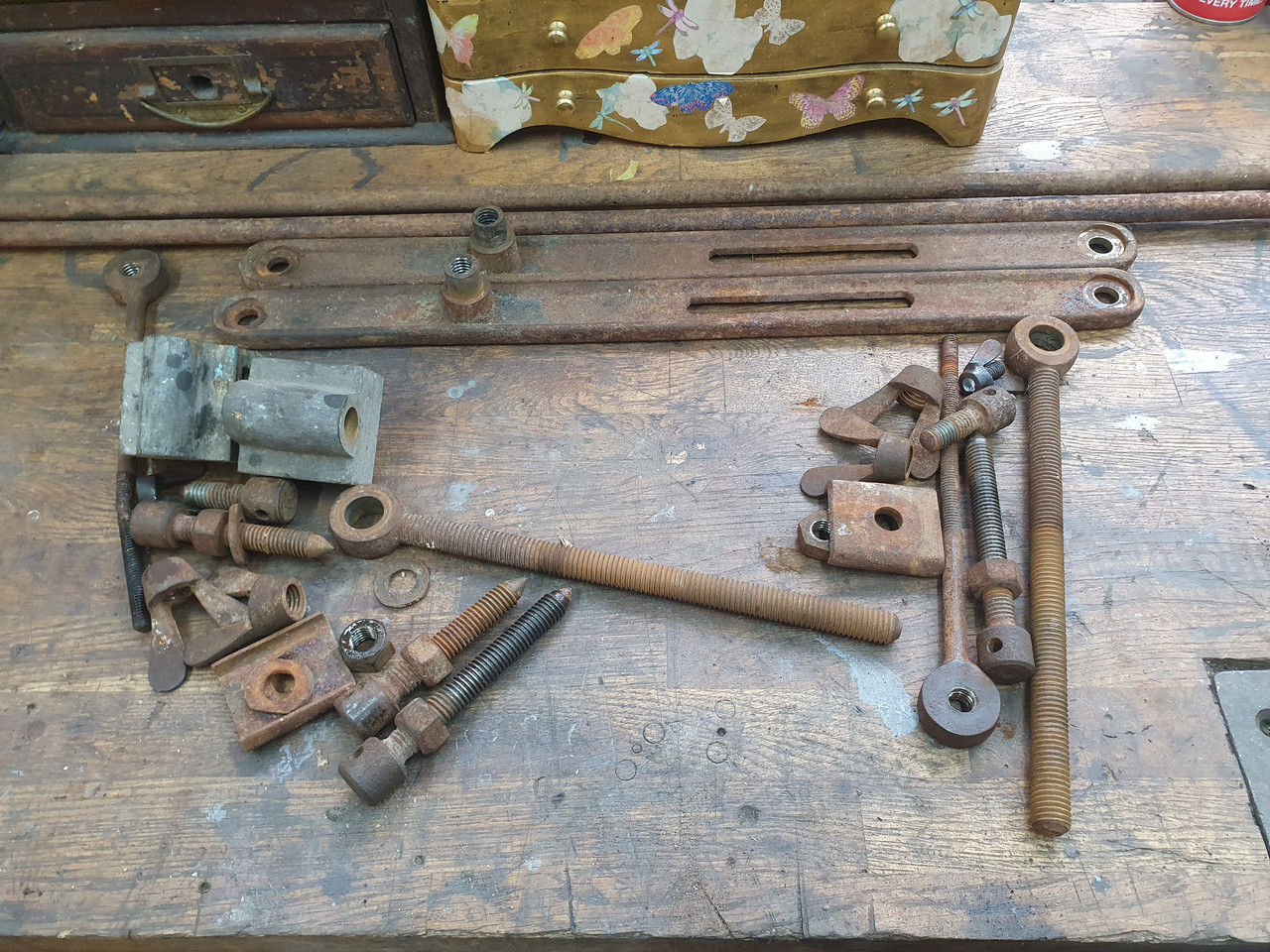
 
The overhead was easy to take to bits only one casualty


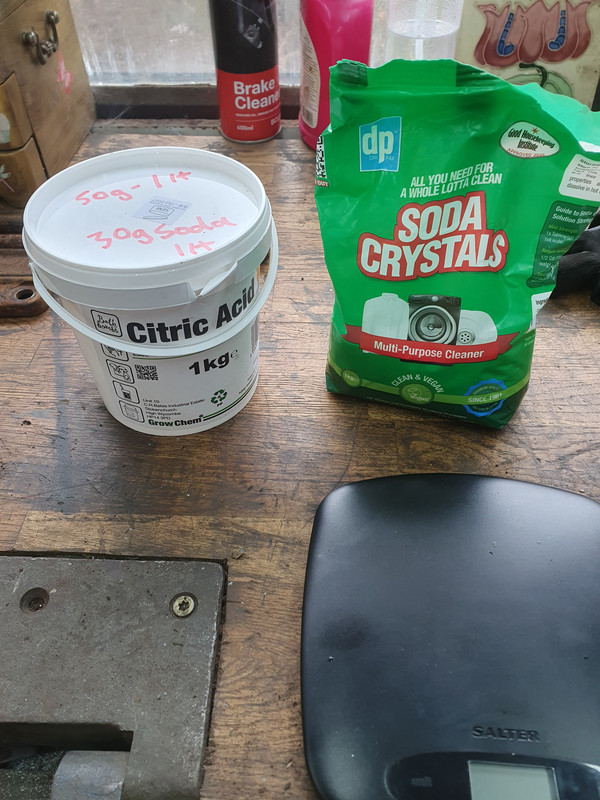
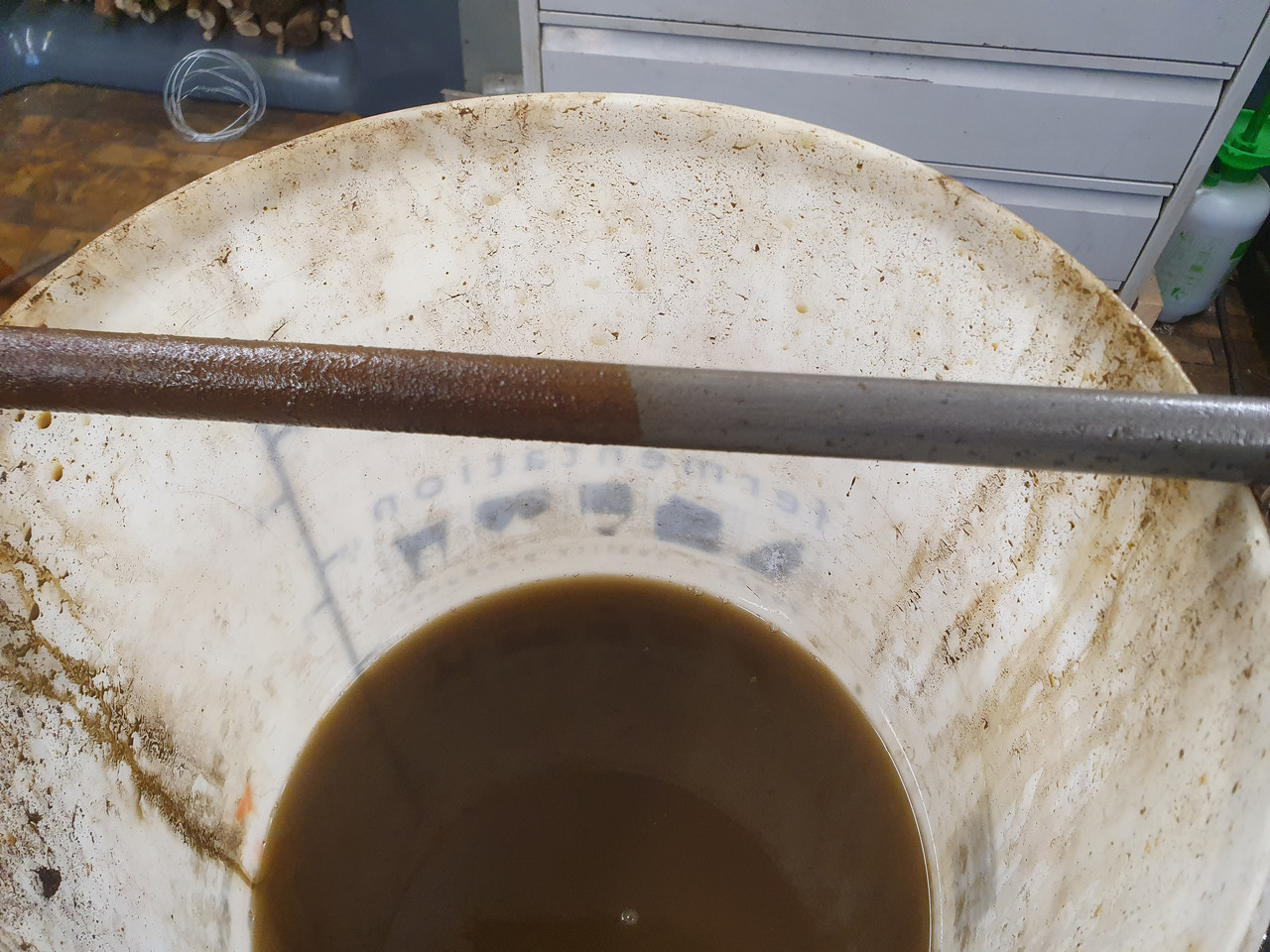
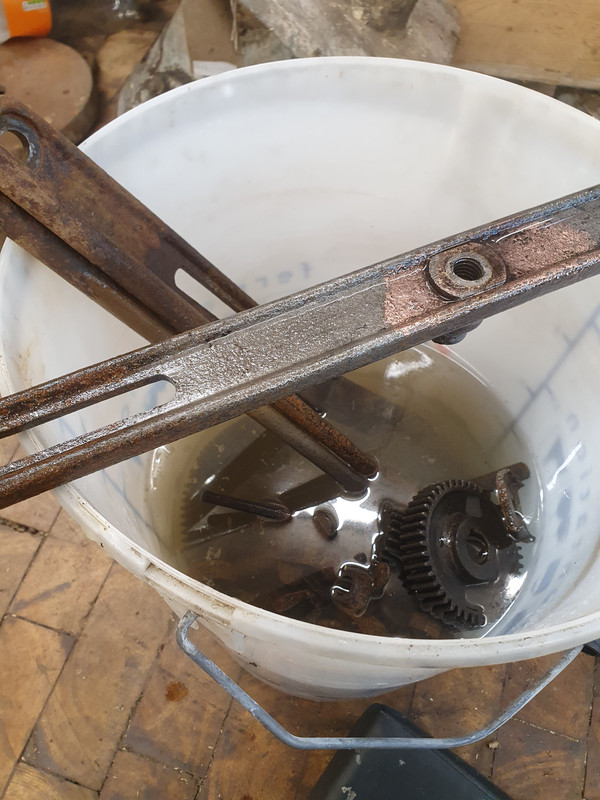
Next I made up 20ltrs of rust remover, this stuff costs peanuts and works just as well as evaporust which would of cost well over £100.


Very happy with the results,


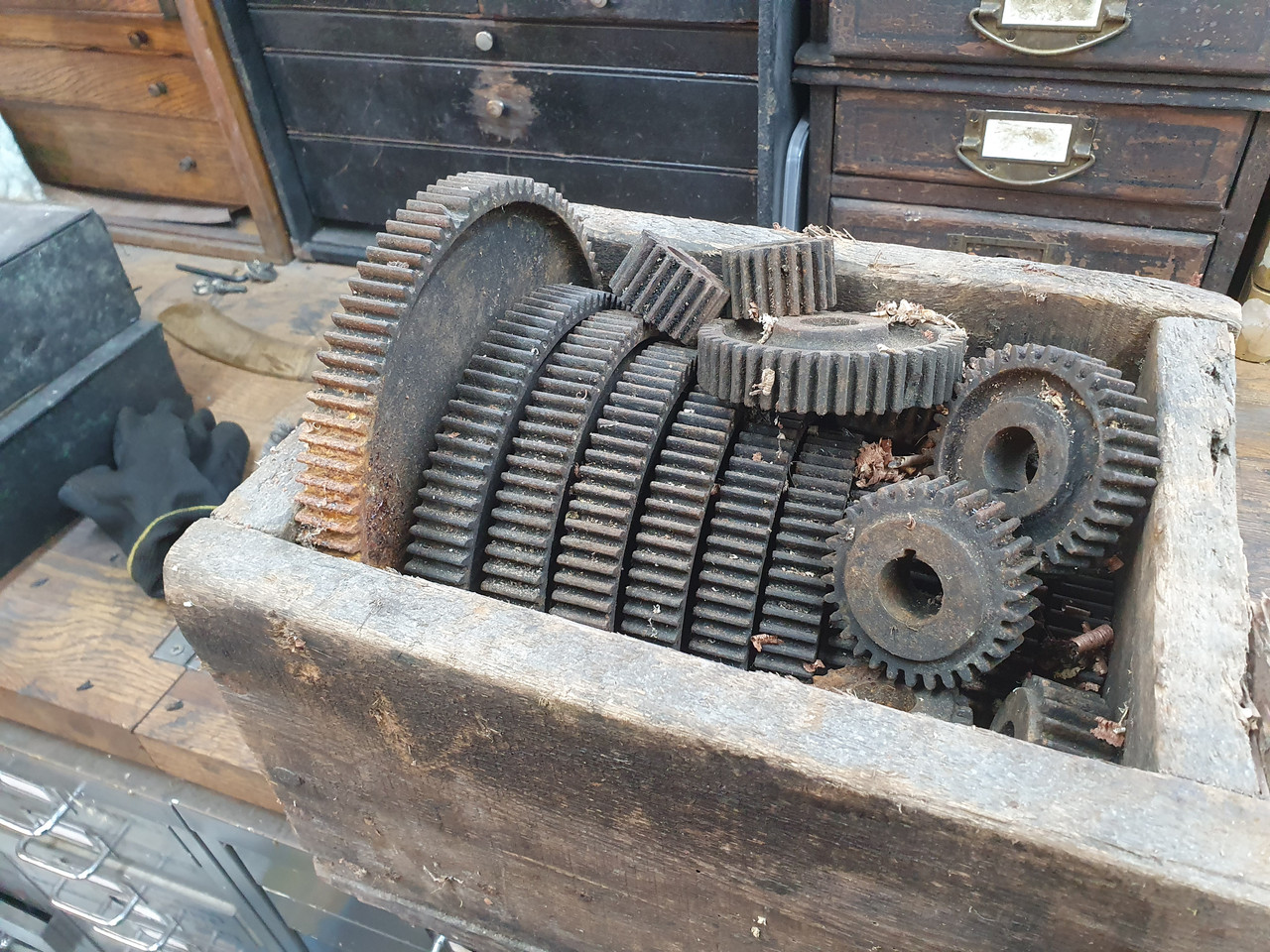
Lots of gears to do


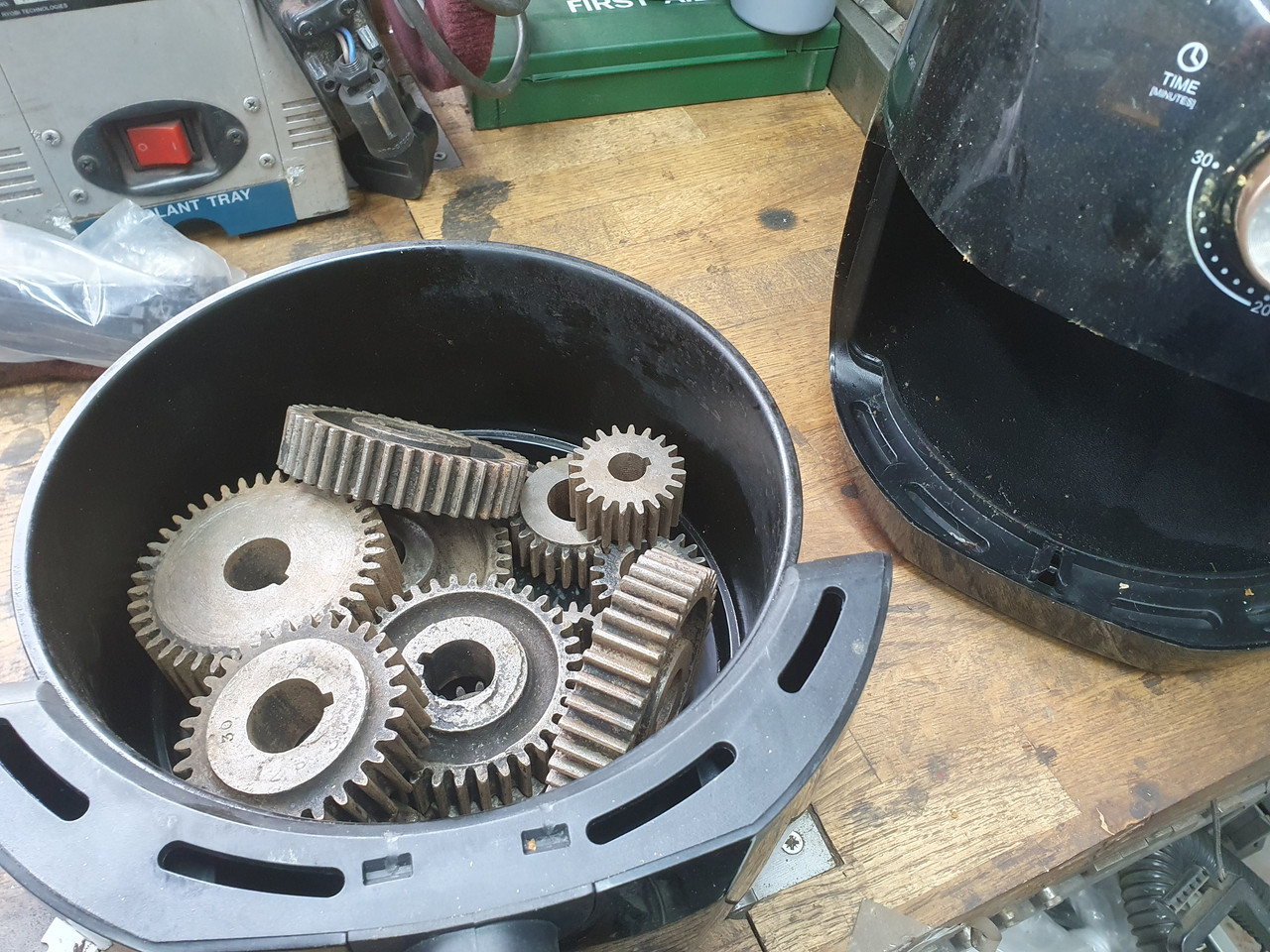
To dry them off I used the old air fryer, I knew it would come in handy when we got a new one. They are looking alot like gears from a drummond type lathe.


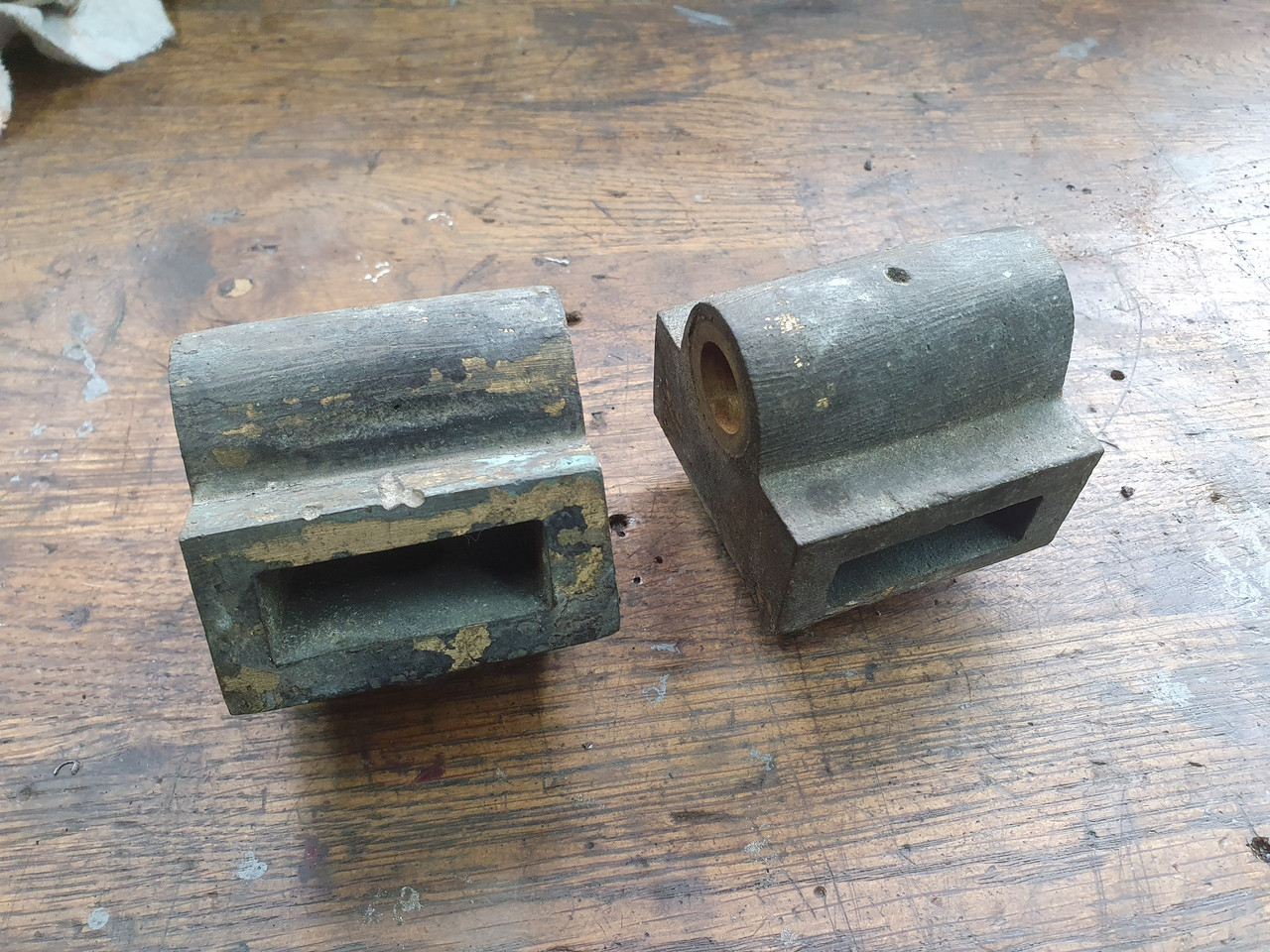
Nice chunks of brass, been painted black over the laquered finish


Great stuff Wallace - especially the sensible use for an air fryer!

And word is spreading about the citric acid + washing soda mix - I recently made up a 5 litre bottle to try and thought it seemed very good too.

What's next for those brass bits - milling? grinding? paint stripper?

Presumably you can weld that broken bit, or make a new one?
 
I thought the air fryer might also work for powder coating, I've always wanted to try it. But the fan might affect the finish, or a bearing heater.

Did you add a bit detergent to your mix? On the welding forum someone said fairy liquid is ok, I put a splash of concentrated engine degreasant.

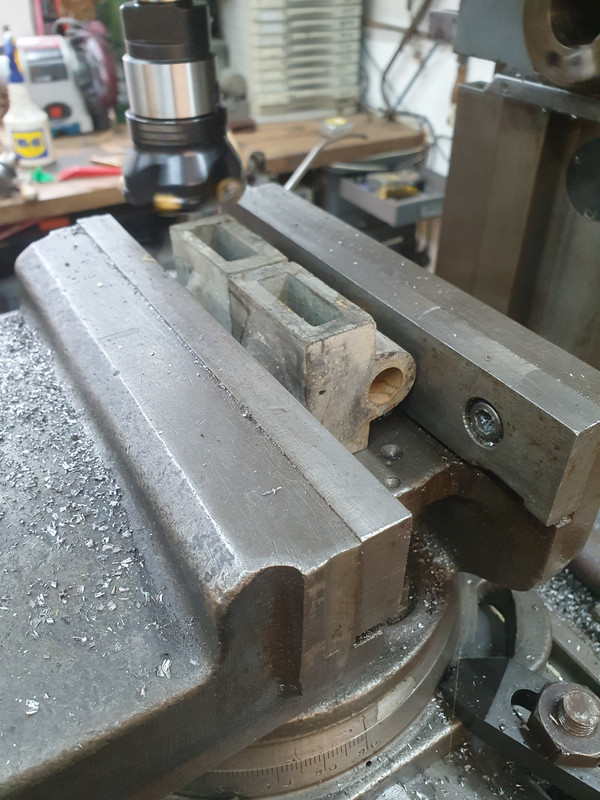
I've milled the bits, it was fun working out speed/feed. It really did not like a slow feed. It had a terrible surface finish. My new shell mill head gave mediocre results, best result came from a new 1" milling cutter with a liberal dose of wd40.
 
I didn't add detergent, but the bits I was experimenting on weren't particularly greasy.
 
best result came from a new 1" milling cutter with a liberal dose of wd40.
Your mill got a "suds" pump Mark? It makes a shockin' difference. That, and slowing the traverse right down. You do have to take the published "standard" speeds as a guide and faff around either side of "recommended values" with feed and depth of cut.
 
Back
Top