• Hi all and welcome to TheWoodHaven2 brought into the 21st Century, kicking and screaming! We all have Alasdair to thank for the vast bulk of the heavy lifting to get us here, no more so than me because he's taken away a huge burden of responsibility from my shoulders and brought us to this new shiny home, with all your previous content (hopefully) still intact! Please peruse and feed back. There is still plenty to do, like changing the colour scheme, adding the banner graphic, tweaking the odd setting here and there so I have added a new thread in the 'Technical Issues, Bugs and Feature Requests' forum for you to add any issues you find, any missing settings or just anything you'd like to see added/removed from the feature set that Xenforo offers. We will get to everything over the coming weeks so please be patient, but add anything at all to the thread I mention above and we promise to get to them over the next few days/weeks/months. In the meantime, please enjoy!

Farm Boy Hit and Miss engine

CHJ":15zm2k25 said:
I once had to tap Qty.8 off 12BA holes in Brass to secure a ring flange on an instrument, took me most of a day. Having the week before broken a 1/4" tap in a large lump of brass (waveguide choke) that had taken a whole day to machine.

Urgh, 12BA (1.3 mm diameter) sounds horrible. I don't think I've ever tapped anything smaller than M2.

For the smaller ones I've done I've tended to use serial taps (I've got sets for M2, M2.5 and M3). They don't seem very easy to get hold of these days, but they're nice for small threads (or threads in tough materials). The first two are undersized (#1 undersized a lot and #2 undersized a bit) and so each of the three taps cuts a much smaller amount of material than a normal (even taper) tap would. I think of them as being like a spotting drill, drill and reamer combination - each one making the job of the next one a bit easier.
 
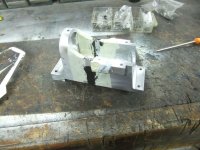
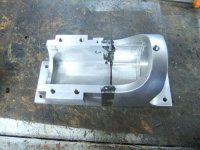
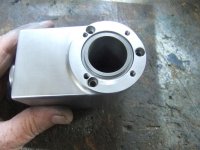
Today was joining the front and rear base units still need to clean them up the tape was there to prevent getting any epoxy into the threaded holes and any reamed holes.

Joining rear and front base units (1).jpg

Joining rear and front base units (3).jpg

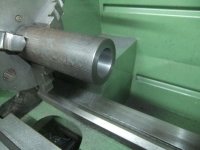
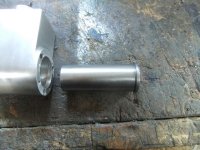
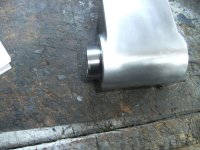
Then onto the cylinder liner which I got to 0.001" under size which will allow me to polish the bore for the piston to run in.

Cylinder liner bored out (1).jpg

Cylinder liner bored out (3).jpg
 
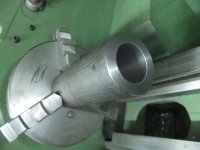
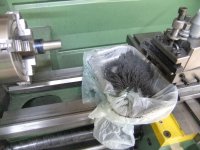
Cylinder complete all but one hole to drill which is for oiling. Lost count the amount of time I had to clean up luckily I had a magnetic tray in a plastic bag which collected a lot of the swarf, just turned the bag inside out to contain the cast iron swarf without it sticking to the magnet. It was a great slid fit as per the instructions on the plans.

Cylinder liner turned (1).jpg

Cylinder liner turned (2).jpg

Cylinder liner turned (3).jpg
 
Enjoying watching your engineering progress. I'd never heard of a hit and miss engine and was holding out for the completion of this to find out about it...but i weakened and did a search and ended up on Wikipedia.

So it only fires again when it slows down and therefore uses very little fuel..

Is it just a demonstration thing or can it provide useful power? You can tell i didn't read a lot about it :)
 
Thank you Chas.

Robert":386yy0ti said:
Enjoying watching your engineering progress. I'd never heard of a hit and miss engine and was holding out for the completion of this to find out about it...but i weakened and did a search and ended up on Wikipedia.

So it only fires again when it slows down and therefore uses very little fuel..

Is it just a demonstration thing or can it provide useful power? You can tell i didn't read a lot about it :)

Just a basic model of the full size hit and miss all be it a working one when finish. The full size were used as stationary type engines running some thing like farm implements and the like.


After a Saturday at a car rally with my woodturning and a day of rest on Sunday(not because it is a religious day but due to being totally knackered after the Saturday). I returned to the workshop and realised that the liner was sticking out by a very small amount. Not sure why so proceeded to measure and remeasure all of my measurements.

Then it dawned on me I had left a small fillet on an internal corner so back into the 4 jaw chuck and with the parting tool banished it from the piece.

Now that I was happy with that I could set up in the milling machine and drill the oil hole, so now very happy with the liner.

With the two part metal epoxy dry(which I was not happy with got it from Halfords so now ordered some JBWeld) I cleaned up all of the joints on the rear and front halves of the main frame.

Tomorrow I will start on the piston.

No pictures of this silly mistake just a red face for not realising this when turning the liner, well you live and learn which is what I am doing a lot of with this project. It could have been worse.
 
I turned the end of a cast iron bar down to 19mm to fit a collet at one end and also a small section of the piston over size so I could reverse it in the 4 jaw chuck. I then reversed the blank in the chuck and turned down the piston to the correct size and faced off, this will be the bottom of the piston. so there is some drilling and milling the bottom as well as a cross hole.
That will be done in a square collet block as the features need to be at right angles to each other. Hopefully that will be done tomorrow as I spent a while getting the piston to a very comfortable fit in the cylinder. As a learner to the hobby like most things it takes a lot longer than a more experienced machinist.
The photos show the piston during machining with a magnetic tray in place catching the cast iron swarf very little ended up on the lathe, will need to turn the bag inside out to contain it. I must buy some plastic bags as the wife keeps on wondering where all the bags are disappearing to :twisted: :lol:
start of piston (2).JPG


The last couple of photos show the cylinder liner in place. If you look carefully there is a small witness mark at each end this is so I can line up a oil hole in the cylinder with the one in the hopper
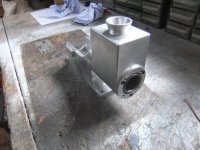
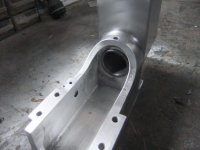
Liner in place (1).JPG

Liner in place (2).JPG


Not posted much but realised that I had not posted the progress on the piston all turned to diameter and the inside milled out and hole drilled and threaded. Still need to part off to length and do the piston ring groove when the o ring arrives


piston progress (1).jpg


Had a very minor mishap on the inside but nothing that would need any more than a little clean up as it I can barely feel the little ridge looks worse than it is.
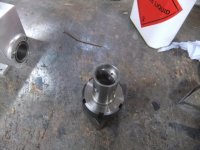

piston progress (2).jpg


I did the piston above a few days ago and decided to make the con rod in the mean time while waiting for the o ring.

After two attempts at this I threw the parts in the scrape pile and ordered some replacement ali. Yes two made and both buggered up by me making stupid mistakes

Any way having a day off of the Farmboy I returned today and turned the blank for the head at least that went right after double checking and double checking again was not going to have another con rod episode.
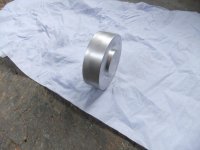
head blank (3).jpg

If the con rod was a failure and leaving me a little down hearted, today I then managed to drop my phone down the loo :oops: :oops: .
Things can only get better at least the head went to plan so far.
 
Thats a great idea with the magnetic tray, I was machining a new cast backplate on my harrison and it made such a mess.
 
wallace":2vxtnpu3 said:
Thats a great idea with the magnetic tray, I was machining a new cast backplate on my harrison and it made such a mess.

It certainly does save a lot of clean up I just take the bag off and the swarf is then in the bag and not stuck to the magnet. If doing a lot in one go you may need to knock the swarf down as it does pile up and hit the chuck.
I also have a thin oven tray under the lathe which also catches most of the swarf just pull it out and empty.

tip time (1).jpg
 
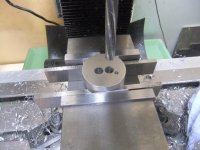
Started on drilling the cylinder head first was the small hole for a post to take the exhaust rocker. Also drill and ream the two holes for the valve guides
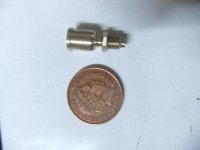
cylinder head (2).jpg

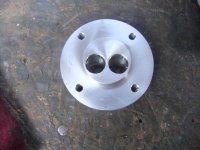
Then onto the four holes for the head bolts also while it was there I did a small dimple which will be where the spark plug will go. The reason the spark plug is not drilled yet is that it needs to be at an angle
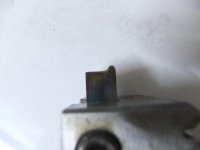
cylinder head (3).jpg

top and bottom view of the head the dimple can be clearly seen. There are still more holes to drill some can't be done until the valve guides are made and in place

cylinder head (4).jpg

cylinder head (5).jpg
 
Been working on the valve guides as these need to be inserted in the head before some holes need drilling


Shaped the outside was the first job as well as drill and ream for the valve stems to fit. You can see that the bases are not yet opened up in the second photo.

valve guides (4).jpgvalve guides (9).jpg

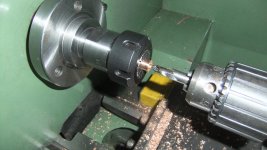
Changed to a collet chuck so that they can be opened up note the bull nose cutter in the drill chuck to give a rounded bottom to the inside

valve guides (17).jpg

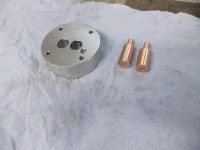
All complete and pushed into the head. They are not going to move now not only can I now drill some holes into the valve guides from the side but they also will aid in getting the at the correct angle as well allow for lining up the fuel chamber where the spark plug pokes through into the cylinder. As well as this it will aid lining up the angled threaded hole for the spark plug which I spotted earlier on in the head(see previous post)

valve guides (28).jpgvalve guides (29).jpg

Slid the valves in just for show, I will fit these properly when I have made some more parts for the head

valve guides (30).jpgvalve guides (32).jpg
 
Except for the spark plug thread which is 1/4" X 32 and I only own a 1/4" X 40 which I seem to have a lot of, so have to order these are ME threads. The head machining is now complete, time to start on some of the furniture for the head like making valve springs and rocker assembly. In the last photo(sorry about the quality) you can make out where the inlet and exhaust ports enter the valve guides. The four holes which can be clearly seen in the bottom of the head photo are for head bolts, the other hole seen in the top of the head is for the rocker arm support and the little hole in the side for a grub screw to lock the support in place.
It seems as if everything turned out OK as closer to completion of the head I was worried that if something went wrong there is a lot of work to get back to here.

Head complete except the plug thread (2).jpg

Head complete except the plug thread (10).jpg

Head complete except the plug thread (8).jpg
 
Very little done today just the valve spring keepers, made from stainless steel the measure 0.400" X 0.125" with a 0.125" hole for the valve stem, and also sized a small piece of brass for the rocker arm ready to be drilled and machined.

valve spring cap (4).jpg
 
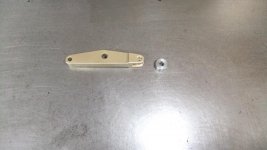
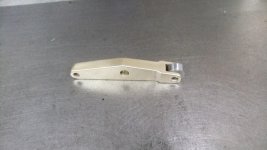
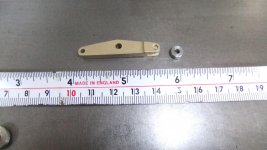
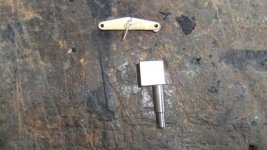
Finally got around to the rocker arm and a small steel bearing which will push on the exhaust valve. As can be seen it is just a fraction over 1 1/2" long.

rocker arm  (2).jpg
rocker arm  (3).jpg
rocker arm  (5).jpg

Next job the rocker arm support
 
Had a delivery of a set of drill bits so I could drill a cross hole in the rocker arm pivot pin, They range from 0.013" to 0.039" so some very small drill bits.

rocker arm support (1).jpg

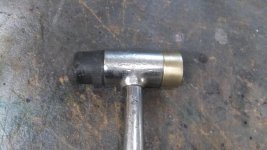
Then the end of my hammer broke so replaced that head with some brass, I am thinking of doing the other end in ali as the black rubber end is very soft.

rocker arm support (8).jpg

Then onto a little of the engine first job drill the cross hole for a 1/32" split pin as well as make a start on the rocker arm support turned the upright and then milled the top to get ready to drill a hole and slot for the arm to sit in. It will be a different shape at the top once finished

A picture of the rocker arm with the pin installed. This is not all I have done today as the grass needed cutting and some gardening.

rocker arm support (4).jpg

Rocker support in place I need to make a small flat on the bottom so that a grub screw has somewhere to grip as well as keep the support at the correct angle for the exhaust valve

rocker arm suppot in place (2).jpg
 
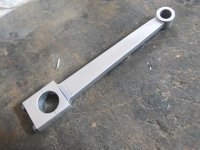
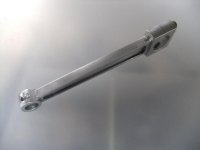
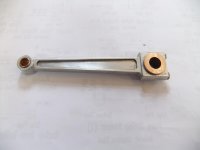
I machined the con rod before the weekend as I was at a show with my woodturning. It still needs some material machining out of the sided to lighten it.

con rod (1).JPG

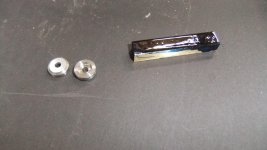
Then onto today. I should really complete the con rod but as I was away the weekend I thought something small before resuming on that. So I found the oilers for the crank shaft bearings and started on the first of the two, made from brass. I still need to drill out the larger hole in the top but that will wait until I have got the second one to this stage before I drill and tap a piece of metal on the lathe to screw these into to do that operation. That is not a nut on that but machined as part of the oiler

Crank oiler (12).JPG

They do not show any caps for these but I may make a couple of them later on.

I did have a go at grinding my first form tool for the outside shape and pleased the way that and the oiler looks.

Crank oiler (13).JPG
 
Malc2098":q2tk5o36 said:
Still nice.

Thank you Malcolm. Some times I only get a little time so only manage the odd small part but then it is not a race. The garden needs attending as well as doing shows with my woodturning

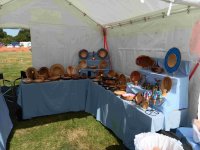
Belmont 2023 1.jpg
 
How come your Days and Weeks are ten times longer than ours, I seem to be lucky if I can fit in enough enthusiasm to achieve anything other than daily living chores and plot maintenance.

Excellent shop output as usual, a true machinist at work when odd ball tools are made to aid completion of an ongoing task.
 
CHJ":1esx4yqk said:
How come your Days and Weeks are ten times longer than ours, I seem to be lucky if I can fit in enough enthusiasm to achieve anything other than daily living chores and plot maintenance.

Excellent shop output as usual, a true machinist at work when odd ball tools are made to aid completion of an ongoing task.

I also have a garden to maintain as well as the vegetable plot. I just do little bits at a time some days I wish I could do more in the workshop as I need to do a little woodturning to catch up. Then I was making Pizza's as we enjoy freshly made meals many using home grow stuff

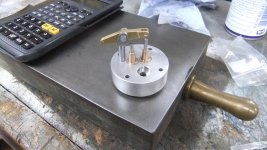
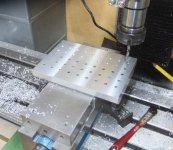
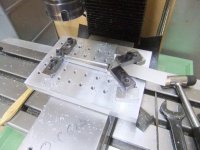
Beside these items I did make a small fixture plate so I can do the bits on the side of the con rod.

First picture during the drilling and tapping of all the holes, second photo of the plate complete but with temporary fixing clamp I will make some better ones. The con rod is only there for the photo I will try and get some when I machine the sides

fixture plate (12).JPG

fixture plate complete (6).JPG
 
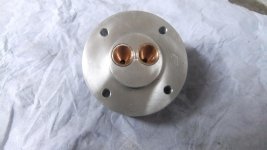
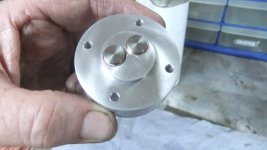
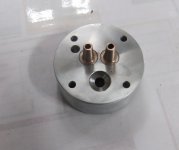
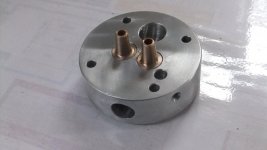
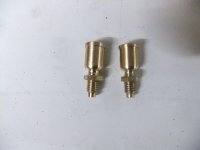
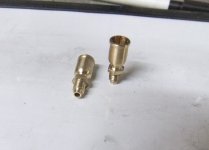
And now there is a pair, complete and with the through hole and larger bit drill to hold a little oil.

Why is it that photos make the look slightly different like the hex part yet the micrometer says they are the same

crank oilers pair (2).jpg

crank oilers pair (4).jpg
 
Why is it that photos make the look slightly different like the hex part yet the micrometer says they are the same

This is a well-known foible of camera optics when you are in "macro" proximity to the object Dalboy. You are marginally closer to the left-hand one in your photo, so the distance to the right-hand one is significantly greater - in optical distance - so it appears smaller. When photographing say, a footie team, the distance to any player is very similar, so if you had identical twins playing, they would look dimensionally identical. Try sketching a ray diagram with the actual distances (lens-to-oilers) and measure with your micrometer, you'll see what I mean.
 
Got around to getting the con rod complete first part was to mount it on the platter that I made and set it up to mill out the recess I had to do this 4 times total because of the taper.

Con Rod final work (2).jpg

The next up was to slim down the big end cap as it was too large. The screw that you can see in the big end is not a mistake but designed to be like that when I make the big end bearing I have to make a cut out on both sides to allow for them. Also seen is the little end bearing which is a tight fit. Final job was to make the cut out for the little end bearing oil way which can be seen in the second photo along with the oil hole for the big end.

Con Rod final work (8).jpg

Con Rod final work (11).jpg
 
Another showcase quality piece to add to the collection, once again the considerable time expended on finishing detail over pure function shines through.
 
Took a break from the main components today and made a start on the main oiler for the engine as I had some test tubes arrive for some single flower pots I will be turning from wood, before I do them I needed a small length of one of them for the oiler.

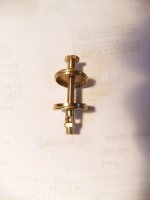
Most of this is from brass the first photo is a part assembled oiler. There needs to be a control needle and a sprung piece to stop it turning as well as a nut and obviously the glass.

drip oiler (1).jpg

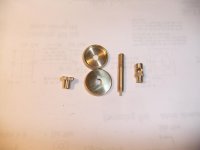
This photo is the parts made so far except those which need to be made as above.

drip oiler (7).jpg

I am enjoying working with brass. The two discs which form the top and bottom of the oiler are just over 3/4" diameter to give an idea of the size

I have also prepared some bronze for the big end bearing no Photo
 
If it were me I think I would make a few glass tubes, one of the few things I remember from Chemistry is how easily test tubes break, looking marvellous as always, particularly liked the shape of the con rods.
It looked to me as if fitting the other rocker arm might be a bit of a squeeze a few photos back. But I’m sure you’ve got it sorted.
 
Cabinetman":129fxvno said:
If it were me I think I would make a few glass tubes, one of the few things I remember from Chemistry is how easily test tubes break, looking marvellous as always, particularly liked the shape of the con rods.
It looked to me as if fitting the other rocker arm might be a bit of a squeeze a few photos back. But I’m sure you’ve got it sorted.

Thank you I have plenty of test tubes :twisted:

There is only one rocker arm the inlet has a weaker spring than the exhaust so that when the piston moves down a vacuum is formed overcoming the spring and drawing in air fuel mix
 
Been busy with the last part of the con rod and that is a bronze big end split bearing. The small dots are there to make sure that when it is taken apart to assemble the complete model they stay in the correct orientation
con rod with bearings (1).jpg

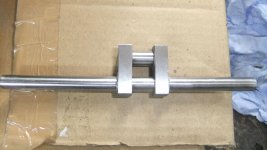
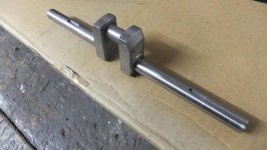
Then it is onto the crankshaft assembly, the plans show it mad from a single piece of steel but I have decided to make it up from two small pieces and some silver steel.

First was to make the two webs made easy by the use of a small home made stop which worked a treat.

crankshaft 1 (7).jpg

Turning the raised sections as well as the curve on both ends I had to do this set up 4 times two for each piece. There are two bosses on each web one is deeper so have to remember when it is finally fitted together

crankshaft 1 (20).jpg

After the part being deburred I am pleased with the result

crankshaft 1 (26).jpg

All the parts for the crank shaft assembly

crankshaft 1 (46).jpg

A dry fit to check everything was in line. I have left the main shaft in one piece until it is finally fitted together then machine the middle away this will ensure everything is straight. I will locktite them in and also drill for a tapered pin in each of the joins. The two pieces at the top of the photo are just machined to the correct width for the gap in the middle.

crankshaft 1 (1).jpg

Still more to do to this once it is finally fitted together
 
What with gardening and cooking yesterday, I always cook a special meal on a Saturday for the wife to give her a day off. Nothing got done on the engine.

Today started a lot better so I took my time as there is a lot of work to restart the crankshaft if I mess up.
Drilled and pined the second conrod bearing and cleaned that up and as can be seen the pins disappeared

Crank shaft 2 (6).jpg
Crank shaft 2 (7).jpg


The main shaft was loctited in at the correct spacings before drilling and taper reaming for the tappered pins as I did with the first shaft once again cleaned up and no sign that they have been pinned. I don't want it coming apart

Crank shaft 2 (13).jpg
Crank shaft 2 (14).jpg
Crank shaft 2 (15).jpg
Crank shaft 2 (20).jpg


The job I was not looking forward to is machining two 1/8" keyways the longest one is 1/2" long This was done using a 3/32" slotting cutter so was very slow as too much pressure on that would snap it like a twig. This meant that I had to machine down the centre and then widen it with a cut down each side

Crank shaft 2 (22).jpg

Final job was to cut and machine away the main shaft that passed between the two crank webs. At least that is the crankshaft completed

Crank shaft 2 (29).jpg
 
Thank you Chas getting there slowly.

What with making the crankshaft the next part was drilling and reaming for the main bearing, as well as making the bearings which was not so bad.

Anyway this job was done without any problems but I did spend a little time setting up to do this task.

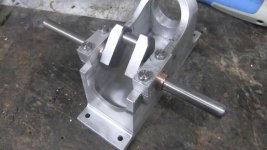
All done and fitted just a little clean up now to get rid of some marks. I do need to ream the bearings again as the caps pinch it very slightly rather this than too loose.

crankshaft fitted (6).jpg
 
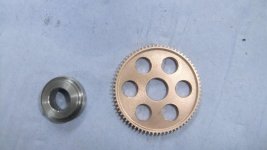
A simple job completed and that is to prepare the blanks for gear cutting, I need to do a little reading on the dividing head to cut the teeth.

One of them is steel and the other bronze they also need to be spot on for the diameter as well as the centre hole size.

gear blanks (2).jpg
 
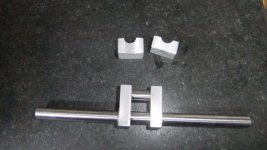
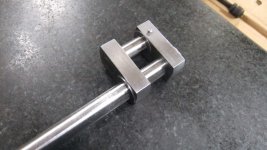
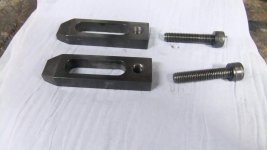
Started to set up for cutting the gears, but things needed doing first. Starting with an arbor for the gear cutter. Then discovered that my milling machine clamps were to large to hold the rotary table in the vertical position (It also acts like a dividing head) so two clamps were made luckily I could use the T nuts and the threaded rods.

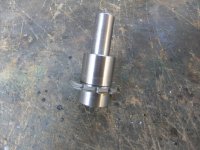
Gear cutter arbor.jpg
rotary table clamps.jpg

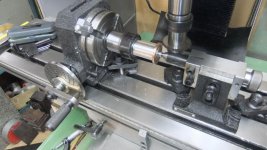
Finally managed to get set up as can be seen.

gear cutting set up (2).jpg

And even better managed to complete the larger of the gears. Now that I have completed my first go at a gear I feel more confident to do others as and when needed

gear cut (3).jpg
 
Dr.Al":2j71q9cx said:
Looking good. I find gear making incredibly satisfying.

It’s so many years * since I last cut one, I’m afraid I would have to get the reference books out to refresh my D.H. theory let alone go through all the trepidation of wondering if I’d got the Tooth PCD etc. correct.

Would be like going back to the days of being scrutinised on the running fit of a fixed centre gear chain. (those are just a trial fit, honest!)


* Just worked it out must have been about 64/65 years ago.
 
CHJ":3t3zjzvj said:
Dr.Al":3t3zjzvj said:
Looking good. I find gear making incredibly satisfying.

It’s so many years * since I last cut one, I’m afraid I would have to get the reference books out to refresh my D.H. theory let alone go through all the trepidation of wondering if I’d got the Tooth PCD etc. correct.

Would be like going back to the days of being scrutinised on the running fit of a fixed centre gear chain. (those are just a trial fit, honest!)


* Just worked it out must have been about 64/65 years ago.

Luckily for me they give the diameter of the gear blank as well as the tooth count and the cutters to use as well as the depth of cut. I do have a book on gear cutting which I am reading.

Anyway I have now managed to do the second gear and this one I am very pleased with it just seemed to go better.

Gears complete (1).jpg
 
Back
Top