• Hi all and welcome to TheWoodHaven2 brought into the 21st Century, kicking and screaming! We all have Alasdair to thank for the vast bulk of the heavy lifting to get us here, no more so than me because he's taken away a huge burden of responsibility from my shoulders and brought us to this new shiny home, with all your previous content (hopefully) still intact! Please peruse and feed back. There is still plenty to do, like changing the colour scheme, adding the banner graphic, tweaking the odd setting here and there so I have added a new thread in the 'Technical Issues, Bugs and Feature Requests' forum for you to add any issues you find, any missing settings or just anything you'd like to see added/removed from the feature set that Xenforo offers. We will get to everything over the coming weeks so please be patient, but add anything at all to the thread I mention above and we promise to get to them over the next few days/weeks/months. In the meantime, please enjoy!

Micrometer storage

Bod1

New Shoots
Joined
Jun 19, 2021
Messages
78
Reaction score
34
I have several micrometers that see almost no use, from one years end to the next,
Packing these up for storage (rust proof paper etc.) should the anvil faces be closed, or open, or clamping paper?
I seem to recall, that to prevent corrosion the faces should be.... that bit I forget.
Any ideas?

Bod1
 
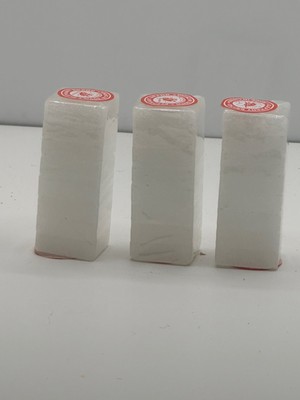
Someone told me about camphor blocks as a rust preventor so I'm trialling them. Not expensive and come in little rolls. I've been adding them to drawers containing tools.
 
Camphor blocks, would that be "Moth balls"?

Bod1
 
I always put the silica packs that come in medication bottles into my tool storage drawers. I'm sure the silica packs can be purchased.
 
Well I am no expert, but I would put a piece of paper (the special brown stuff, I forget what it is called) between the jaws.
When I packed all my stuff up, the stuff that was wrapped up in the brown stuff survived perfectly (apart from that which got nicked)
 
Duke, your silica packs WILL hydrate with exposure to atmospheric water vapour and thus, become useless. Once a year, pop then into a gentle oven, circum 100°C, for an hour. That will re-de-hydrate them.

I used to do this periodically on night shift for the various desicators around our lab. The loose silica changes colour, depending on degree of hydration. Colourless, you got to dry them out. Deep pink to purple was the aim.
Sam
 
Where the anvils touch on smaller micrometers, I leave a small gap. As mine are in constant use I do not bother with anything inside the storage boxes. Also because I have a gentle heat in the winter (Electric Greenhouse heaters) in the workshop, this helps keep rust at bay
 
The EU kicked proper mothballs into touch decades ago. Usual common sense legislation.

We have a tiny stock left, and a lot of new carpet, and carpet/clothes moths around. The perceived harm from Napthalene is nothing compared to the potential damage, and, AFAIK, moth damage is NOT covered by insurance. Then there's the piano felts: dampers and hammers--they love those, apparently.

Back on topic, anything that displaces water vapour from the air surrounding the item ought to work. The question is how sticky you want it to get - I'd think 'not at all' for a micrometer. The brown paper isn't everlasting, but it does work.

And ideally you need to have a reasonably strong alkalai in proximity, because the other thing is keeping acid ions from getting into the local atmosphere. I was watching Dan Gelbart on YT, explaining this in the context of toolroom and metrology equipment. He said that the tiniest amount of acid - e.g. vinegar, or the hydrochloric I use for de-rusting things, or sulphuric acid from batteries - tiny spillages for example, can trigger the rusting process and ruin precision equipment.

I think I've seen the effect myself :-( The answer (for me) is probably to not store batteries and precision kit close to each other.

I think I might try supermarket bicarb (for cooking) in the same container, as (a) it's a mild alkali, and (b) it absorbs water.
 
Last edited:
How does that work, Eric? Surely either it gets rid of rust or it causes it?
I've forgotten all the little bit of chemistry I ever learned.
S
Er, yes.

I direct you to the esteemed Mr. Gelbart's YouTube channel - taking metrology to staggeringly accurate levels...
... I think he explains in this video:
but I might have the wrong one. The man is a genius (his string of patents prove this).

By the way, these workshops were designed as part of his house!

And the alkali in proximity was my idea, not his - I could well be wrong, especially as your chemistry knowlege far surpasses mine!
 
The forum has its own resident metrologist who may be able to help - Paging @Dr.Al !
 
I'm not sure I'm that much of an expert on this (but thanks for the page @AndyT!). The micrometers I use most often get used often enough that I don't worry about them (and I have a dehumidifier in the garage to limit the humidity and minimise rust). The ones that get used rarely get wiped with some rust prevention stuff and left with the jaws slightly open, but I've no idea if that's best or not. I can see the advantages of each approach, but with the rust prevention stuff I don't think the risk is too great.

I've used a couple of different rust prevention things in the past, Rustilo being one (but that's virtually impossible to buy now in anything other than huge quantities). Shield Technology's Metalguard Ultra is another good one that's a bit easier to get hold of I think. I bought my can from Arc Euro Trade who are sadly in the process of closing down (and they don't have any Metalguard Ultra left in their sale). It looks like that's been bought out by Rustins, so I can't comment on whether it's still the same stuff.
 
I watched that video by Mr Gelbart a while back and realised I had a gallon of 85% phosphoric and a container of brick acid and a container of white vinegar. I've always had a fight with rust over the years. And have tried everything. Its quite a challenge with 16 machines.
 
Thanks all, I shall leave a small gap filled with rust paper. Also I remove batteries from those that use them.

Bod1
 
I watched that video by Mr Gelbart a while back and realised I had a gallon of 85% phosphoric and a container of brick acid and a container of white vinegar. I've always had a fight with rust over the years. And have tried everything. Its quite a challenge with 16 machines.
Only 16 Wallace :)
 
Only 16 Wallace :)
I forgot the ornamental lathes so 20. :oops: I used to have 10 machines outside waiting for rebuild but me lady got sick of looking like steptoes scrapyard so I sold them. Now there are only 1 1/2. I'm trying to convince her that a machine base in bare cast iron would look good with a nice thick top of oak would look good as a kitchen table. She's not having any of it but I can wait.
 
Back
Top