• Hi all and welcome to TheWoodHaven2 brought into the 21st Century, kicking and screaming! We all have Alasdair to thank for the vast bulk of the heavy lifting to get us here, no more so than me because he's taken away a huge burden of responsibility from my shoulders and brought us to this new shiny home, with all your previous content (hopefully) still intact! Please peruse and feed back. There is still plenty to do, like changing the colour scheme, adding the banner graphic, tweaking the odd setting here and there so I have added a new thread in the 'Technical Issues, Bugs and Feature Requests' forum for you to add any issues you find, any missing settings or just anything you'd like to see added/removed from the feature set that Xenforo offers. We will get to everything over the coming weeks so please be patient, but add anything at all to the thread I mention above and we promise to get to them over the next few days/weeks/months. In the meantime, please enjoy!

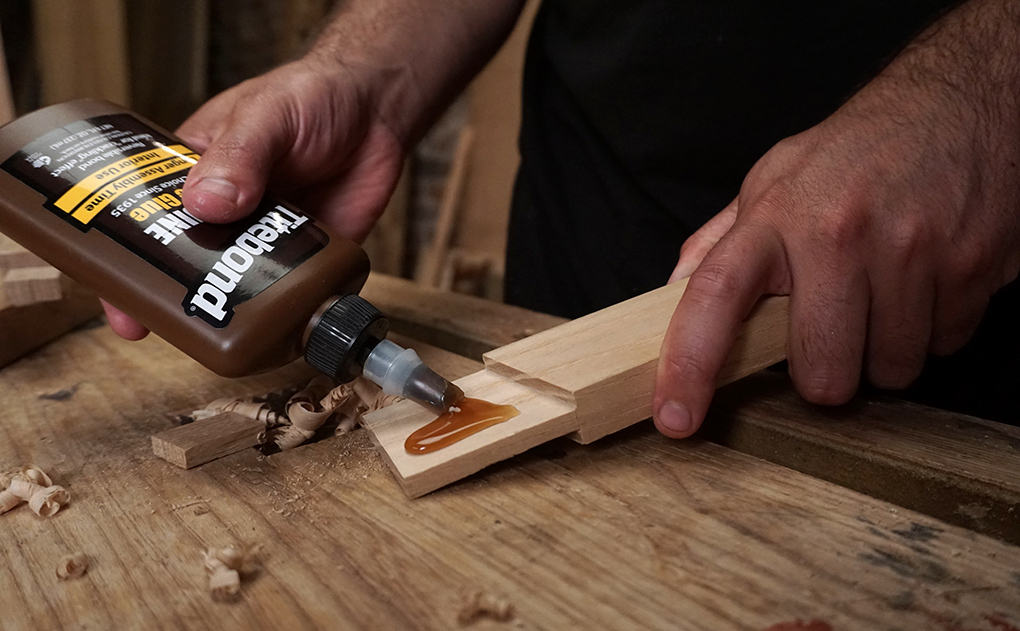
Old Glue - an experiment

No, unless you count superglued joints (generally sticking broken bits back on and them then detaching again later). That lack of failures is why I don't really consider strength as a key priority.
So PVA, Resin W would be my choice, in small 125ml bottles is the way to go? I do not recall ever having a problem with its shelf life either.
 
So PVA, Resin W would be my choice, in small 125ml bottles is the way to go? I do not recall ever having a problem with its shelf life either.
You might well be right. It isn't one I've ever tried before but I'd be interested to give it a go.

The reversibility of the protein glues appeals to me (not that I've ever tried reversing a glue joint) and that was also another part of what spurred this little trial.

From what I've read, protein glues lubricate joints (to make assembly easier) whereas PVA/TB type glues tend to swell the wood & make joints harder to assemble. Protein glues also leave a less visible glue line apparently. I don't know whether those traits are just applicable to hot hide glues or also to the liquid protein glues.
 
I'm a big fan of epoxy, but not usually for wood.
I've spent too long trying to chip rock hard epoxy off botched chair repairs, but I've always been an Araldite accolite. Evostik Resin W was always my go to wood glue, until Everbuild arrived. My father had tins of cascamite powder in his workshop, but generally used Resin W.
 
I'm a big fan of epoxy, but not usually for wood.
I've spent too long trying to chip rock hard epoxy off botched chair repairs, but I've always been an Araldite accolite. Evostik Resin W was always my go to wood glue, until Everbuild arrived. My father had tins of cascamite powder in his workshop, but generally used Resin W.
I’ve always used resin W, what is it about Everbuild that makes you think it’s an improvement pls?
 
I'm unlikely to change my brand as I've been happy with it for general projects but the interesting thing for me as a Titebond user is the performance of old glue v new. I wonder if the formula has quietly changed. My glue is often relatively old but a number of years ago I inherited some original when a pal died it was open and I guestimated a good 10 years old. I used it over the next 12 months or so and it was absolutely fine.
I have a tub of the new / original Cascamite sent to me when it was reintroduced and I've never opened it.

With Al's permission would it be possible the make the experiment a forum sticky?
 
I find it slightly strange reading this that folks would spend many hours on a project using wood that is so expensive these days only to scrimp on the cheapest aspect & use old glue.
Don’t get me wrong as Al has shown some old glues will work okay but is it really worth taking a chance on old glue when a small pot of glue is so cheap, especially when you consider the effort you’d have put in.

I’d add with cascamite type powder glues I was taught if it won’t mix into a smooth paste & you are left with lumps then the glue has gone off.

One thing I like about Everbuild D4 is when its gone from its normal white colour to a deep cream colour in the pot you know its past its use by date, I’m not saying you can’t use it, but that’s when I’d be buying a new bottle & use the old glue as end seal.
 
I find it slightly strange reading this that folks would spend many hours on a project using wood that is so expensive these days only to scrimp on the cheapest aspect & use old glue.

Don’t get me wrong as Al has shown some old glues will work okay but is it really worth taking a chance on old glue when a small pot of glue is so cheap, especially when you consider the effort you’d have put in.

That's an entirely fair point. For me the investigation was less about cost and more about waste: I've got very frustrated by having to throw away bottles of Titebond 3 when they're half full. Also a fair amount of it was about interest: I'd never tried a lot of the protein glues and I wanted to do a fair-ish comparison.

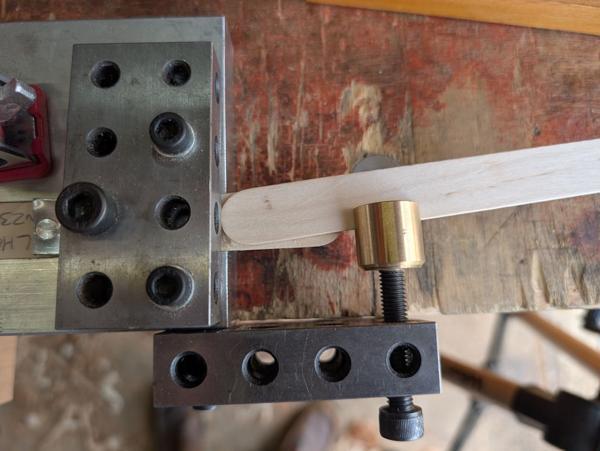
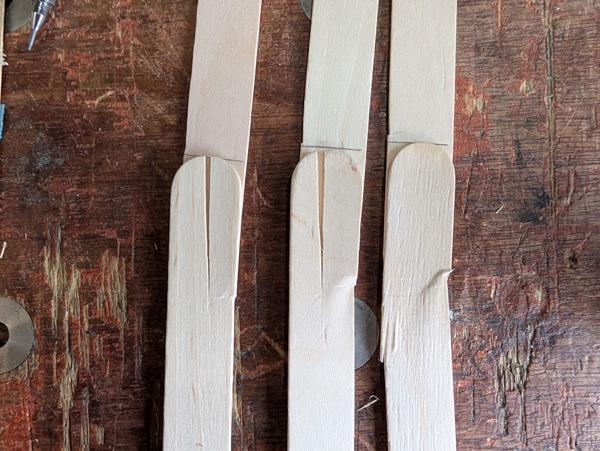
One of the conclusions I've taken from this is that most of the old glues would probably be absolutely fine assuming the joinery is doing most of the work. Most of the glues survived the shear test (which is akin to trying to rip a dovetail apart) and even those that failed (with the exception of the weak mix of fish glue flakes) took a lot of force to break the joint (just less force than it took to break the wood). The peel test was less kind on the glue of course but that's applicable to different joints.

I’d add with cascamite type powder glues I was taught if it won’t mix into a smooth paste & you are left with lumps then the glue has gone off.

That may well be true (and it's interesting to know). However it's worth mentioning that the Polyvine Cascamite (which, as has been discussed, may not actually be the original "Cascamite you know and trust" despite the labelling on the packet) was difficult to mix into a smooth paste when I made the chopping board with it and that was when the tub was brand new.
 
I wouldn't want it to appear that I am in any way focused on epoxy, but here's another thing in it's favour: it sets very hard and inflexibly. Now, in many circumstances this is a real negative, but if you are laminating and don't want any spring-back, then epoxy is the sensible choice.

Oh, and cleaning up is easy with acetone.
 
That may well be true (and it's interesting to know). However it's worth mentioning that the Polyvine Cascamite (which, as has been discussed, may not actually be the original "Cascamite you know and trust" despite the labelling on the packet) was difficult to mix into a smooth paste when I made the chopping board with it and that was when the tub was brand new.
That doesn’t surprise me at all Al, sadly I wouldn’t trust any glue with Cascamite on it with the troubles they had with it over the last however many years, I seem to remember @Mike Jordan writing about the troubles he’s had & I certainly had some that wouldn’t mix nicely
 
I’ve retired now but recently purchased and used some cascamite by Ureca.
It worked just as the Borden chemicals cascamite did for all those years. My problems were all to do with Polyvine cascamite,
I have been avoiding all products bearing that name for years..
 
This thread sent me on a memory trip to see if could find a glue that I used back in 1988 to 1992+ ... Memory says 'green bottle, waterproof, white in colour but dried a creamy/yellow colour and expanded to fill joints during drying when clamped together - had to be scraped off and was as sticky a fk. I used it for clamping the different timbers I used for the Falconry blocks I made around that time... with them being designed for exterior use.

I had to resort to using Google which came up with two possibilities brand wise: Balcotan 100 Match and Bison PU Max. I don't recall the name Balcotan... and 'Bison' is very vaguely sounding familiar... Modern day version is available as "Bison PU MAX D4" and available but in a bright yellow bottle. Another alternative would seem to be "Everbuild Lumberjack 30-Minute PU Wood Glue".

Apologies for the trip down memory lane chaps 😉
 
I wouldn't want it to appear that I am in any way focused on epoxy, but here's another thing in it's favour: it sets very hard and inflexibly. Now, in many circumstances this is a real negative, but if you are laminating and don't want any spring-back, then epoxy is the sensible choice.

Oh, and cleaning up is easy with acetone.
I wouldn't want it appear that I'm anti-epoxy either. I've used some this morning in fact. It just wasn't one I considered in this test.
 
This is an interesting take on liquid hide glue (I think that all these benefits apply to liquid fish glue too, but I couldn't say for certain):

 
Al, thanks for this, it is a very interesting and useful read. I brought over a 5l bottle of Everbuild D4 in 2022. Sadly, when I came to use it 6 months ago, it was one solid lump of rubber.
The same glue is available over here, mail order from Amazon, but the last time I looked it was "Delivery in 6 months time" and nearly twice the price it is in the UK. The sheds (Bricomarche, Leroy etc.) sell PVA, but only in small bottles, typically 250ml. Ok t stays fresh, but ye gods, it makes it expensive.
I'm currently using stuff I bought in the UK nearly 12 months ago. It's not keeping very well at all, which is a pity, as when it is good it is very good indeed..
S

PS I've just checked and it's not listed at all. There is this option for Titebond, I have no idea how it compares with the UK.
 
Back
Top