• Hi all and welcome to TheWoodHaven2 brought into the 21st Century, kicking and screaming! We all have Alasdair to thank for the vast bulk of the heavy lifting to get us here, no more so than me because he's taken away a huge burden of responsibility from my shoulders and brought us to this new shiny home, with all your previous content (hopefully) still intact! Please peruse and feed back. There is still plenty to do, like changing the colour scheme, adding the banner graphic, tweaking the odd setting here and there so I have added a new thread in the 'Technical Issues, Bugs and Feature Requests' forum for you to add any issues you find, any missing settings or just anything you'd like to see added/removed from the feature set that Xenforo offers. We will get to everything over the coming weeks so please be patient, but add anything at all to the thread I mention above and we promise to get to them over the next few days/weeks/months. In the meantime, please enjoy!

Tack Hammers

Windows

Old Oak
Joined
Jan 25, 2022
Messages
1,347
Reaction score
370
Location
Cumbria & West Kent
I haven’t used it very much yet, but I treated myself to a tack hammer. This one from Draper:
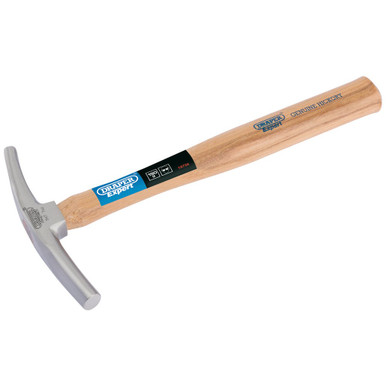

I got it because of the feature where the hammer holds the tack or pin so you can get started without hitting your fingers, but it also has another feature that I was unaware of: when the end of the shaft is close to the surface you’re nailing into, the face of the hammer is parallel to the surface (or vice versa). This makes it pretty easy to ensure that the hammer hits the tack at 90°. I haven’t read anything about tack hammers except the sales page and they don’t seem to mention this. Is it just common knowledge? Maybe commonly taught on upholstery courses and no one except those people would buy a tack hammer?
 
I have the same one but didn't know about the 90deg feature even though I've had it probably 35 - 40 years. It rarely sees the light of day tbh.

My father in law did a short upholstery evening course and decided I should have one as well as his so it was a gift, cost him only 2 or 3 quid if I remember. he was a fiercely proud Scot and wouldn't pay more than a fiver for anything. :ROFLMAO:
 
I got this because my wife wanted to reupholster a chair (which looks great now) but also because I was curious whether it would help with attaching glazing beads. Haven’t tried it for that purpose yet - coming later this summer. Hope it’ll get some use.

Probably most people just naturally adjust their use of the hammer until it works good, but if you’re used to hammers where the face is more or less parallel to the shaft of the hammer, this style feels pretty odd until you adjust.

You can do the short rotation about the base of the handle with the tack hammer because the pins are so small so you don’t need much power. With a framing hammer, everything needs more oomph so I guess the angles are set for a more distant pivot like your shoulder.
 
I need to get a very small hammer like this for nailing veneer pins which I use on the glazing bars of cabinets. Even the smallest hammer I've currently got in the 'shop is way too clunky - Rob
 
I need to get a very small hammer like this for nailing veneer pins which I use on the glazing bars of cabinets. Even the smallest hammer I've currently got in the 'shop is way too clunky - Rob
Have you ever used a "RAMPIN" or "PINPUSH" Rob, no hammers needed and will often countersink the head for you?
Cheers. Andy
EDIT you mention veneer pins so may be a bit heavy for the countersinking part...
 
I've just been and looked again at my similar old tack hammer (also rarely used🙂) and you're dead right about the handle length matching the angle. That's something I'd never noticed, so thanks for pointing it out.
Maybe I should try to remagnetise the head.
 
Good point, not sure how that works. Also a chance of it picking the pin up and putting it into your finger at the next stroke? But admittedly you’d have to be inattentive. And I must say I haven’t used one of this type.
I have held really small pins with a pair of needle nose pliers in the past.
 
I have held really small pins with a pair of needle nose pliers in the past.
That works as well Ian. I've also found that drilling a teeny tiny pilot hole in the glazing bar (with a Dremel) that's slightly smaller than the dia of the pin makes tapping them in far less fraught, but as the pins are so small needle nosed pliers (or instrument pliers) is the way forward - Rob
 
I have never used a magnetised head like that. I imagine there is no room for error though with the tack held on the head the first “hit” has to be in the right place. Or am I missing something?
Exactly that Andy and if you watch an experienced upholsterer they have it off to a fine art, practice like everything else I suppose.
I use the pliers method as well and just a note re the pin pusher, I've had one for longer than the tack hammer, no good for veneer pins in my experience but a downside is it can leave a ring depression around the pin head.
 
I need to get a very small hammer like this for nailing veneer pins which I use on the glazing bars of cabinets. Even the smallest hammer I've currently got in the 'shop is way too clunky - Rob
That is a light hammer! Only 30 g. I don’t think I’ve got a hammer less than 100 g. I tend to use a 200+ g hammer for ‘delicate’ work. The Draper tack hammer is 190 g.
 
My tack hammer is buried in a box in the shop somewhere. It is brass with a magnetised steel tip and wood handle. Using it takes a little getting used to but once mastered is quick and easy. Magnetic end into the box of tacks. A quick spin to turn the head of tacks towards yourself and into your mouth. You sort the tacks with your tongue and spit one onto the magnetic end. Spin it towards the cloth you want to tack down and hit it into the wood. Spin the head to the other end and hit the tack home if it didn't seat with the first hit. Take a break if you get the hiccups. ;)

Pete
 
Have you ever used a "RAMPIN" or "PINPUSH" Rob, no hammers needed and will often countersink the head for you?
Cheers. Andy
EDIT you mention veneer pins so may be a bit heavy for the countersinking part...
Glad you mentioned this. I think I have a rampin somewhere that I’ve never used that came with a plane or a gauge or something from eBay. I should dig it out. I’ve recently been using the low tech equivalent: shoving really hard with the end of a nail punch.
 
I have held really small pins with a pair of needle nose pliers in the past.
I’ve done my share of holding pins with needle nose pliers, but I switched to piloting with a headless pin and shoving the pin in the hole (sometimes with the aid of a nail punch) partly cause I was piloting anyway and partly just to avoid the pliers.
 
That is a light hammer! Only 30 g. I don’t think I’ve got a hammer less than 100 g. I tend to use a 200+ g hammer for ‘delicate’ work. The Draper tack hammer is 190 g.
They're watchmaker's hammers. For a job in a confined space even a standard, common or garden pin hammer (Warrington pattern) is just too unwieldy for driving veneer pins. As I mentioned, if a slightly smaller pilot hole is drilled in the glazing bar, a very lightweight hammer will easily drive a veneer pin through it - Rob
 
I haven’t used it very much yet, but I treated myself to a tack hammer. This one from Draper:


I got it because of the feature where the hammer holds the tack or pin so you can get started without hitting your fingers, but it also has another feature that I was unaware of: when the end of the shaft is close to the surface you’re nailing into, the face of the hammer is parallel to the surface (or vice versa). This makes it pretty easy to ensure that the hammer hits the tack at 90°. I haven’t read anything about tack hammers except the sales page and they don’t seem to mention this. Is it just common knowledge? Maybe commonly taught on upholstery courses and no one except those people would buy a tack hammer?
If the tack is on the hammer then how do you guarantee it goes where you want it?
 
If the tack is on the hammer then how do you guarantee it goes where you want it?
It is a learned skill that becomes part of you by repetition. When as kid I used to watch the upholsters covering chair seats. They could deliver tacks within a fraction of an inch of the fingers on the other hand holding the fabric very quickly.

Pete
 
Last edited:
I have never used a magnetised head like that. I imagine there is no room for error though with the tack held on the head the first “hit” has to be in the right place. Or am I missing something?
I've had and used one since I was about 25. You use the magnet end to pin in, so you can pull the tack or domed decorative nail in my case usually, out again if you missed the spot. Then spin the hammer and drive in with the other face. Very easy to use. If you are pinnng webbing then you just use the magnetic face and drive in quite hard as you pull the web tight, as dead on accuracy is not so important. I bought it to do a six chair dining set for my first proper house. Very good tool.
 
I have more hammers than I dare count and no idea why. These are my two smallest the brass hand made to use only with planes, the other I've had for as long as I can remember and I do use it occasionally for veneer pins.

IMG_3335.JPGIMG_3334.JPGIMG_3333.JPG
 
Back
Top