Cabinetman
Sequoia
- Joined
- Oct 11, 2020
- Messages
- 5,745
- Reaction score
- 1,412
- Location
- Lincolnshire Wolds + Massachusetts
- Name
- Ian
Watching that video I was a little surprised that they didn’t tinkle, being bell shaped —and Japanese.
Ian
Ian


Rain chains are great but unfortunately you need a roof with a very large overhang for them to be effective, which we don't have on our house. National Trust shops sell a rain chain at a reasonable price:MattS":1ufjltor said:Never seen anything like those flower rain chains, they’re beautiful.

AJB Temple":1a0relxx said:They are steel in that link. Cheap for a basic one just as an ornament though.
Why do you say they need a big overhang Rob? Splash back? I realise that most Japanese rooves that have these most likely do have a large overhang.
The type I am interested in uses multi link chains as well as the cups, to create flow. They may well splash more than I thought. One of the newer buildings at RHS Wisley ( I think it is there, but it may be the new RHS site north of London), might be the newish library building, uses rain chains instead of downpipes. Just straightforward thick link galvanised chain. It wasn't raining when we were last there though.

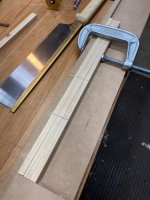


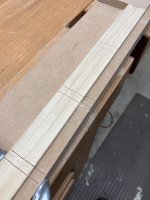
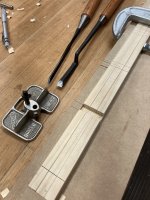

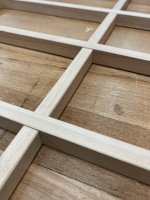
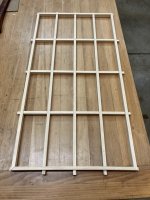
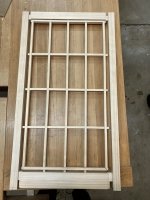

Mike G":18hn9rwe said:The design may be very eastern, but the technique is universal. Nice to see it being done by hand.
The real skill in this sort of work isn't the joints, but in preparing the stock. Accurately planing thin material is difficult, although a "thicknessing" planing jig is easily imaginable.
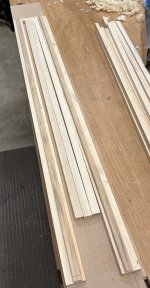
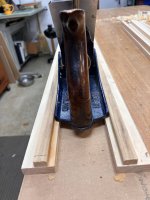
Cabinetman":1vcuptbf said:Yes a successful outcome and nice proportions too.
and there it was, another Morticer the same as yours still working well and earning its keep, just not quite as pristine as yours though Gary, he thought it was so cool you having all the provenance for yours.
Ian
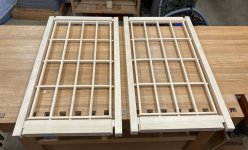

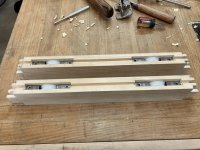
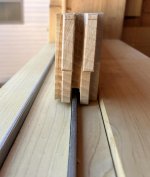
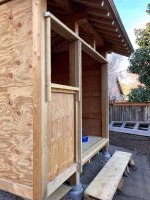
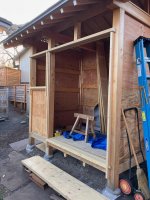
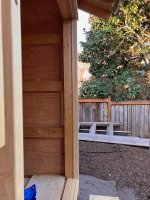

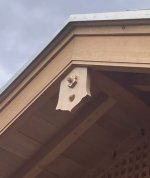
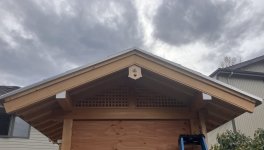

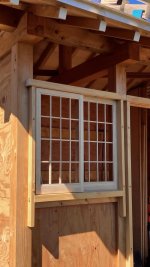
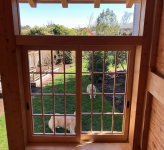
Cabinetman":2aoecrr4 said:They have a very nice action Gary, they’re called Yorkshire sashes here btw.
Ian
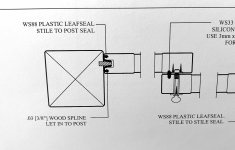
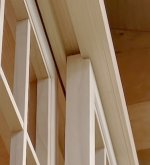
AJB Temple":2zxnkb1v said:In the video the right hand one shows a distinct gap to outside when closed. Are they meant to slide into a rebate to keep the rain out? or will a bead be added? Presumably there will be some sort of lock to stop the wind rattling them open?

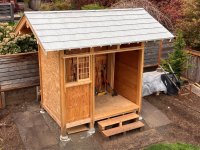


Simply put, It's an experiment, like the rest of the project. Earth plaster is a typical old school finish indoors in Japan, and can be used outdoors but isn't quite as durable in a wet climate. Lime plaster is more durable outdoors but as I understand it more difficult to work with. Never having worked with either before I thought I would try both.Why different renders inside and out?
Shall follow the earth plaster with interest.....