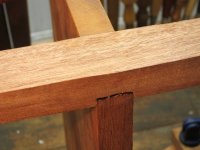
The next task was to attach the seat pieces. I marked the positions of the screw holes by squeezing a screw with a g-cramp.

Then I drilled pilot holes in the seat pieces and attached them with brass screws, having first inserted and withdrawn a greased steel screw to reduce the risk of snapping the brass ones.

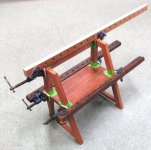
Then it was time to fit the hinges. I cramped the two parts of the chair together so I could mark the positions of the ends of the hinges.

An ordinary marking gauge was not suitable for marking the width of the hinge pockets here owing to the direction of the sloping seat edge. Instead, I used the equivalent metalwork tool: odd-legs calipers.

However, a marking gauge could be used here.

I chiselled out the hinge pockets.


The hinges stick up a little above the surface of the seat. This doesn't seem to cause too much discomfort. I did consider using counter flap hinges instead but decided that they would be too conspicuous.

I intend to remove and polish the hinges before final assembly.

Next, I made some fine adjustments to the ends of the legs.

I fitted a cabin hook to prevent flapping about when the chair is lifted (following AndyT's example once more).

Then I shaped the tops of the back legs.


This is how it looks now. The next stages will be general clean-up and staining. I propose to try potassium permanganate for staining (or would "shading" be a more correct description of its action?).