• Hi all and welcome to TheWoodHaven2 brought into the 21st Century, kicking and screaming! We all have Alasdair to thank for the vast bulk of the heavy lifting to get us here, no more so than me because he's taken away a huge burden of responsibility from my shoulders and brought us to this new shiny home, with all your previous content (hopefully) still intact! Please peruse and feed back. There is still plenty to do, like changing the colour scheme, adding the banner graphic, tweaking the odd setting here and there so I have added a new thread in the 'Technical Issues, Bugs and Feature Requests' forum for you to add any issues you find, any missing settings or just anything you'd like to see added/removed from the feature set that Xenforo offers. We will get to everything over the coming weeks so please be patient, but add anything at all to the thread I mention above and we promise to get to them over the next few days/weeks/months. In the meantime, please enjoy!

Dr Al's Latest Folly

Sorry Al :oops:

Your thread has been well and trully jacked. I think the pen subject needs to be discussed elsewhere if it has any mileage left.
 
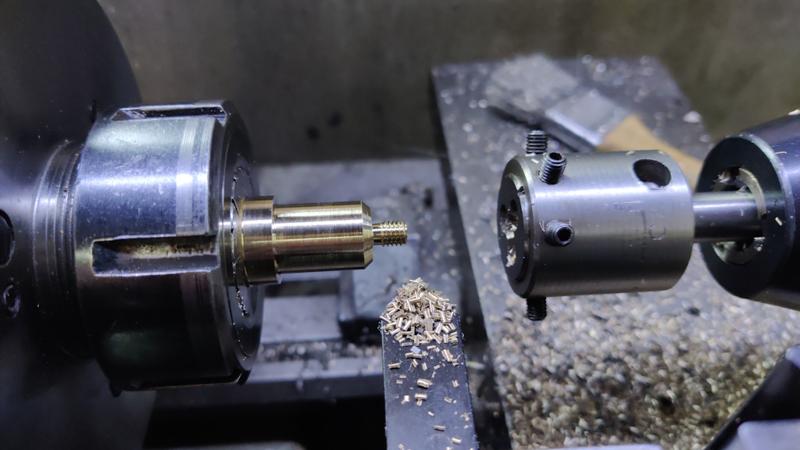
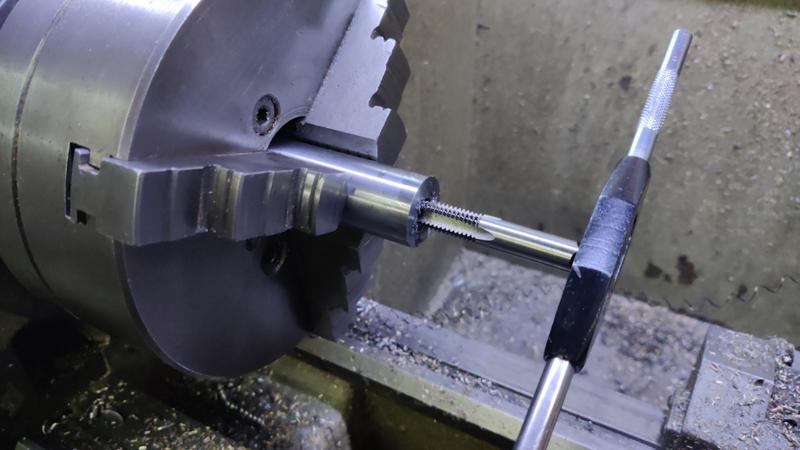
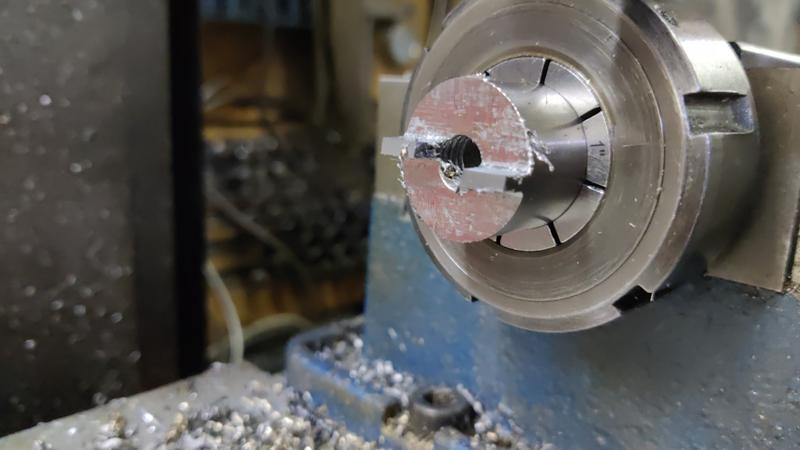
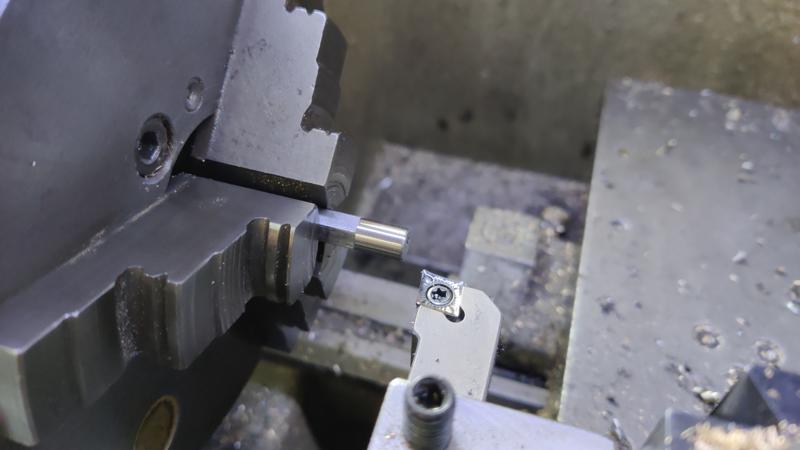
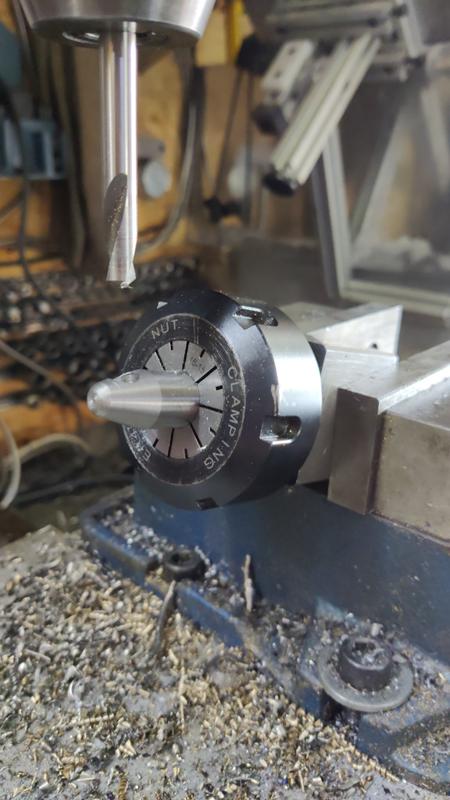
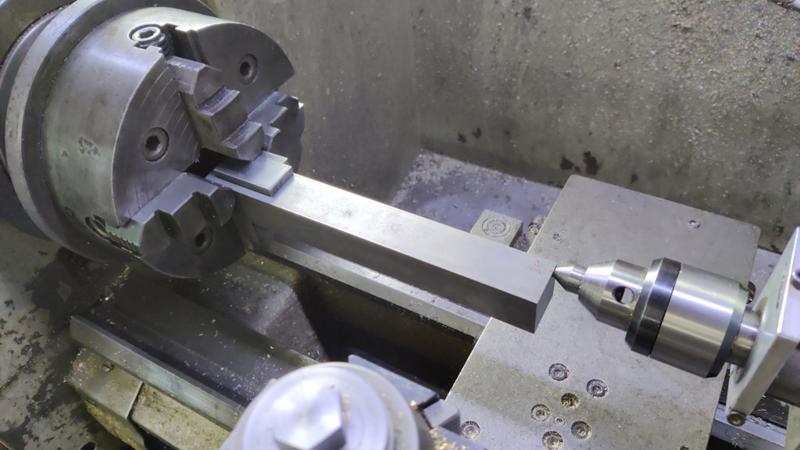
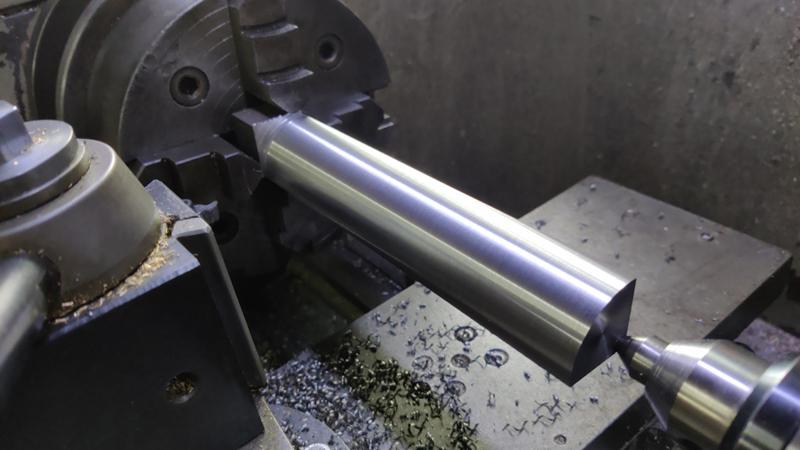
Some more simple-ish jobs done this evening. I started with a bit of brass bar and shaped the end before using a tailstock die holder to put an M6 thread on the end.

0703_01_shaping_and_threading_800.jpg


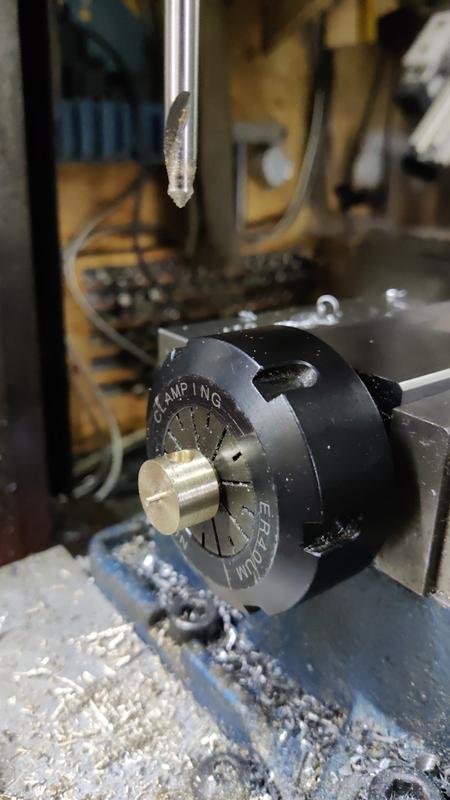
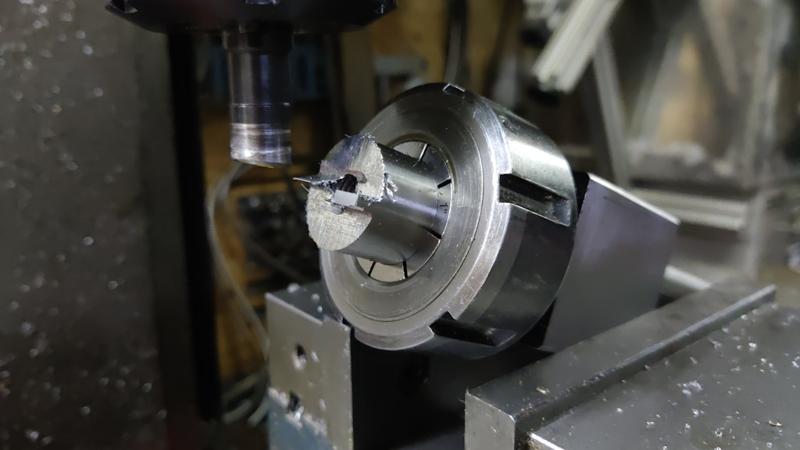
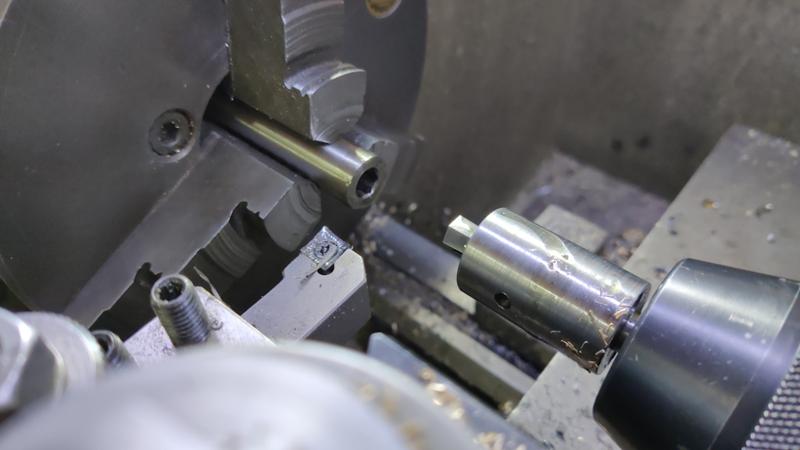
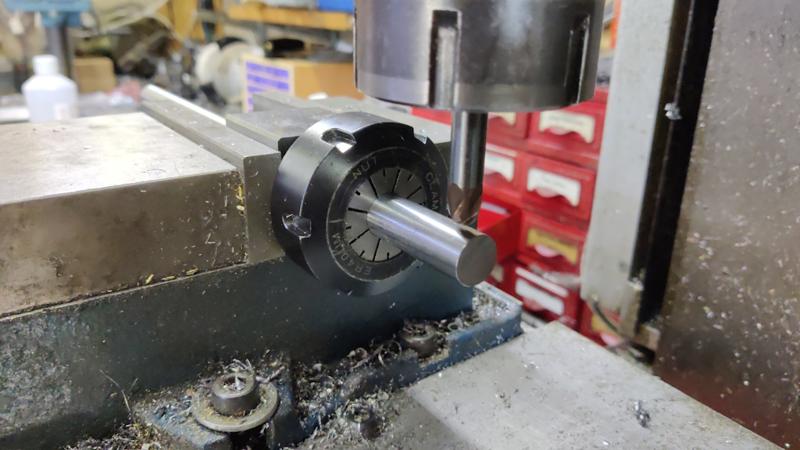
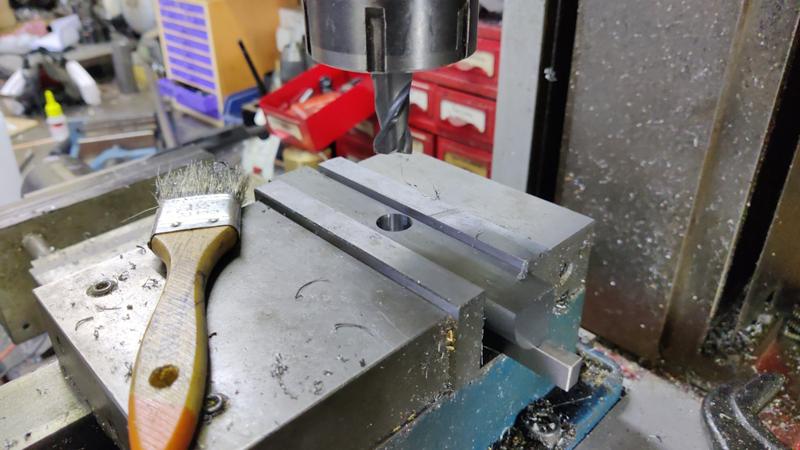
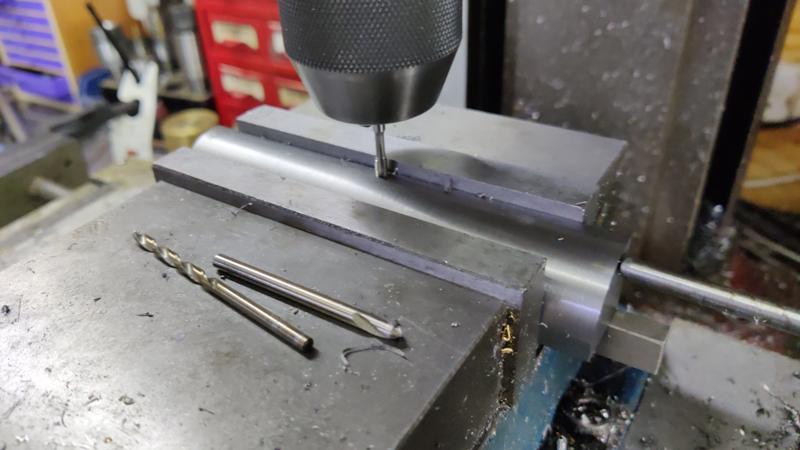
After parting off, I fitted it into its destination hole and marked the angle I wanted the cross-bar to come out at. I then clamped it in a collet block in the milling vice and drilled a blind 6 mm cross-hole:

0703_02_blind_cross_drilling_800.jpg


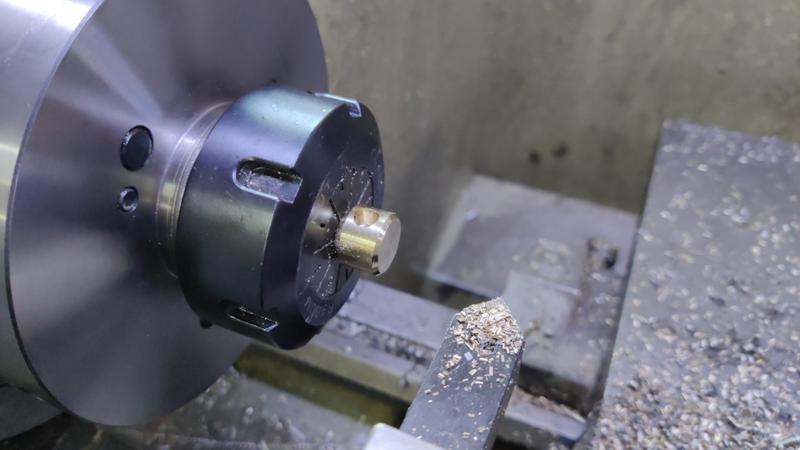
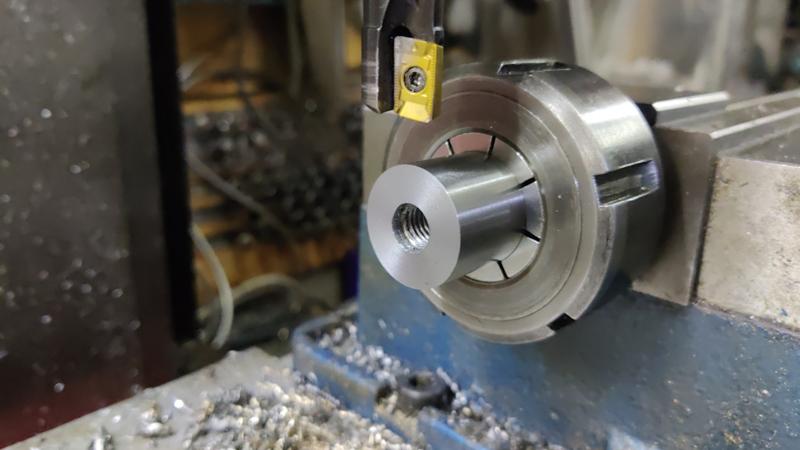
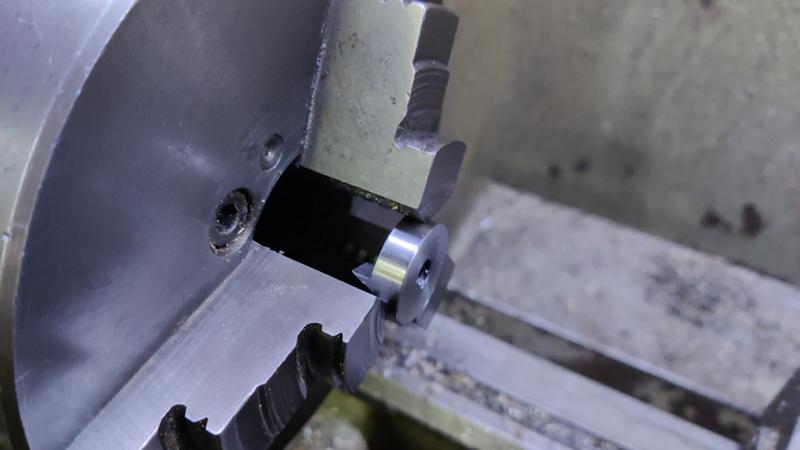
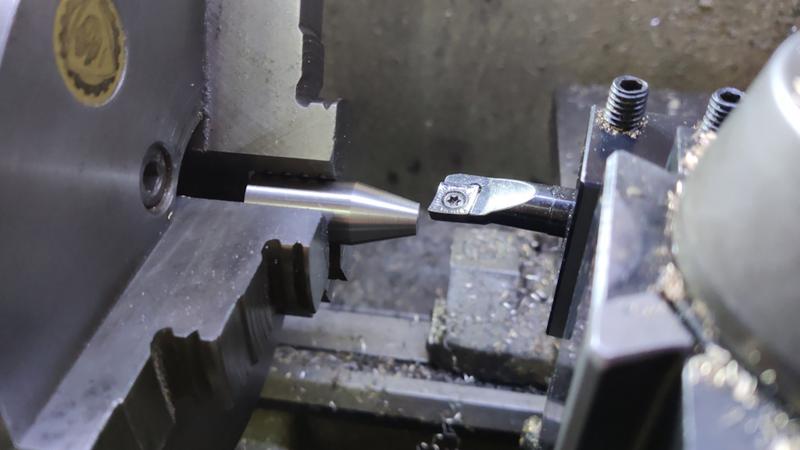
It then went back to the lathe to have the end tidied up:

0703_03_facing_and_chamfering_800.jpg


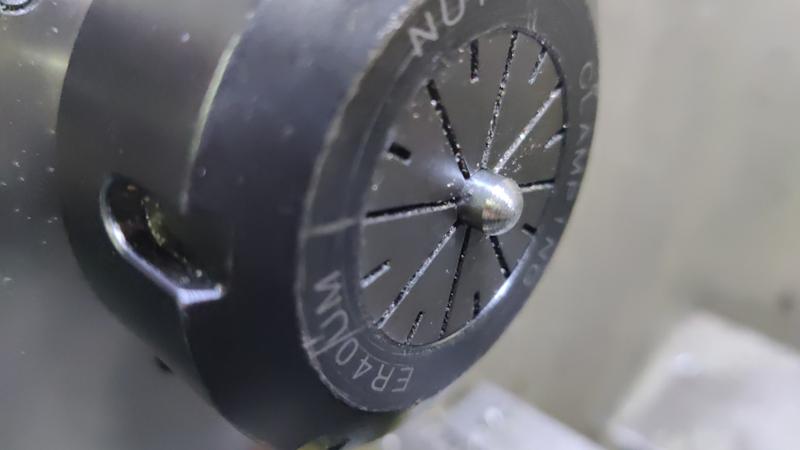
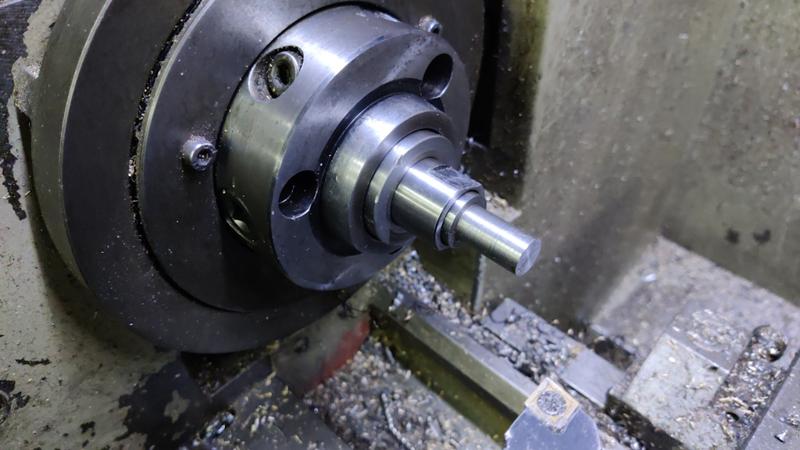
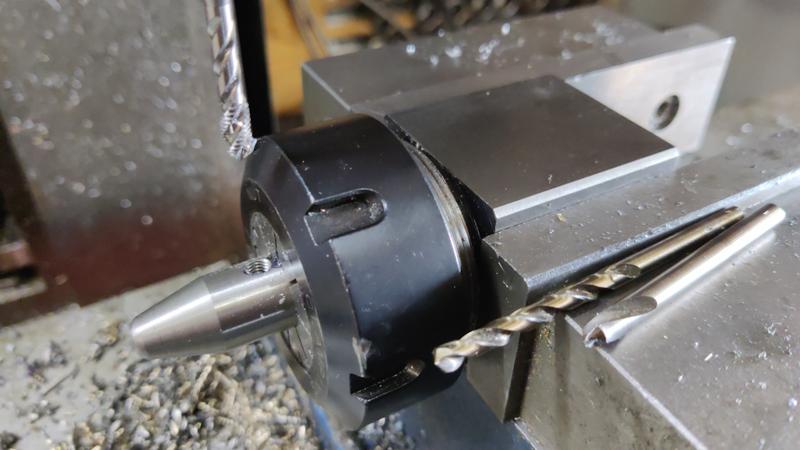
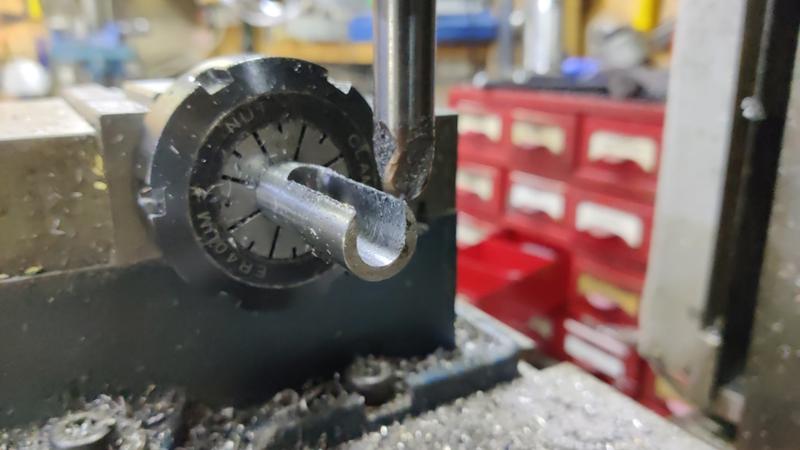
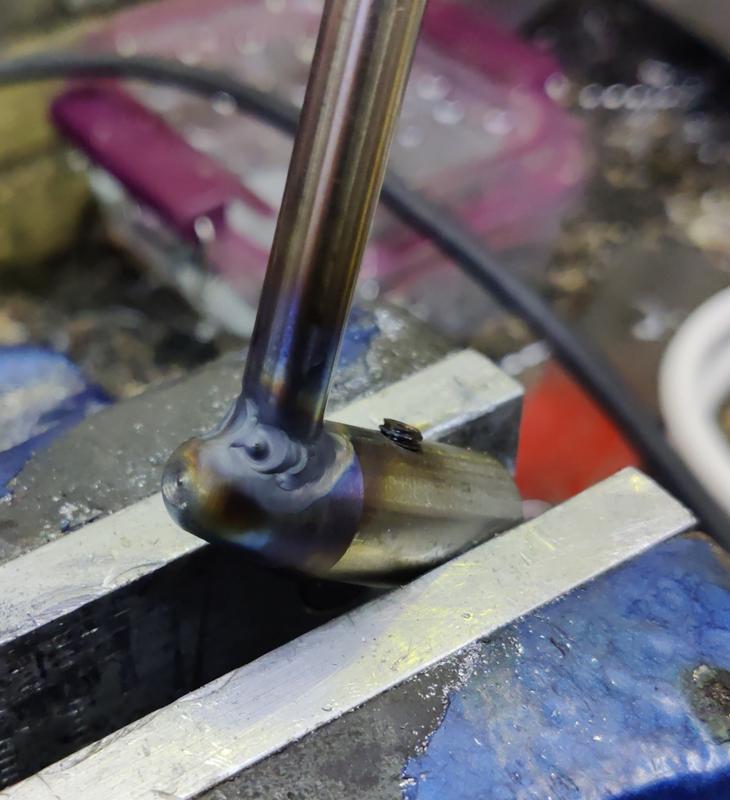
For a cross-bar, I got a bit of 6 mm stainless bar and put it in the collet chuck and rounded the end over with a file:

0703_04_shaping_stainless_end_800.jpg


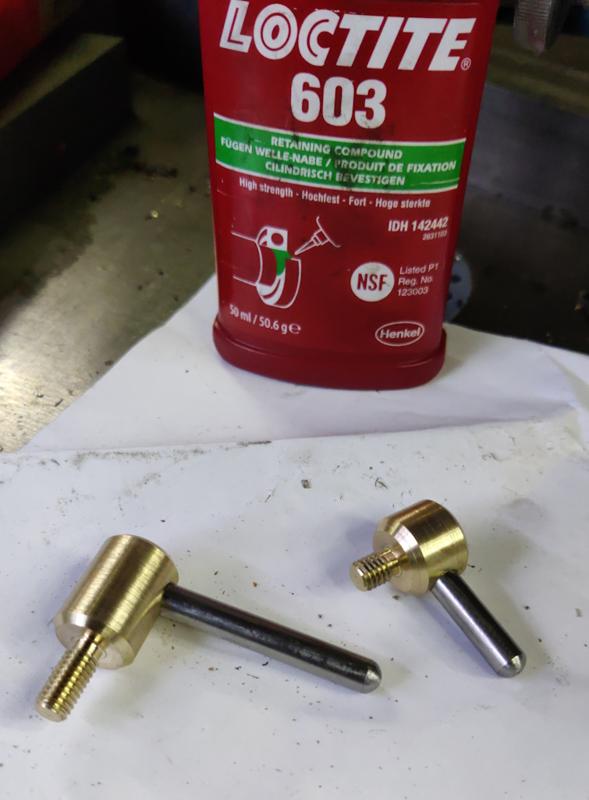
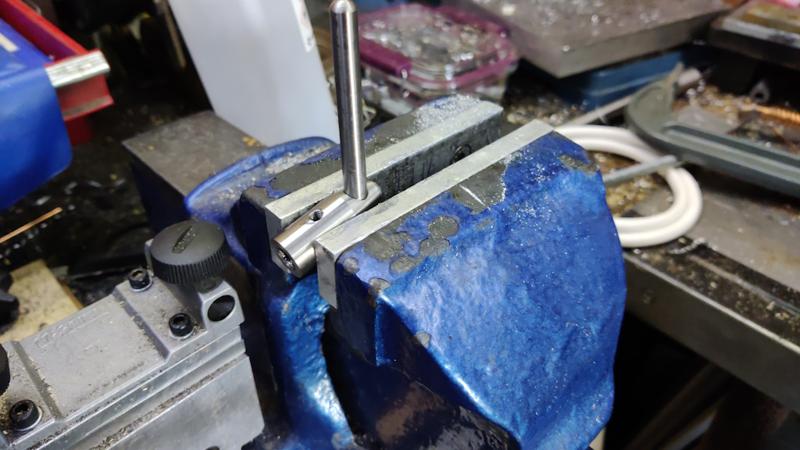
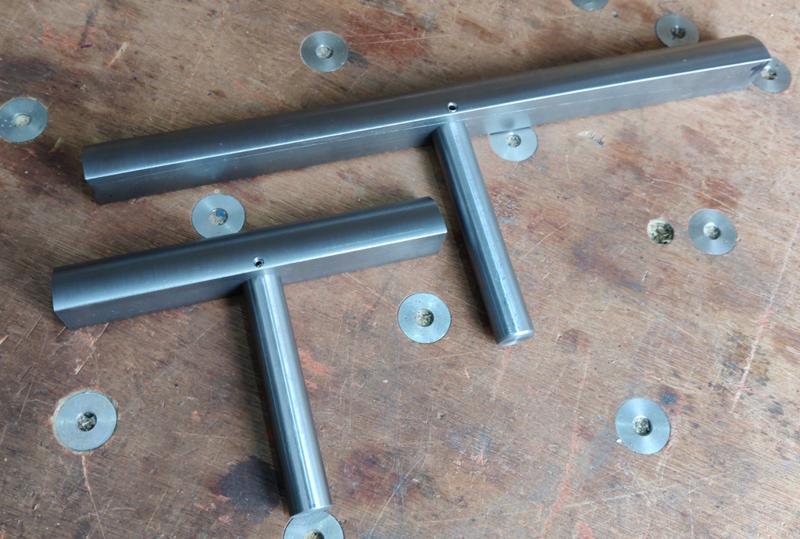
I repeated that process on a second knob and then glued the two stainless bars into their holes with some Loctite 603:

0703_05_two_knobs_done_800.jpg


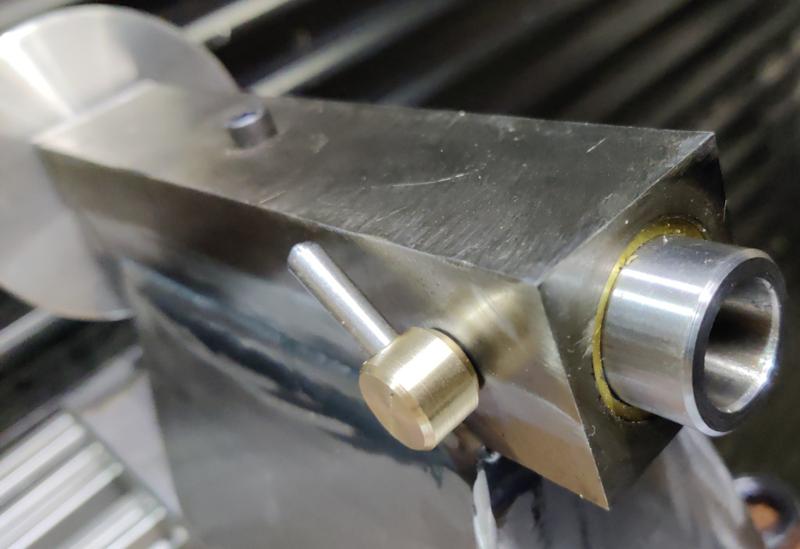
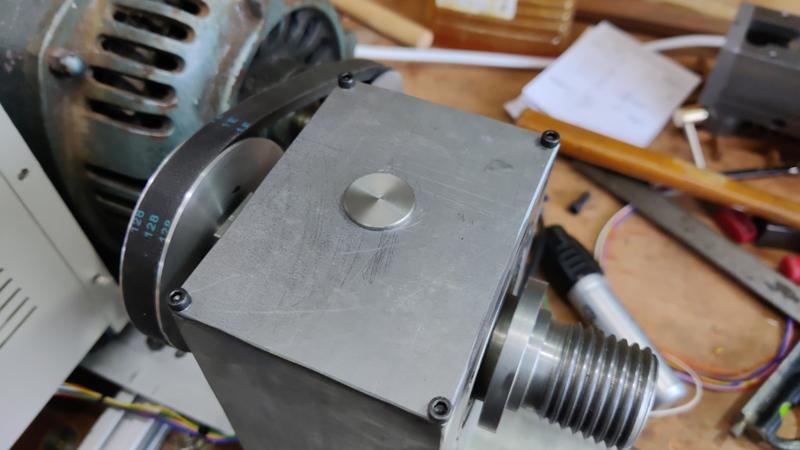
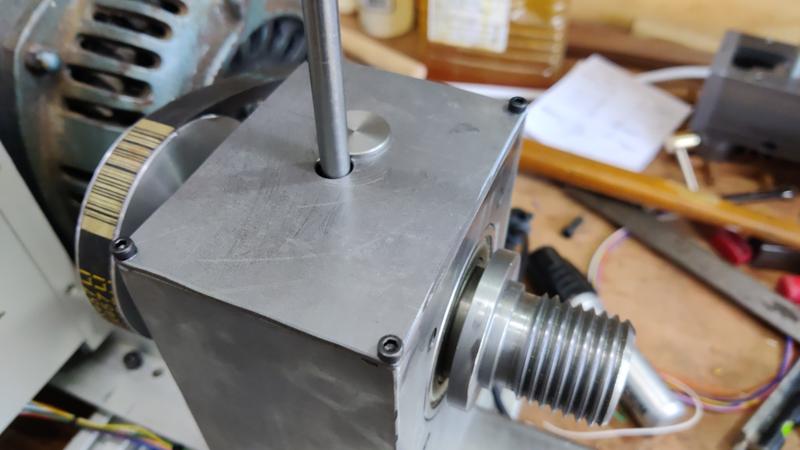
The first knob sits in the back of the tailstock and clamps the tailstock spindle thing in place:

0703_06_rear_of_tailstock_800.jpg


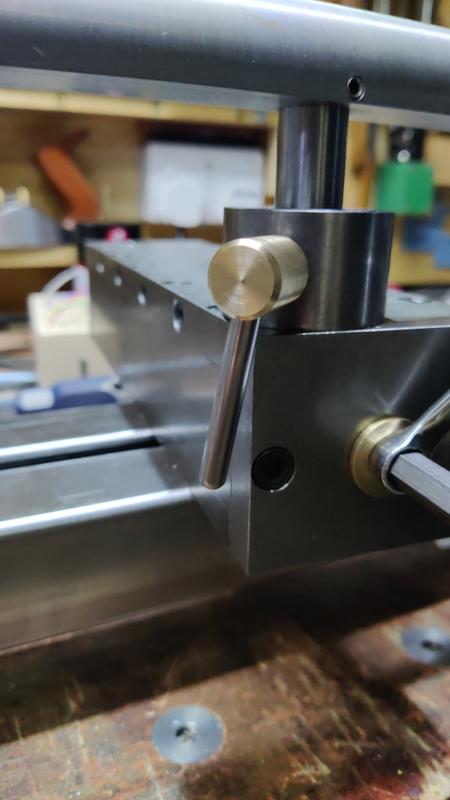
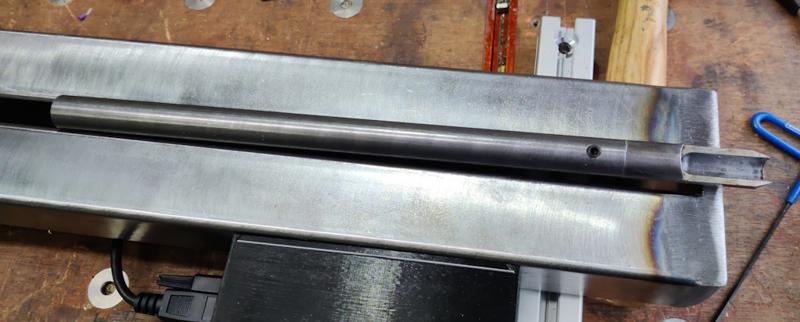
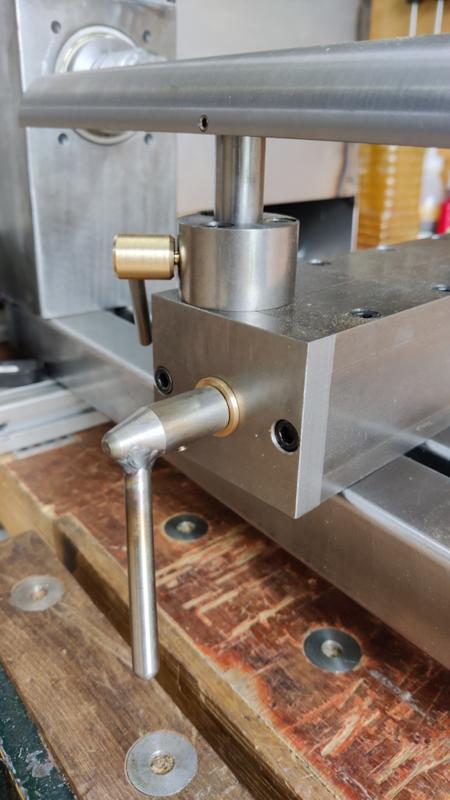
The slightly longer one screws into the end of the tool rest slide and clamps the tool rest in place:

0703_07_tool_rest_lock_knob_800.jpg


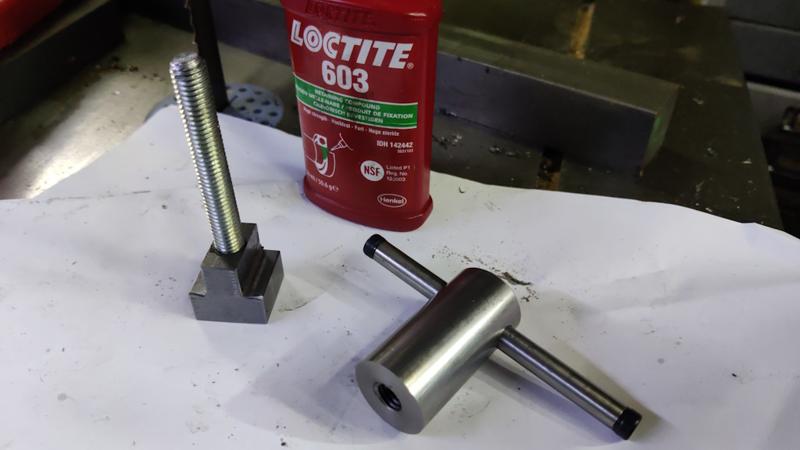
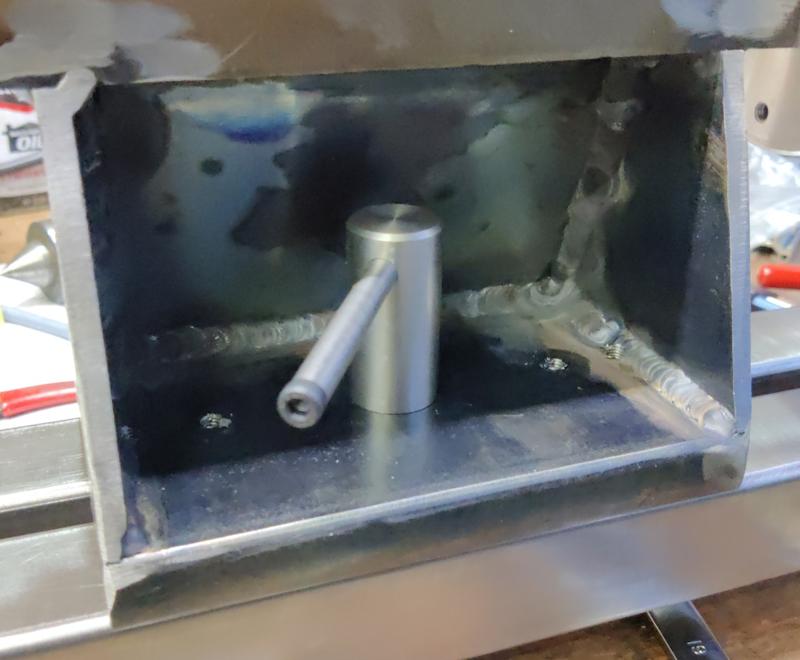
Next up was a bit more work with some 303 stainless bar. I didn't take many photos of the process as it was much the same as above, but I drilled and tapped an M10 hole in the bottom of some 25 mm diameter bar and then cross-drilled 8 mm. I also got a bit of 8 mm stainless bar and drilled and tapped an M5 hole in each end. They went together (without glue) to form the tailstock lock knob, using some M5 cap screws as bar ends.

I also glued a bit of threaded rod into the tailstock t-nut...

0703_08_stainless_tailstock_lock_800.jpg


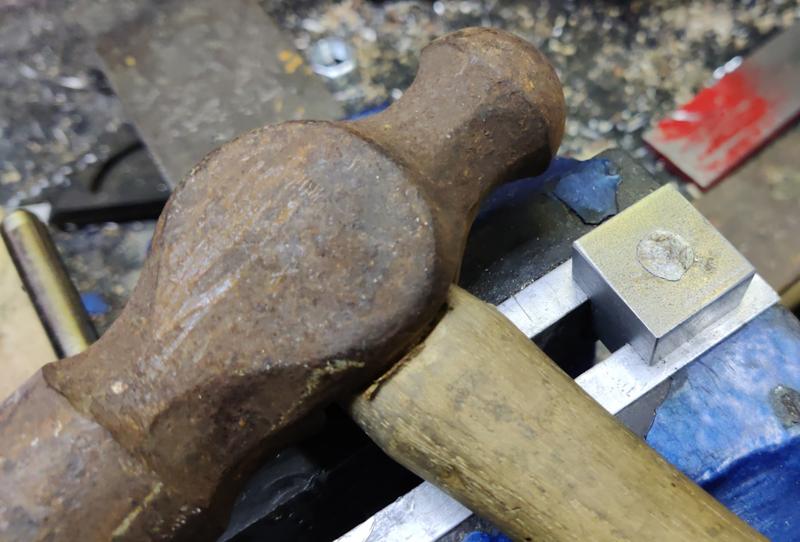
... and to be extra sure it wouldn't go anywhere, I peened over the bottom end:

0703_09_belt_and_braces_800.jpg


This one is used for locking the tailstock in place. Using M5 cap screws for bar ends means they (and hence the sliding cross-bar) can be easily removed, which makes fitting the tailstock lock nut a lot quicker. Once it's screwed most of the way in, the sliding bar is inserted and the cap screws tightened and then the cross bar can be used to tighten / loosen the tailstock:

0703_10_tailstock_knob_in_place_800.jpg
 
That hammer was a bit of a surprise - the first bit of rust amongst all the shiny metal!

Could I politely suggest a once-over with a wire brush, and maybe even several grades of emery paper on the business ends?

Only if you feel like a distraction from the main event, of course. :)
 
Al, may I ask why you used brass for the locking bolts with lever handles? As opposed to steel? Is it so that it will not corrode and bind in the threads?

I've managed to snap brass threaded rods in the past, so assumed it was a bit weak. (To be fair one was a bit stuck and was nudged with a Birmingham spanner).
 
AndyT":hwci9bui said:
That hammer was a bit of a surprise - the first bit of rust amongst all the shiny metal!

Could I politely suggest a once-over with a wire brush, and maybe even several grades of emery paper on the business ends?

Only if you feel like a distraction from the main event, of course. :)

:oops:

Guilty, sorry!

I inherited that hammer from my father-in-law (found at the bottom of his shed) and this is the first time I've used it. It does rather need some TLC, doesn't it?!

AJB Temple":hwci9bui said:
Al, may I ask why you used brass for the locking bolts with lever handles? As opposed to steel? Is it so that it will not corrode and bind in the threads?

I used brass because it's a lot softer than steel and hence won't damage the steel surface it's pressing against. The tool rest shaft (for example) is a ground bar in a reamed hole. If the end of a screw marred the surface, the deformation could result in the bar getting stuck or the hole getting scored.

There's such a big mechanical advantage to a screw thread that it doesn't take much torque to lock so I think the brass threads should be fine.

In the past I've added little brass wear pads to the end of a steel screw, but that's a lot more hassle & reduces the amount of usable thread.
 
Lateral thinking supreme, Dr Al. This thread is magic and I really appreciate the WIP and the photos that show your approach and thinking ... :obscene-drinkingcheers:
 
RogerS":3lmbebsi said:
Lateral thinking supreme, Dr Al. This thread is magic and I really appreciate the WIP and the photos that show your approach and thinking ... :obscene-drinkingcheers:


:text-+1:

Fully agree!
Work way beyond my capability
 
Thoroughly enjoying and learning from the step by step. I had a little play with the little tom senior I got ages ago. Only making some hold downs fit but it was fun. I'm too impatient and expect material to be removed like wood machines.
 
I've had quite a productive afternoon, so I think I'll spread the work over a couple of forum posts, one now and one tomorrow morning probably.

The first thing I wanted to get on with was mounting the inverter (aka variable speed drive, aka variable frequency drive).

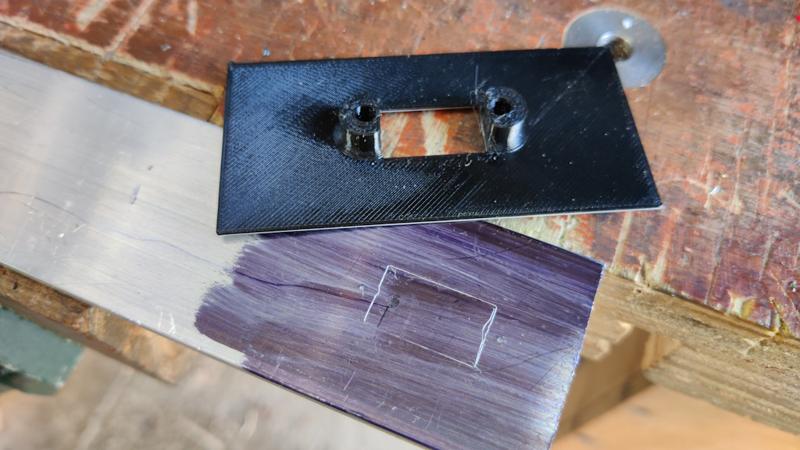
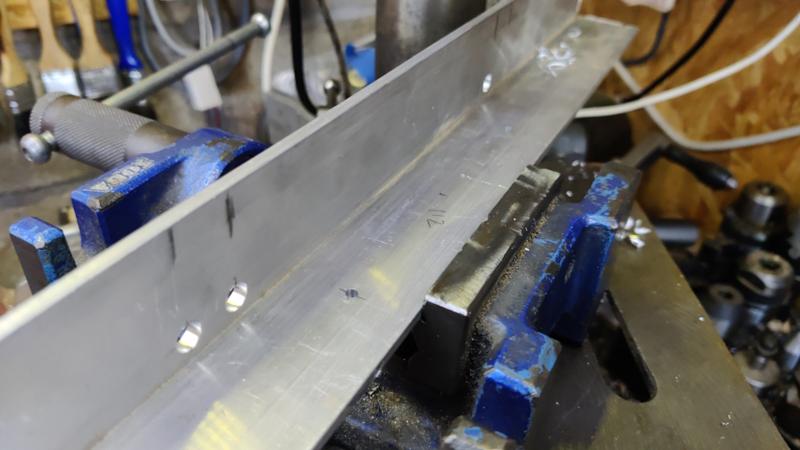
A couple of days ago, I 3D printed a little marking gauge to allow me to mark a pocket in a bit of 40 mm deep aluminium angle:

0803_inverter_mount_01_marking_with_printed_gauge_800.jpg


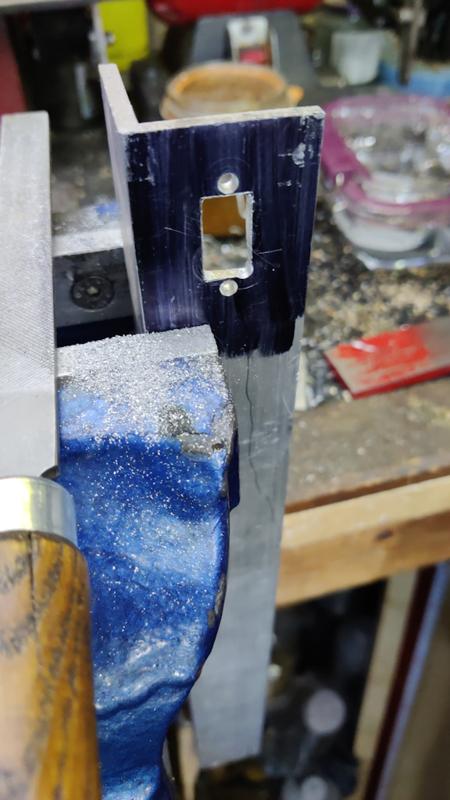
To hollow out the shape, I used a drill bit (not especially accurately) to get rid of the bulk of the waste and then filed it until it was looking okay-ish:

0803_inverter_mount_02_drilled_and_filed_800.jpg


I then drilled some mounting holes, including a bonus extra one that I drilled in completely the wrong place!

0803_inverter_mount_03_drilled_some_holes_800.jpg


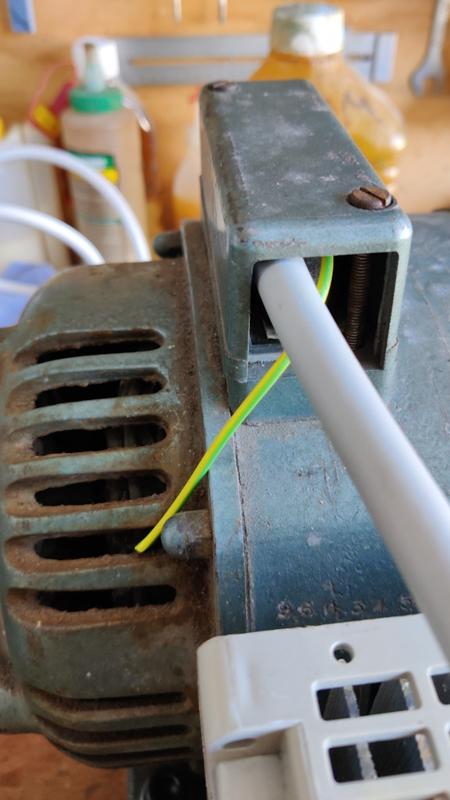
Before mounting the inverter to the motor plates, I fitted what will be the final bit of wire to the motor and trimmed it to length. There isn't anywhere very obvious to attach the earth wire to the motor, so I'm still pondering what to do about that as it seems sensible to have a decent earth connection.

0803_inverter_mount_04_what_to_do_with_earth_wire_800.jpg


Using a multimeter on continuity test mode, it buzzes through okay from the spindle shaft to the inverter earth and all the way to the bed, so it's probably okay without that extra connection, but I still think I'll probably attach it to a screw hole somewhere in due course.

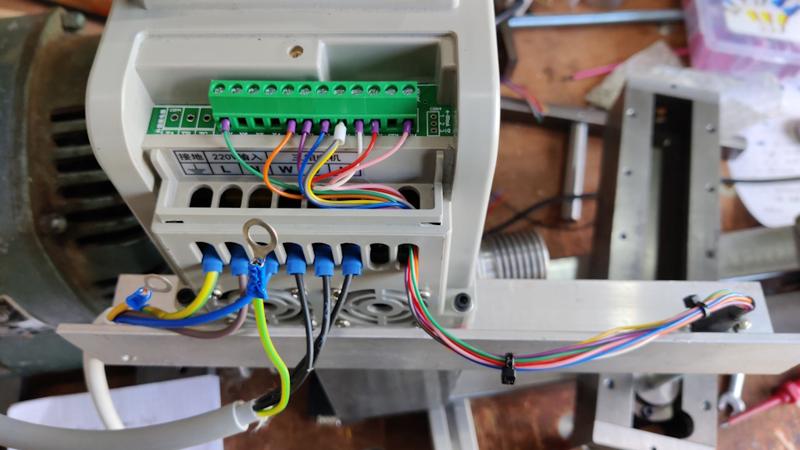
There was then a very tedious exercise of doing lots of cutting, stripping and crimping of wires. I'm an electronics engineer by profession, but I find wiring intensely dull.

0803_inverter_mount_05_wiring_at_inverter_base_800.jpg


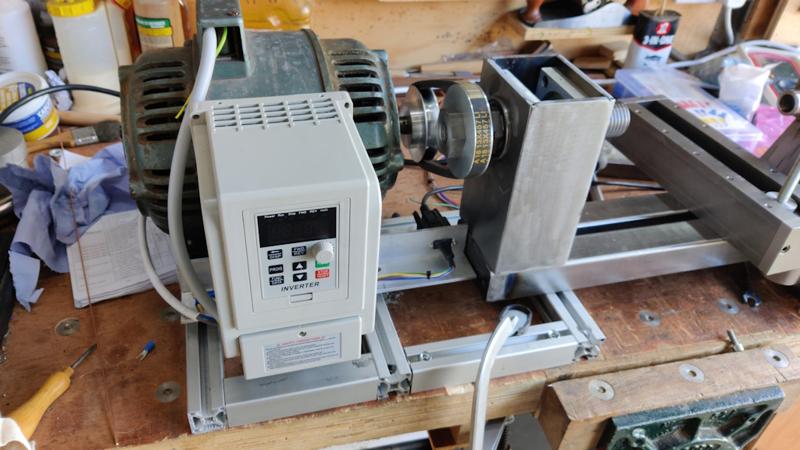
With that done, I could finally mount the inverter through the motor mount plates (with slightly longer screws than were there before), so the inverter slides back and forth with the motor.

0803_inverter_mount_06_inverter_mounted_800.jpg


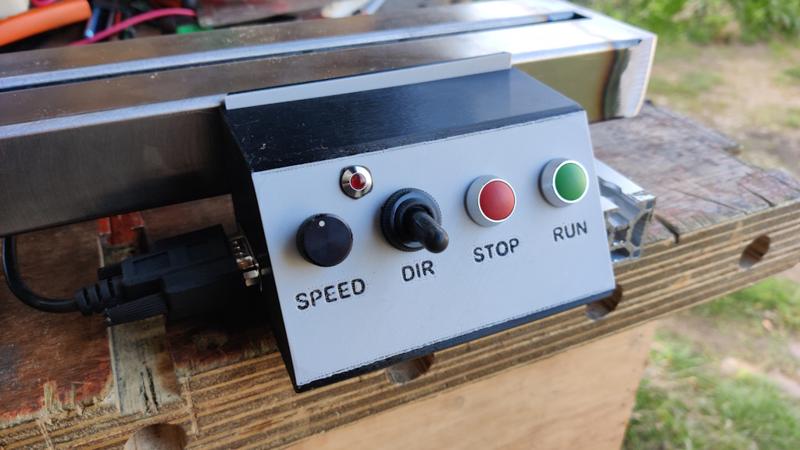
Another little 3D-printed creation was a little control panel to sit at the right-hand end of the bed, connected to the inverter with an old 9-way serial cable extension lead (held to the bed with some M4 rivnuts and some cable tie mount things):

0803_inverter_mount_07_control_panel_800.jpg


It all seems to be working okay when powered on. It took me a while to figure out how to configure the remote controls. The manual for the Jaguar Cub inverter I have on my metalworking lathe is 171 pages long. The one that came with this cheap unbranded inverter is two sides of A3 and I've already found a couple of mistakes in it! Anyway, after fiddling and experimenting for a while, I got it all set up okay.

There are a couple of things that don't work quite as planned. The little LED on the control panel is one with a built in flasher. I fitted one of those to the control panel on my metalworking lathe, wired up such that it flashes when the inverter is configured to run the lathe backwards. I wanted to do the same here, but the LED needs 24 V to come out of the inverter and this one only supplies 12 V. I haven't decided whether I think it's worth the effort to do anything about that.

The other thing which doesn't work quite right is the speed control. I've got the inverter configured for maximum frequency of 120 Hz. If I set it up to derive the speed from the control panel potentiometer, it runs from 0 to 120 Hz. If I switch it to use the remote potentiometer, it runs from 0 to 60 Hz. The manual shows the potentiometer supply voltage as "10 / 5 V". My inverter supplies 5 V for the potentiometer, so I wonder if the power supply output is 5 V but the potentiometer is expecting to run from 0 to 10 V!

The next job I got on with was making a lid for the headstock (to stop it filling up with sawdust). I started with a bit of 2 mm plate (probably stainless steel, but I'm not sure) and chopped it roughly to size with the metal cutting circular saw:

0803_headstock_lid_01_rough_sawn_800.jpg


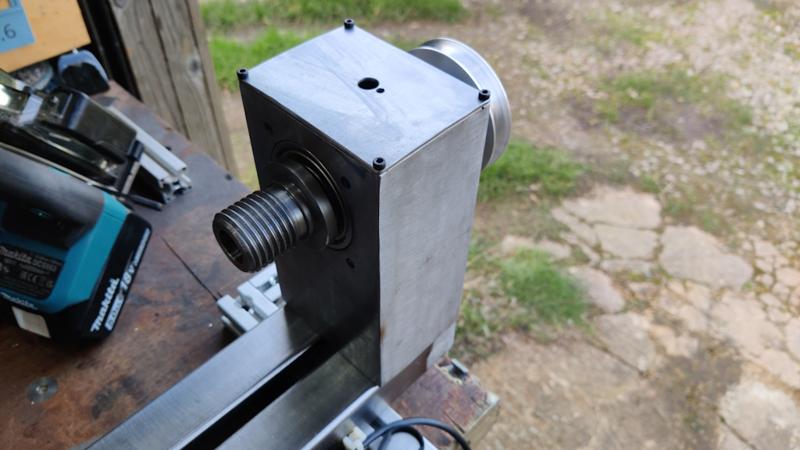
I then used some transfer punches to mark the location of the mounting holes and measured the location of the hole needed for the tommy bar (used to lock the spindle and allow a chuck or the pulley/bearing nuts to be tightened/loosened). They were drilled and then the lid was attached to the headstock and ground to fit with a flap disk in an angle grinder, not worrying too much about perfection!

0803_headstock_lid_02_shaped_with_grinder_800.jpg


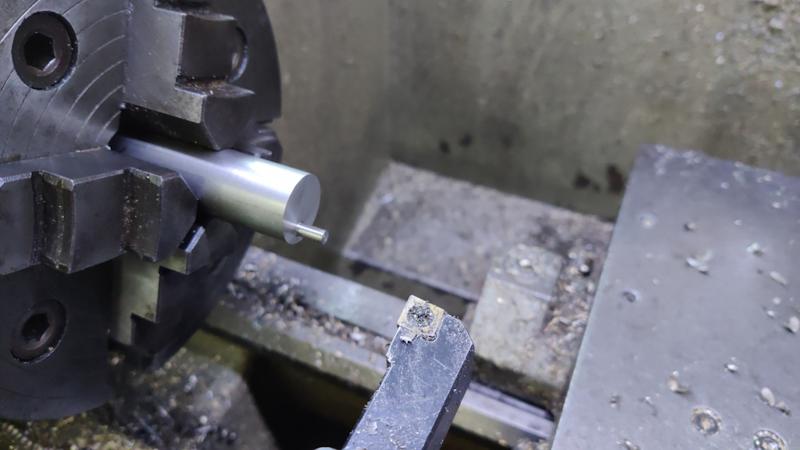
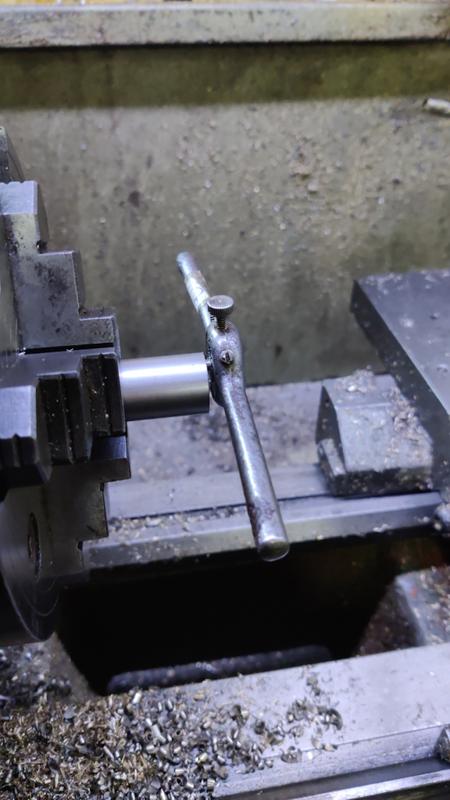
There's still a couple of holes in that lid, which sawdust could get into, so I mounted a bit of 20 mm 303 stainless bar in the four-jaw chuck, rather dramatically shoved off-centre. I then faced it and turned it down to 4 mm:

0803_headstock_lid_03_shaping_screw_800.jpg


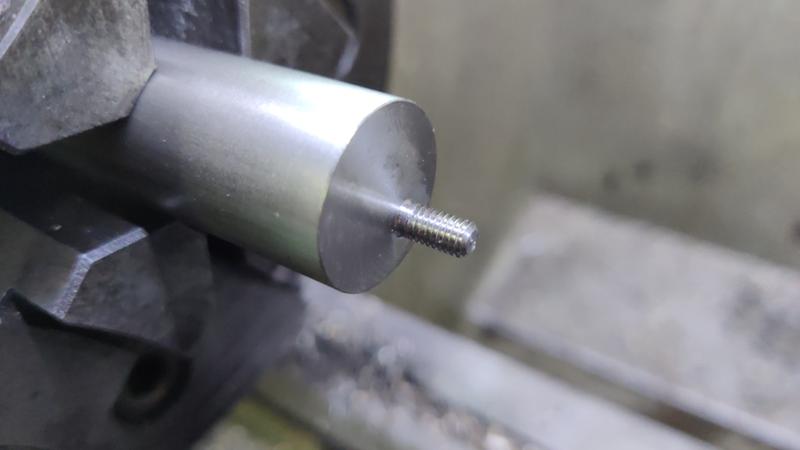
I used a die to cut an M4 thread on the reduced diameter bit:

0803_headstock_lid_04_threading_screw_800.jpg


0803_headstock_lid_05_threaded_screw_800.jpg


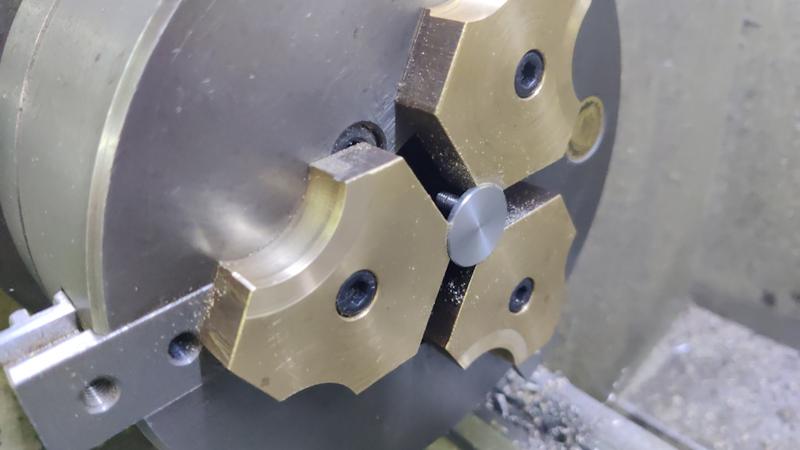
After cutting off with the bandsaw, I then used my home-made soft-jaws to hold the part the other way round to tidy up the cut-off face:

0803_headstock_lid_06_soft_jaws_facing_800.jpg


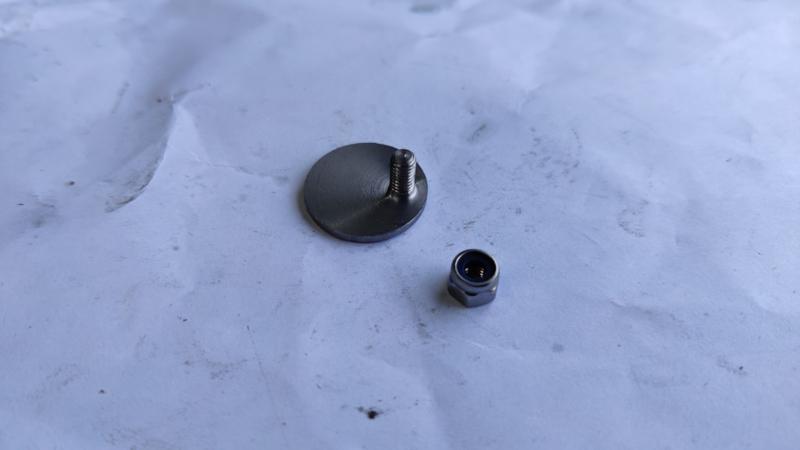
The finished part, along with the nyloc nut that will hold it in place:

0803_headstock_lid_07_cap_and_nyloc_800.jpg


This is what it looks like in situ:

0803_headstock_lid_08_cap_in_situ_800.jpg


It can be rotated out the way to allow tommy bar access:

0803_headstock_lid_09_cap_with_tommy_bar_800.jpg
 
Well, if anyone was foolish enough to think this was going to be some sort of rough and ready compromise job, they were definitely barking up the wrong tree!

Al, I suspect that you may have to solve those little niggles (the LED that won't flash, the speed control) yourself while the rest of us just watch. But I'm sure you will solve them.
 
All that metal turning! Be interesting to see you turn a bit of wood with a tool that’s not held down and is jiggling and vibrating in your hand.
You’re nearly ready so the very best of luck.
 
AndyT":2tbnvgn1 said:
Well, if anyone was foolish enough to think this was going to be some sort of rough and ready compromise job, they were definitely barking up the wrong tree!

Thanks Andy. There are definitely some compromises; the most significant one (I think) being the bed strength (it's only 2 mm wall thickness). That's one of the reasons I made the bed so simple (just some lengths of box section with plates on the end and some rivnuts in) - if it proves to be a problem it won't be that much work to upgrade it.

AndyT":2tbnvgn1 said:
Al, I suspect that you may have to solve those little niggles (the LED that won't flash, the speed control) yourself while the rest of us just watch. But I'm sure you will solve them.

There are a few easy solutions to the LED one, but all of them involve buying stuff :o

The speed control needs a bit more thought. The simplest option (and the one I'm leaning towards at the moment to be honest) is use the control panel potentiometer when I want to run at any speed up to 1800 rpm and then a few button presses on the control panel will swap to speed control on the front panel and I can use the front panel potentiometer for the higher speeds. That'll have the advantage of having a bit more "resolution" when controlling up to 1800 rpm. The alternative would be to step the voltage up, but that runs the risk of putting too much voltage into the controller input if I've misjudged things.

Cabinetman":2tbnvgn1 said:
All that metal turning! Be interesting to see you turn a bit of wood with a tool that’s not held down and is jiggling and vibrating in your hand.
You’re nearly ready so the very best of luck.

Thanks Ian :eusa-pray:
 
The next job I decided to work on yesterday is one that is arguably a bit pointless, but I thought I'd do it anyway.

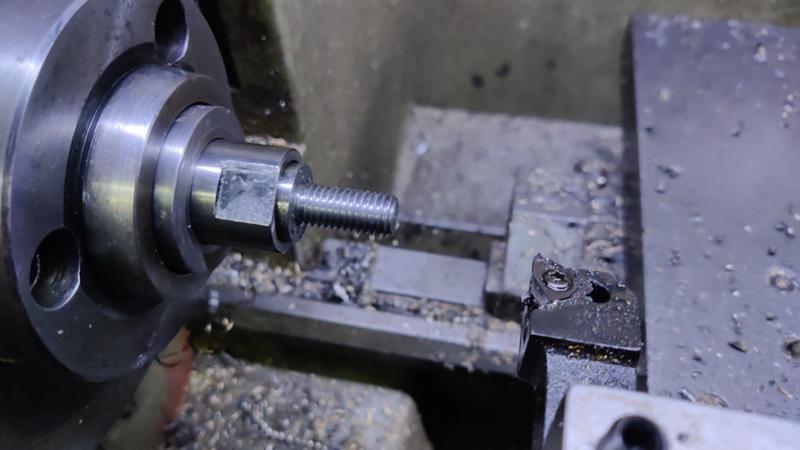
I started with a bit of 25 mm silver steel in the chuck. I faced it off and then drilled and tapped an M10 left-hand thread:

0803_drive_centre_01_tapping_left_hand_800.jpg


I then transferred it to a collet block in the mill vice for shaping:

0803_drive_centre_02_in_collet_block_800.jpg


The first job was to remove the stock to slightly under half-way, before removing all the way to the midway point on just one side. I then flipped it over and repeated - note that I'm using a slightly blunt carbide tip because I don't really care how rough the finish is on this part:

0803_drive_centre_03_rough_finish_800.jpg


I then held the collet block at a rather arbitrary angle in the mill vice (the angle was mostly dictated by the length of the bar!) and used the same cutter to turn those prongs into pointy bits:
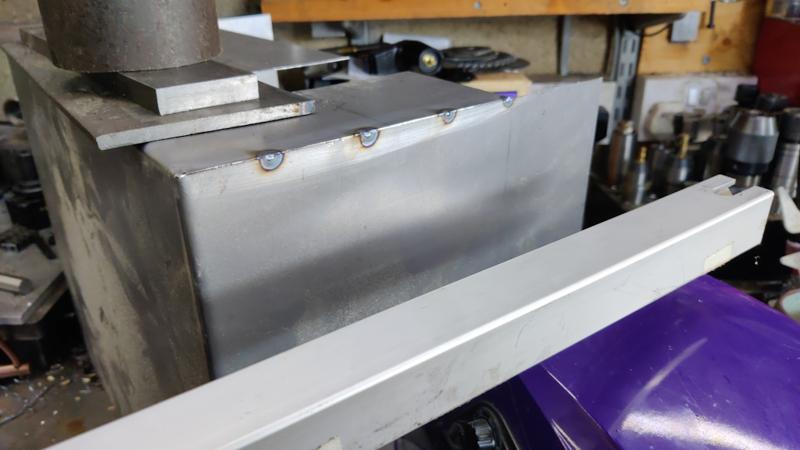
0803_drive_centre_04_arbitrary_angle_800.jpg


The part was then sawn off with the horizontal bandsaw and then I used the lathe again to clean the rear face up:
0803_drive_centre_05_facing_rear_800.jpg


The other half of this part was made from an old MT2 blank end arbor, which had previously been used for a tailstock die holder for my mini-lathe. I never use the mini-lathe now that I've got the Harrison M250, so I figured this part was fair game. To hold it in the spindle, I used a stack of adaptors. The M250 has a rather unusual Morse Taper 4.5. A while ago I made myself an adaptor to go from MT4.5 to MT3 (the "proper" adaptors of the sort that would have come with the lathe seem to be like rocking horse droppings). This, in combination with an off-the shelf MT3 to MT2 adaptor allowed me to hold the part, with a bit of M10 threaded rod all the way through the spindle acting as a drawbar to stop the arbor from shifting.

0803_drive_centre_06_stack_of_morse_800.jpg


It was then just a case of cutting the matching M10 left-hand thread...

0803_drive_centre_07_left_hand_thread_800.jpg


... and then making the end pointy:

0803_drive_centre_08_pointy_800.jpg


That's it done for now. I should probably harden and temper the silver steel part, but I don't think I'm going to bother. The two parts together go in the headstock spindle thus:

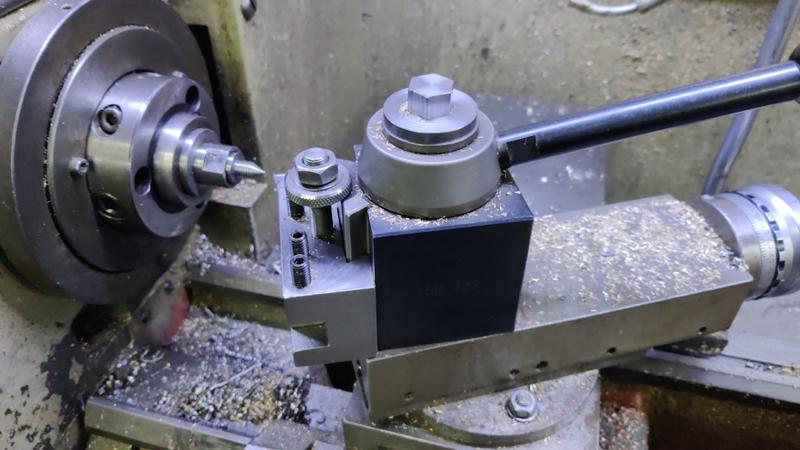
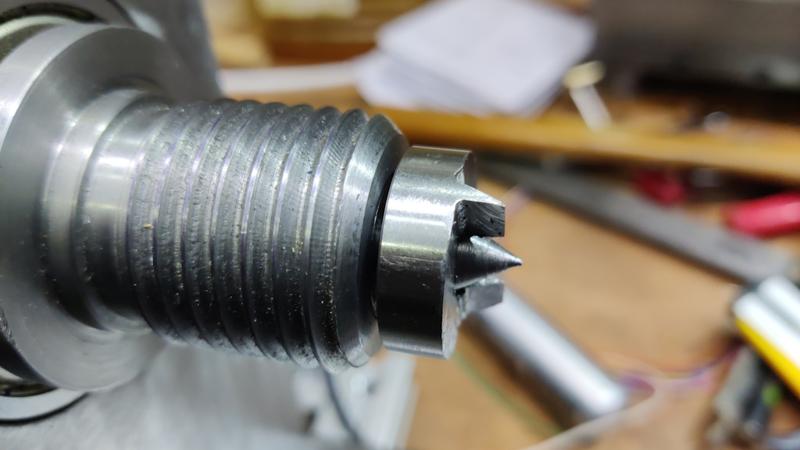
0803_drive_centre_09_in_situ_800.jpg


Any turning forces will tend to act in the direction that causes the thread to unscrew, which will drive the prongs further into the wooden workpiece.

It's probably a rather unconventional design for a drive centre, but it felt like it was the easiest way to make one given the bits I had to hand.

The reason that I'm not going to harden it and that I said at the start that it's a bit pointless is that I'm planning to buy a proper commercial drive centre fairly soon (recommendations are welcome). I only really made this one to prove to myself that I can get to the point of turning a chisel handle with minimal purchases involved. As soon as I've proved this works well enough to be functional, it'll probably go in the metal scrap bin!
 
It's always doen to personal choice Al, I use my MT2 steb centre more than any other. The one I have is stubbier than this and there are loads around including cheapos on ebay.
 

Attachments

  • steb centre.jpg
    steb centre.jpg
    34.3 KB · Views: 447
Wadkin supplied drive centres exactly like that, but with a morse 2 taper
 
SamQ aka Ah! Q!":2hrcw4a3 said:
"drilled and tapped an M10 left-hand thread:"
:shock:

Using a tap you just HAPPENED to have? Colour me dead impressed Dr. Al.

I can't for the life of me remember why I bought that tap (it was definitely for a project once in the dim and distant past). The reason I went with 10 mm for this and also for the tailstock leadscrew was because I had that tap.
 
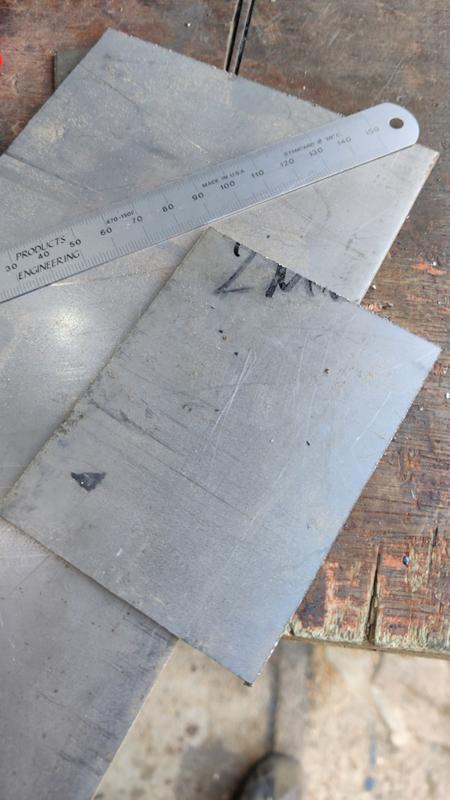
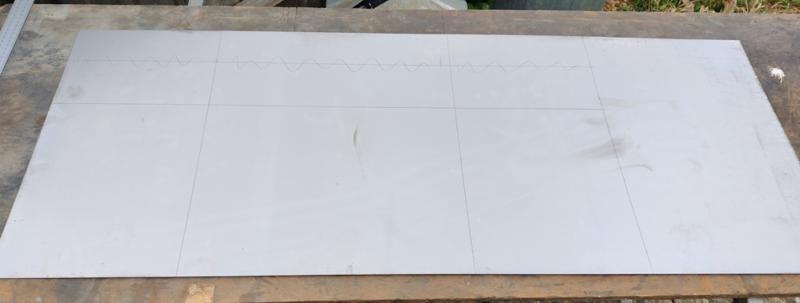
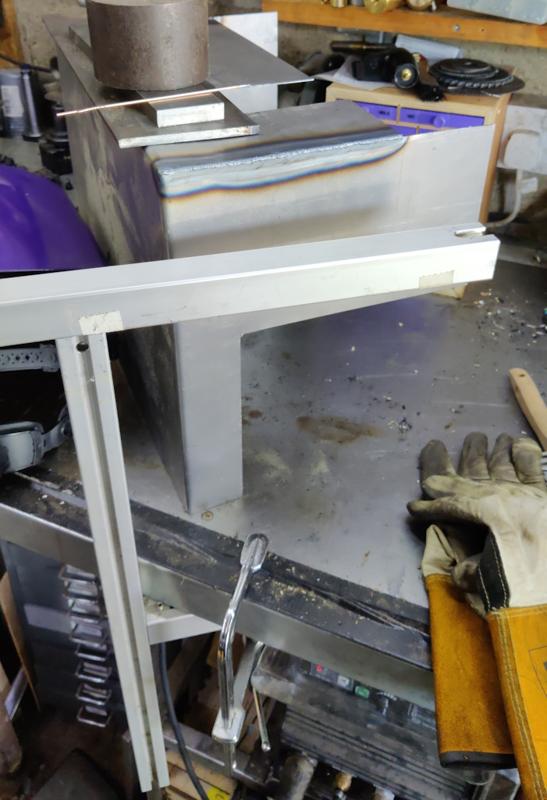
The bulk of this morning has been spent working on a shield to keep the sawdust out of the motor and inverter. I started with a big sheet of 0.8 mm thick steel, left-over from when I made some drawers (which you can see in lots of photos in this WIP). I marked out where I wanted the cuts to go, then did it again after getting it wrong first time (measure twice, and all that):

0903_shield_01_sheet_800.jpg


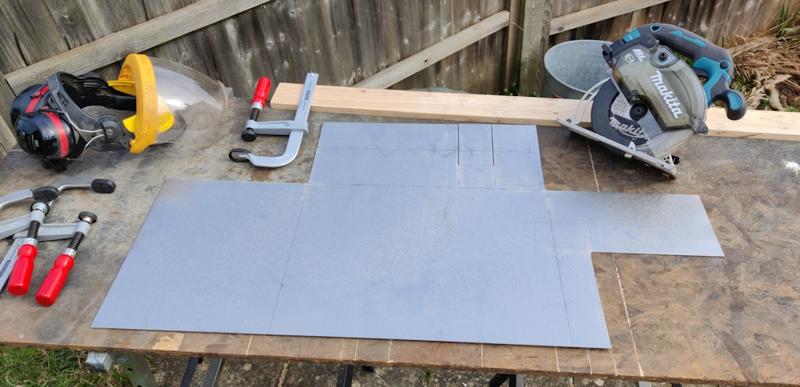
I then used my lovely little metal cutting circular saw to cut along the lines:

0903_shield_02_cut_out_800.jpg


To remove the bit that goes over the spindle, I started by bending it back and forth to make the line a bit weaker and very clear:

0903_shield_03_bent_spindle_cut_out_800.jpg


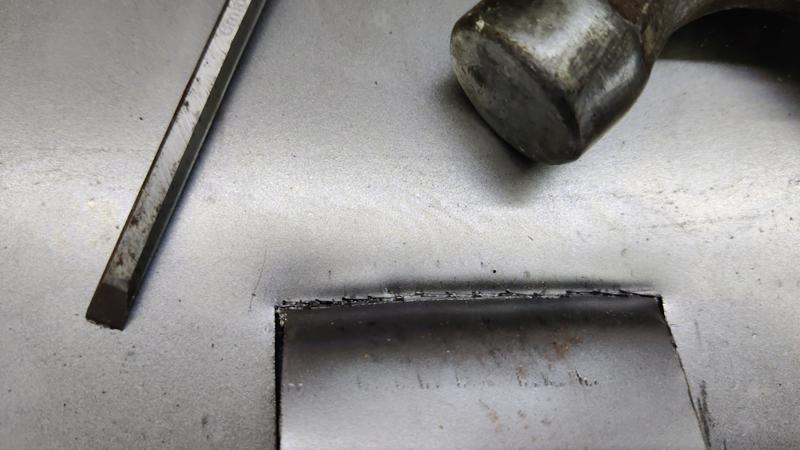
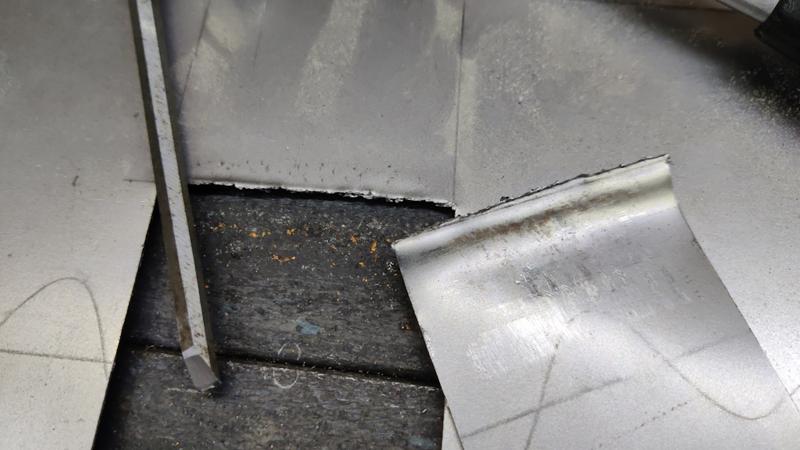
I then considered a few different approaches, none of which seemed viable, before resorting to abusing one of my cheap and nasty chisels that I reserve for such abusive treatment:

0903_shield_04_abusing_chisel_800.jpg


One run along each side of the cut line and the thin steel was severed:

0903_shield_05_abusing_chisel_2_800.jpg


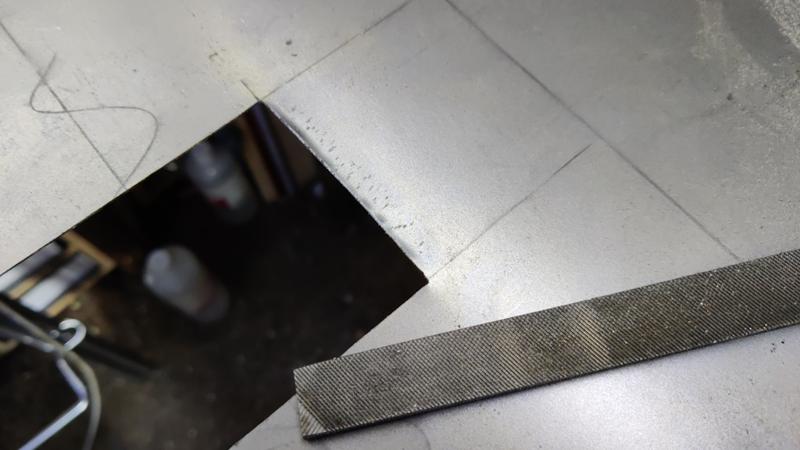
After roughly resharpening the poor chisel, I used a file to clean up the edge:

0903_shield_06_filing_to_clean_up_800.jpg


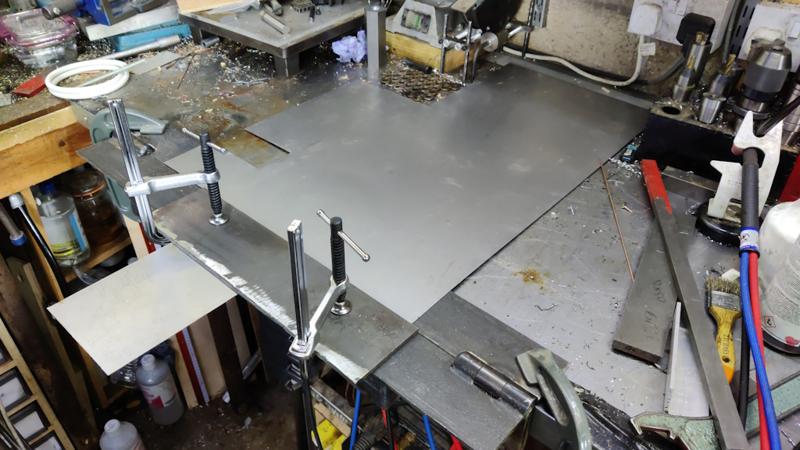
I then used my home-made sheet metal folder to form the sheet into shape:

0903_shield_07_setup_for_first_fold_800.jpg


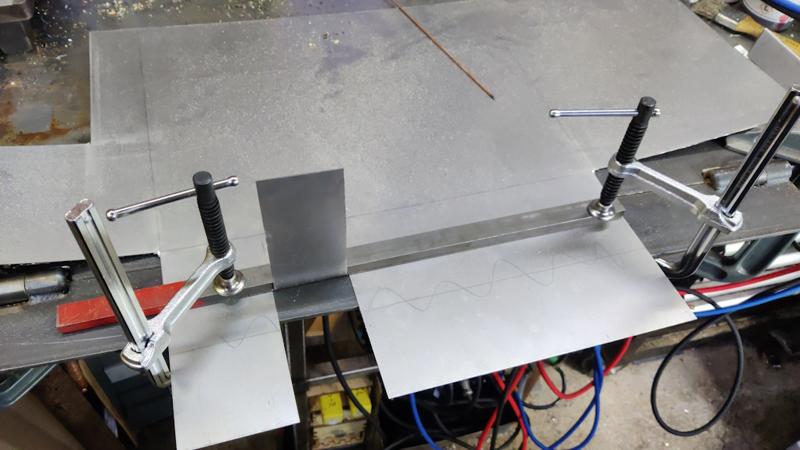
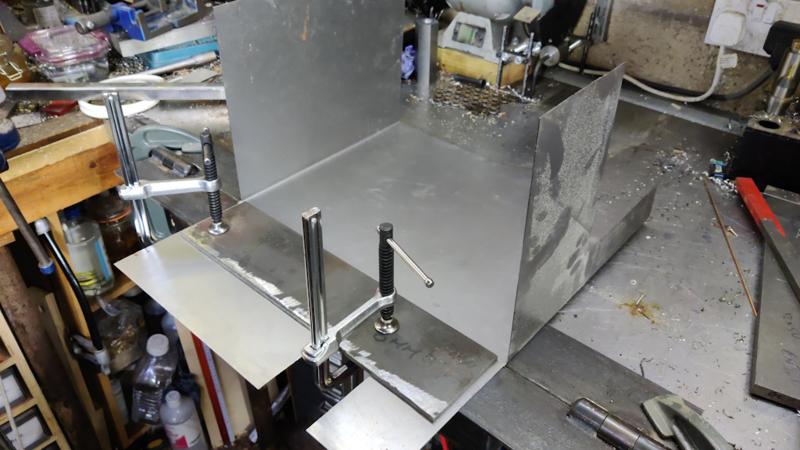
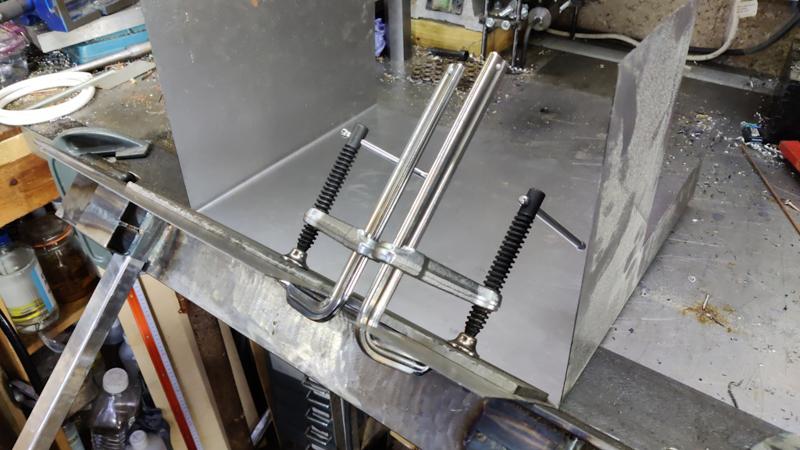
For the last fold, I started with two clamps at each end of the bar:

0903_shield_08_setup_for_last_fold_800.jpg


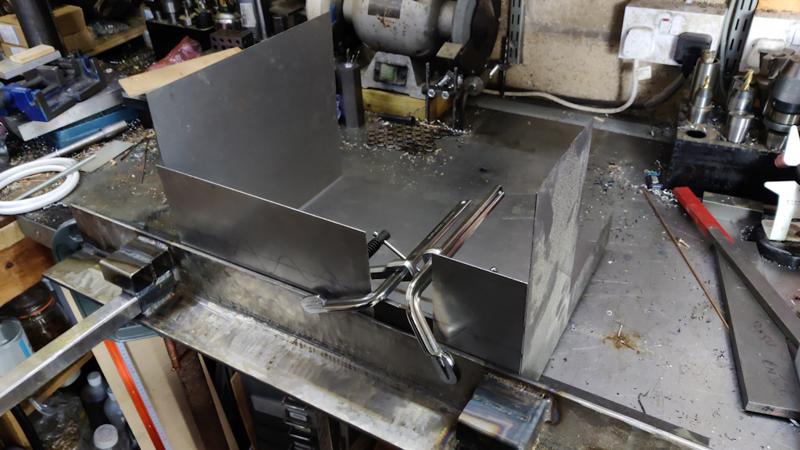
Then moved one of them once I'd folded it up as far as I could (I didn't have any clamps with sufficient jaw depth to have a clamp from the front edge):

0903_shield_09_moved_clamp_800.jpg


All done:

0903_shield_10_folded_800.jpg


Before welding it, I did a quick test fit:

0903_shield_11_test_fit_800.jpg


Then it was just a case of applying some tack welds:

0903_shield_12_tack_welds_800.jpg


Then using some more of the 3030 extrusion as an arm rest to try to get as comfortable as possible for welding:

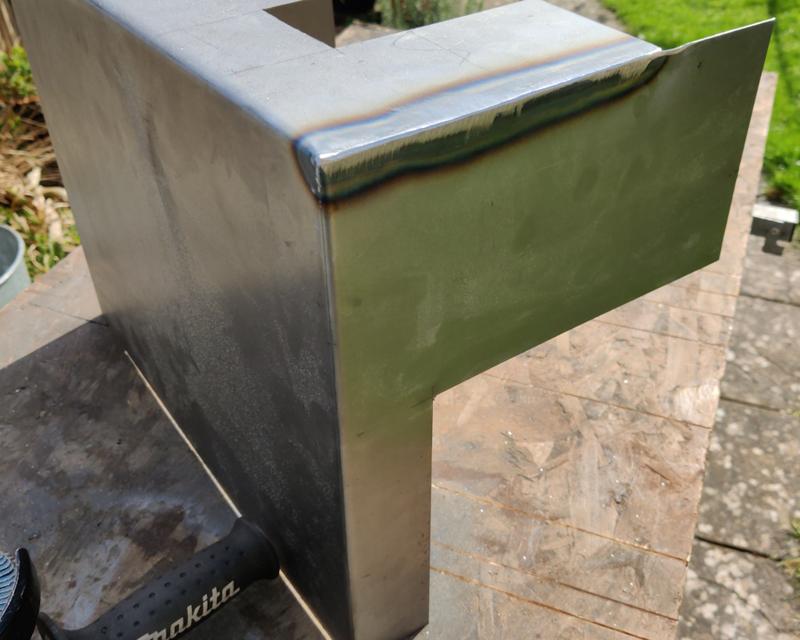
0903_shield_13_welded_800.jpg


The angle grinder then hides all the evidence:

0903_shield_14_more_grinding_800.jpg


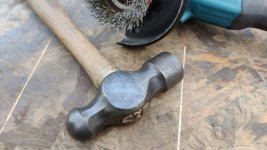
While I was outside and being noisy, I thought I'd appease AndyT ;) :

hammer.jpg

When I made the shield, I hadn't really thought about how to mount it (although I had realised I needed to, I'd just put off the thinking!)

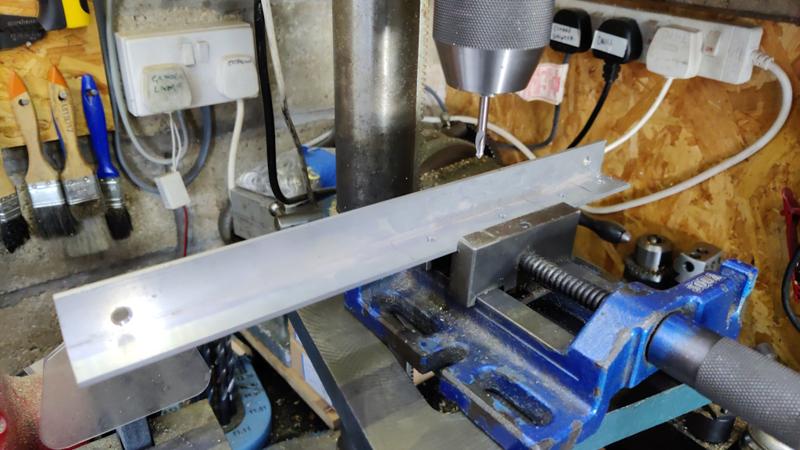
I rummaged around in my various metal stores and found a promising looking bit of aluminium angle. It already had a couple of holes in it; I added some more:

0903_shield_15_drilling_angle_800.jpg


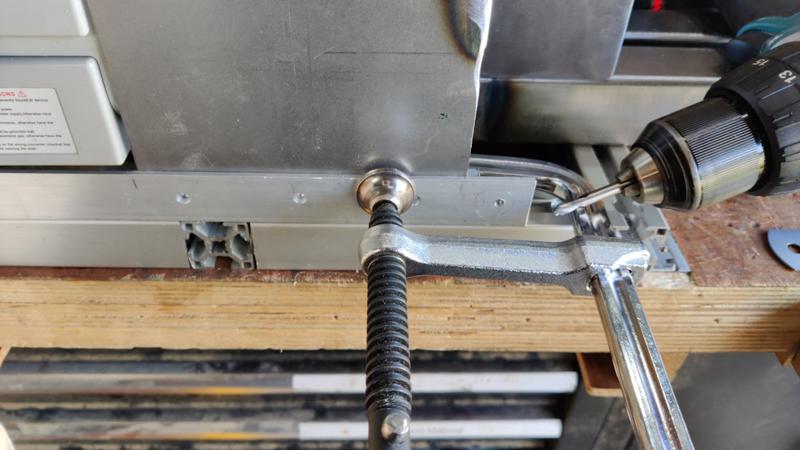
I then clamped it to the steel sheet with another bit of scrap aluminium at the back and then drilled through:

0903_shield_16_drilling_sheet_for_angle_800.jpg


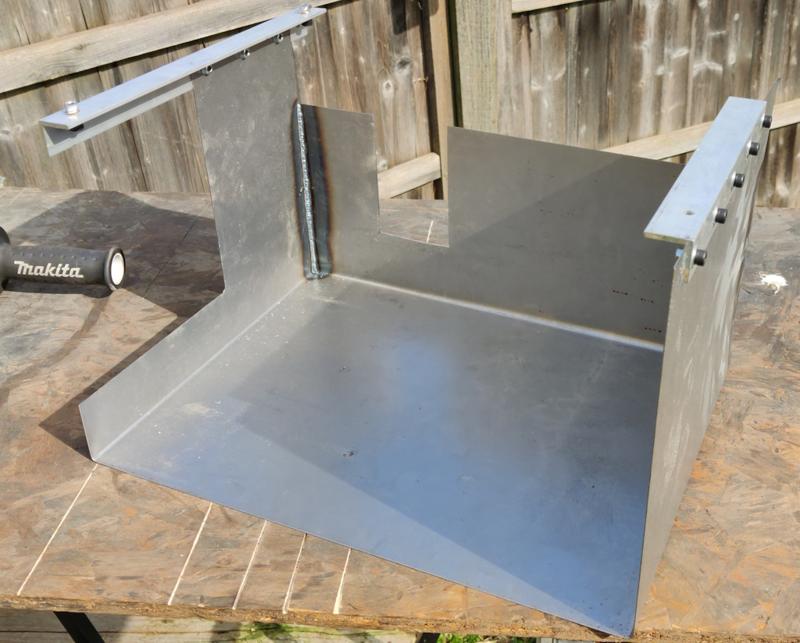
I did a similar process on the back end of the shield as well and with that, the shield is finished (give or take some rounding off of edges and some paint at some point):

0903_shield_17_finished_frame_upside_down_800.jpg


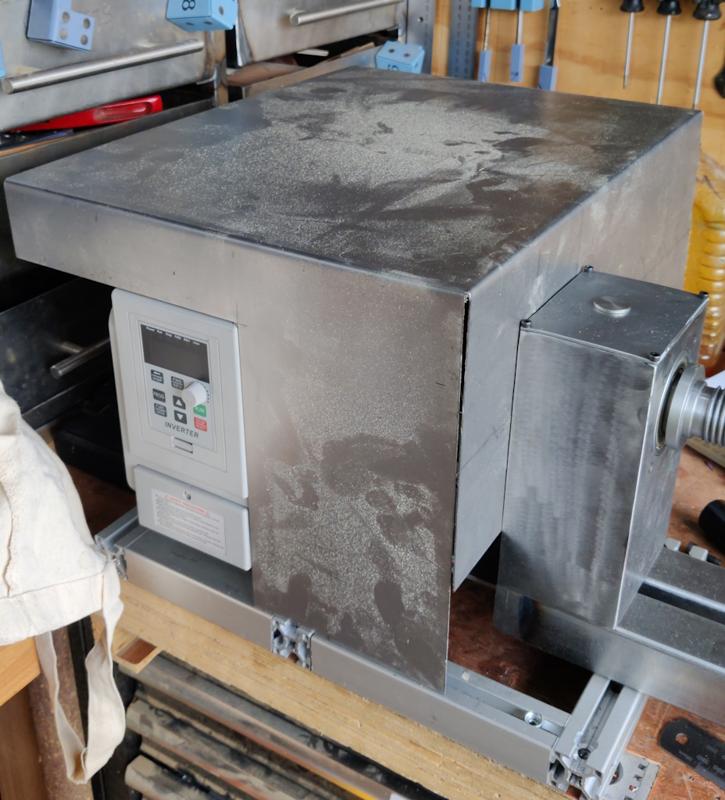
It's held to the 3030 extrusion with two drop-in t-nuts at the front; the back just rests on the extrusion. I wanted it to be quick to remove as it'll have to be removed to adjust belt tension or to dismantle the lathe for storage. I thought I'd taken a photo of the finished shield in situ, but I can't find it. No doubt more photos will be taken in due course!
 
wallace":1f9xqm8l said:
Wadkin supplied drive centres exactly like that, but with a morse 2 taper
That is a 2 MT as far as I know Wallace. The steb centre was suposedly developed and patented by Robert Sorby
 
Another outstanding job is to make the knob for what I've been calling the tool rest slide but is apparently known as the banjo (according to a post from AndyP yesterday in another thread on this forum). The knob will turn the hex bar that runs through the banjo. I started by modifying the end of the hex bar to have a smooth shank section on the end:

0903_banjo_knob_01_machining_hex_bar_800.jpg


I then grabbed a bit of 16 mm diameter 303 stainless bar and drilled an 8 mm hole, 20 mm deep, then broached it as deep as the rotary broach would go. The 8 mm drill then went back in to clean out the detritus from the broaching operation.

0903_banjo_knob_02_broached_hole_800.jpg


It got flipped around in the chuck and, with the lathe running backwards, I shaped the end:

0903_banjo_knob_03_shaped_end_800.jpg


It then went in a collet chuck for a hole to be drilled and tapped for a grub screw:

0903_banjo_knob_04_tapped_800.jpg


Finally, the collet block was tilted up to allow the cross hole to be drilled for the handle:

0903_banjo_knob_05_handle_hole_800.jpg


After preparing a handle (by rounding over the end of a bit of 8 mm bar), I glued it in place with Loctite 603:

0903_banjo_knob_06_glued_800.jpg


After leaving it for an hour or so, the glue was still not holding (it usually cures in about 5 minutes). My first suspicion was that I'd made the hole a bit big, so I drilled it out bigger and used a 10 mm handle. That didn't stick either, so I started again and made a completely new handle body (with an 8 mm hole again). I meticulously cleaned everything with acetone and tried gluing again but after an hour it was still quite loose. I'm beginning to suspect it might be the age of my bottle of Loctite 603 (which must be getting on for 10 years old now). I've left it for now: if it hasn't cured by the morning, I'll probably just cheat and weld the two bits together!

Next up is another job that's firmly on the "arguably pointless" pile: making a spindle gouge so that I can turn something with the lathe once it is finished. I say this is pointless as I'm intending to buy some HSS lathe tools very soon and at that point it's unlikely I'll ever use the home-made one again. However, in the spirit of "try to make everything and buy nothing", I felt I ought to give it a shot.

What makes it slightly more difficult is that I've never held a spindle gouge in my life and it's difficult to be confident of the geometry based on photos online!

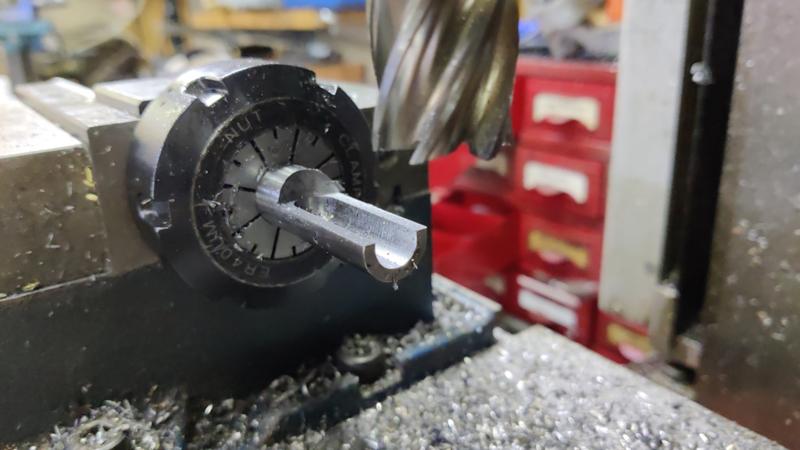
I started with a bit of 16 mm silver steel. I've got a 10 mm double-ended ball-end end mill. I've honestly no idea where it came from (I guess I bought it at a show at some point) and it has never been used. Now's its chance! The silver steel got held in a collet chuck and the mill spindle aligned with the centre of the bar:

0903_spindle_gouge_01_preparing_to_cut_800.jpg


I then gradually milled the silver steel away until I'd reached a depth of 13 mm and hence there was 3 mm material left all the way round the slot:

0903_spindle_gouge_02_ball_ended_slot_800.jpg


A big end mill was then used to bring the top surface down a bit and hence remove the sharp edges at the top of the slot:

0903_spindle_gouge_03_big_end_mill_800.jpg


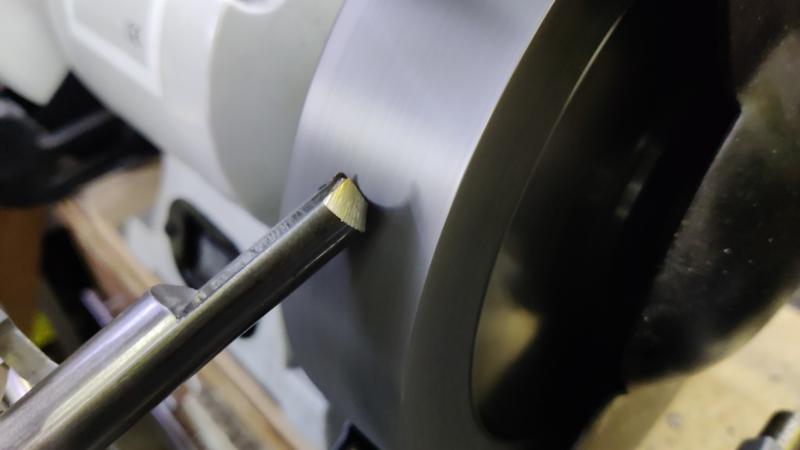
Rather than waiting until after hardening, I decided to rough out the bevel now. This has the considerable advantage that I could be quite aggressive with the bench grinder as I didn't really care about overheating the edge:

0903_spindle_gouge_04_grinding_bevel_800.jpg


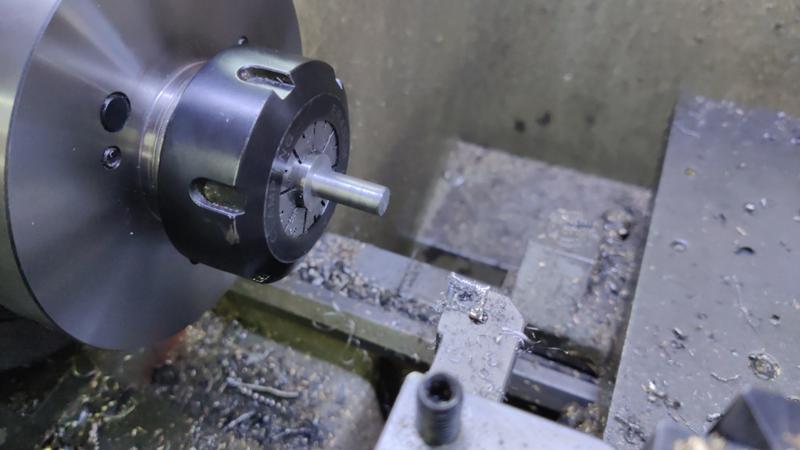
It felt a bit wasteful to use such a long length of 16 mm silver steel on what is essentially a throw-away project, so I decided to cut it down to length and use an extension bar. After cutting it down, I faced the back edge and turned an 8 mm diameter shank on the back:

0903_spindle_gouge_05_cutting_8mm_shank_800.jpg


I then filed a flat on the shank:

0903_spindle_gouge_06_filing_flat_800.jpg


A bit of 16 mm EN1A was faced off and an 8 mm hole drilled and reamed in the end. The EN1A bar will act as a handle for now.

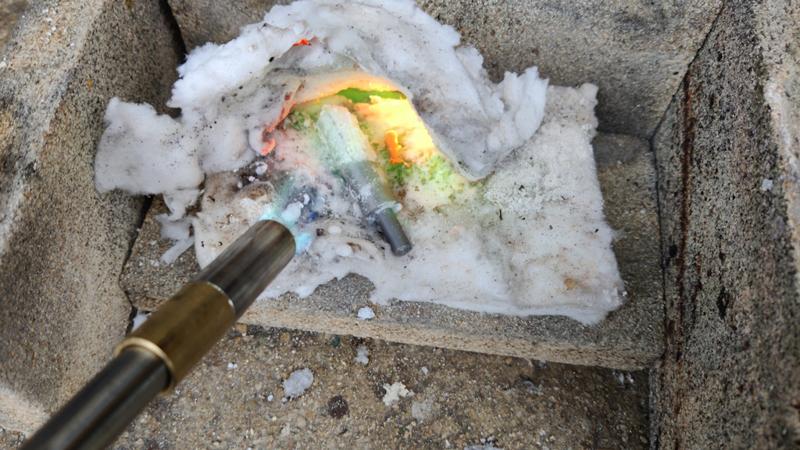
Next up was heat treatment. I covered the part in a mixture of boric acid and methylated spirits. That mixture helps stop scale forming on the piece, which makes clean-up much easier later. It then got attacked with the MAPP gas torch:

0903_spindle_gouge_07_mapp_800.jpg


Once it was glowing red and wouldn't stick to a magnet, I dunked it in some water and wiggled it round until it stopped fizzing.

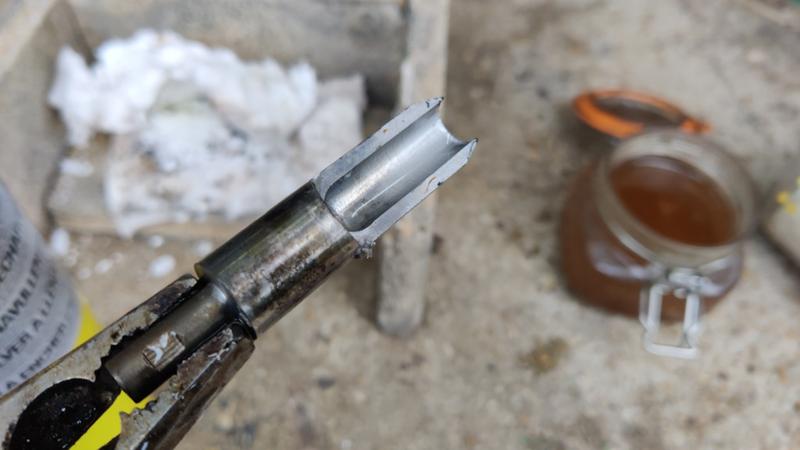
In this photo, you can see the effect of the boric acid, which stayed put in the slot, but didn't stay as effectively on the body:

0903_spindle_gouge_08_effect_of_boric_acid_800.jpg


After a quick rub with some 180 grit wet-and-dry, I tempered it with the MAPP torch again. A bit of 10 mm bar was reduced in diameter slightly (about 9.75 mm at a guess) and wrapped with wet-and-dry paper. That was used to clean up the slot, working up through the grits until I got bored.

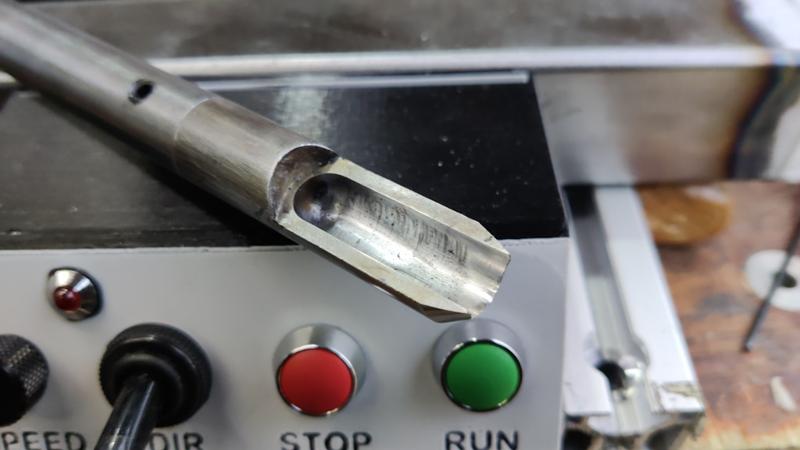
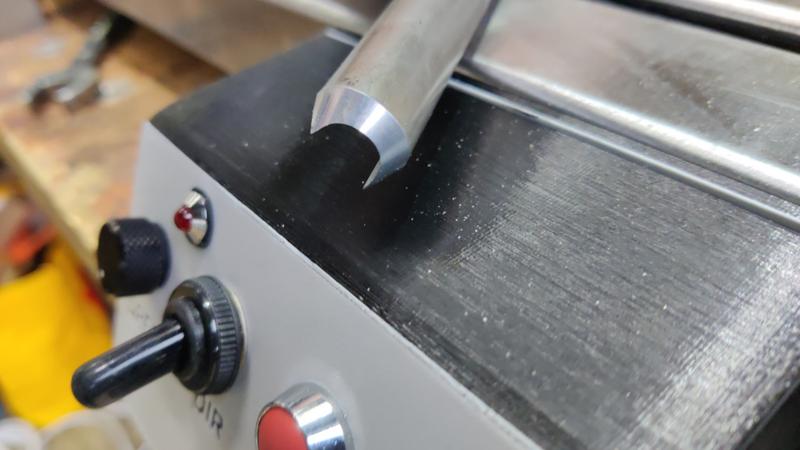
Finally, I sharpened the bevel and gave it a hone and I think it's ready for use:

0903_spindle_gouge_09_ready_for_use_800.jpg


0903_spindle_gouge_10_ready_for_use_2_800.jpg


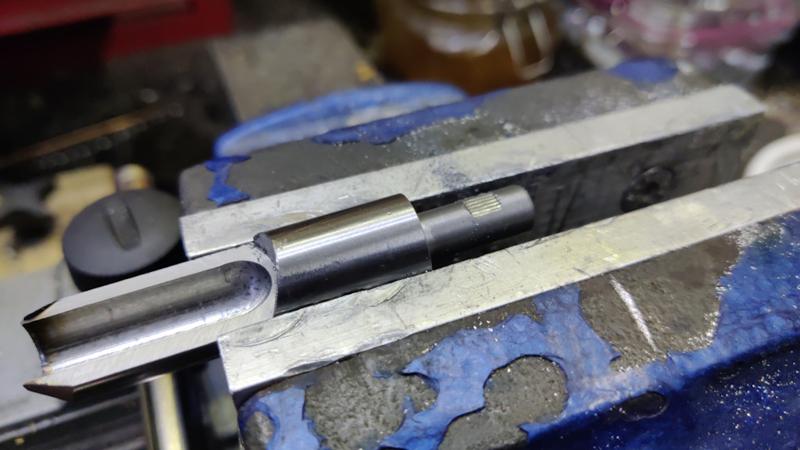
This photo shows the full tool: not the most ergonomic of handles, but hopefully it'll do the job for the limited use I expect this to get:

0903_spindle_gouge_11_full_tool_800.jpg
 
Dr Al":4klcasar said:
not the most ergonomic of handles, but hopefully it'll do the job for the limited use I expect this to get:

If only you had a woodturning lathe and some nice walnut... ;)
 
Andyp":7ipqqwly said:
Not just me Al

I believed you! Before reading your post I had no idea what it was called (hence making up my own name). The only use of banjo I've come across in the past (outside of the musical instrument) is a piece that holds change gears on a metalworking lathe. I've no idea why that's called a banjo either.

AndyT":7ipqqwly said:
Dr Al":7ipqqwly said:
not the most ergonomic of handles, but hopefully it'll do the job for the limited use I expect this to get:

If only you had a woodturning lathe and some nice walnut... ;)

8-)
 
Next up was heat treatment. I covered the part in a mixture of boric acid and methylated spirits. That mixture helps stop scale forming on the piece, which makes clean-up much easier later.

Never heard of this one, Dr. Al. I thought you were case-hardening at first, then re-read what you said about scale. Consider your tip nicked. 8-)
 
SamQ aka Ah! Q!":daca7g8u said:
Next up was heat treatment. I covered the part in a mixture of boric acid and methylated spirits. That mixture helps stop scale forming on the piece, which makes clean-up much easier later.

Never heard of this one, Dr. Al. I thought you were case-hardening at first, then re-read what you said about scale. Consider your tip nicked. 8-)

I'd recommend working your way through the Clickspring youtube videos. That's where I learnt that (and many other) tips. He usually wraps the parts in some steel wire and then covers it in the boric acid / meths mix: the steel wire keeps the boric acid in place. I've done that a few times and it works well; I was just too lazy this time :)
 
Yesterday's attempt at gluing (the fourth one I think) hadn't cured overnight, so I started today by welding the knob in place:

1003_01_welded_knob_800.jpg


It then got a bit of attention with a wire brush before fitting it:

1003_02_knob_in_place_800.jpg


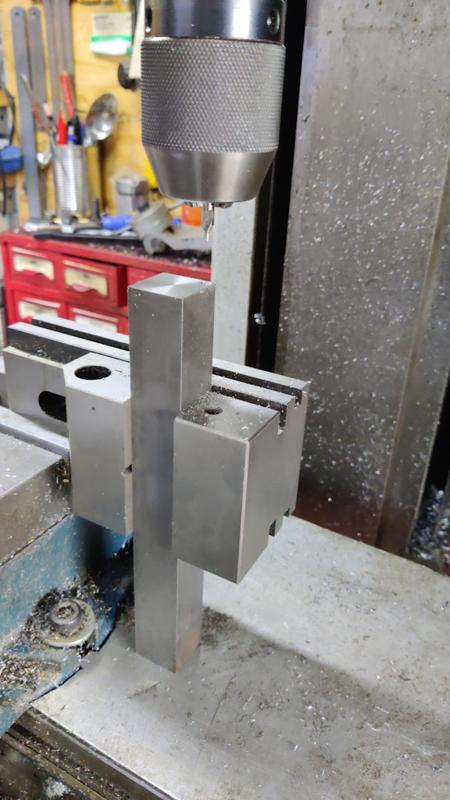
The next job was to work on a shorter tool rest. Being shorter (and aiming for shorter than the stock that it's made from) allows for a slightly tweaked process of making it. The first thing I did was clamp a vice in the mill vice and used that second vice to hold the stock upright. I could then drill a centre hole, just in one end this time. As I was drilling more accurately (using an edge finder on the edges of the stock and moving in a controlled amount) by virtue of being on the milling machine, I could use a slightly larger centre drill without risk of blowing out the edge:

1003_tool_rest_01_vice_in_vice_800.jpg


I could then mount the piece in the four jaw chuck (using a couple of offcuts of steel as I couldn't get the jaws close enough to each other to allow such off-centre turning):

1003_tool_rest_02_four_jaw_800.jpg


As it was held quite robustly in the chuck, I could run the lathe quicker than I did when making the longer rest and that meant that turning it down to size was much quicker:

1003_tool_rest_03_turned_800.jpg


After using the bandsaw to chop it to length, I milled the two ends with an end mill (which handily gave me a very accurate gauge of the centre) and then drilled the hole for the support post:

1003_tool_rest_04_support_hole_800.jpg


After turning it through 90°, I drilled and manually tapped the the grub screw hole (using the chuck to keep the tap aligned, but turning the spindle by hand):

1003_tool_rest_05_tapped_hole_800.jpg


The two rests side-by-side for comparison:

1003_tool_rest_06_two_rests_800.jpg


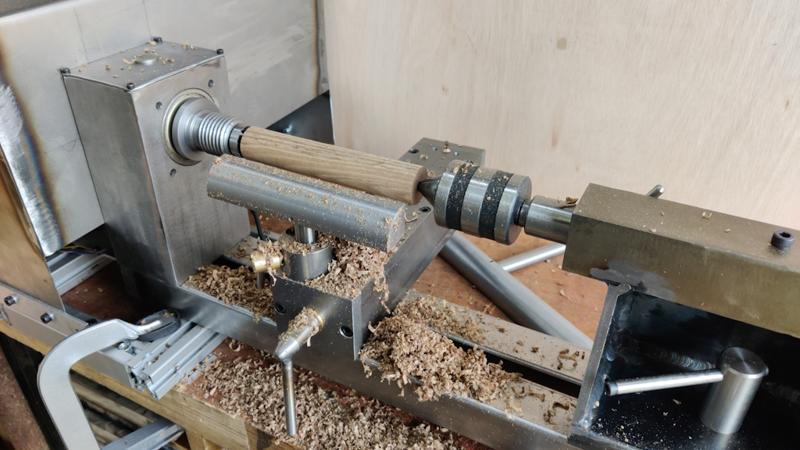
With that done and a bit of walnut made octagonal with the bandsaw, there was really nothing for it and I bravely (stupidly?) decided to set up a camera on a tripod to video my very first attempt at woodturning...

[youtubessl]x9lsJ73gs00[/youtubessl]

The bit of plywood in the background was there to keep the shavings from covering all the tools mounted on the wall, although it didn't seem that bad in practice.

After reviewing the video on the camera's screen, I realised it wasn't that clear (I'll never be a youtuber!), so I moved it a bit closer and filmed my second ever attempt at woodturning!

[youtubessl]84THNzxhiWs[/youtubessl]

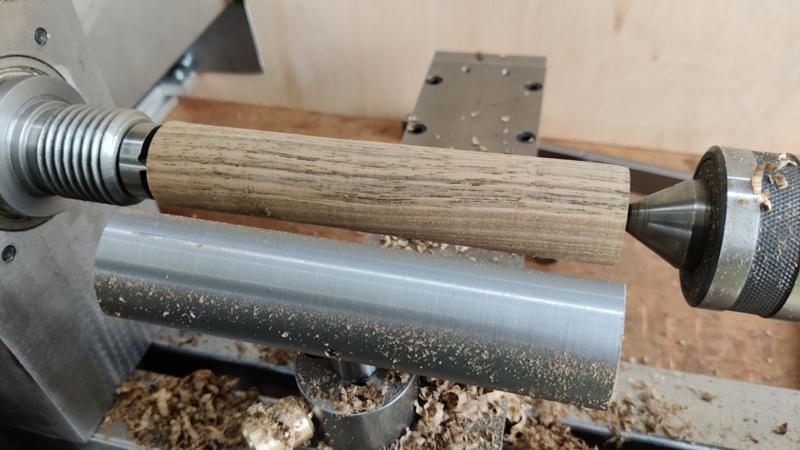
A couple of photos of the result:

1003_first_turn_result_1_800.jpg


1003_first_turn_result_2_800.jpg


I also braved a second attempt (with the camera off this time) and turned a longer piece with the long tool rest (the photo was taken after vacuuming up the mess!):

1003_second_turn_result_800.jpg


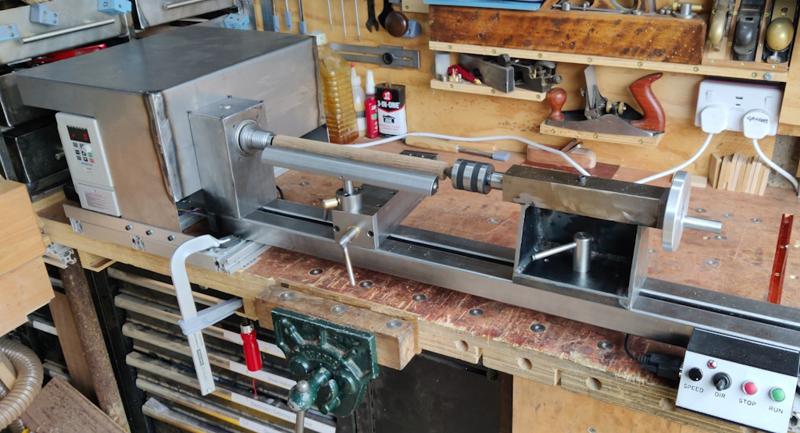
Some more photos:

1003_photo_shoot_01_800.jpg


1003_photo_shoot_03_800.jpg


With the cover off:

1003_photo_shoot_04_800.jpg


1003_photo_shoot_05_800.jpg


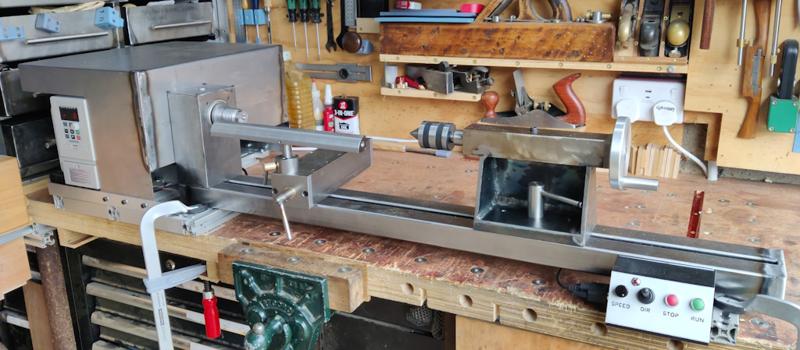
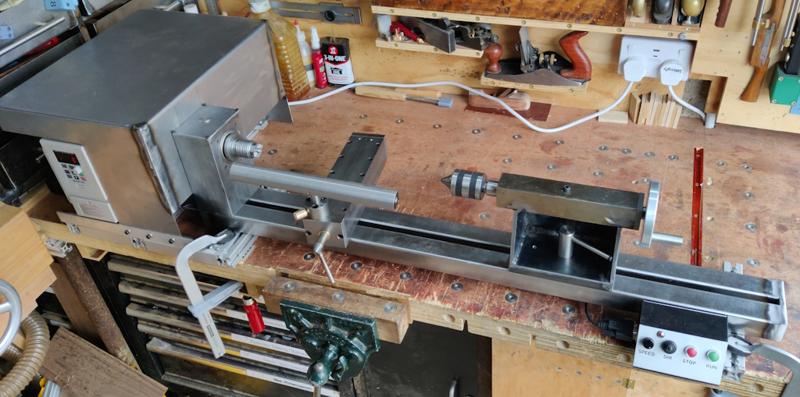
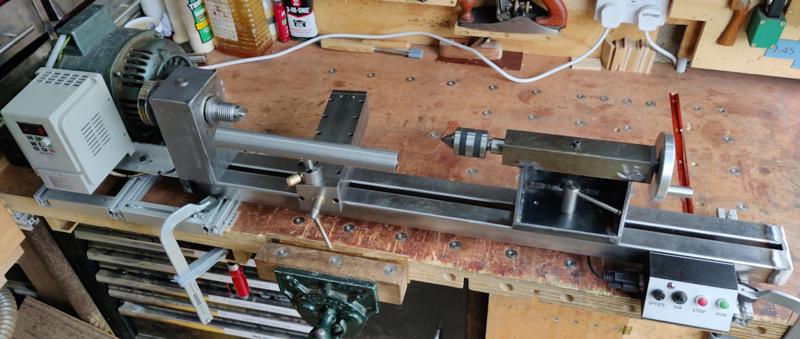
From my point of view, that's basically a finished lathe. I started on 8/2/2024 and today is 10/3/2024, so it has taken me just over four weeks to make. When the weather gets a lot warmer, I'll paint the bits of it that I think would benefit (painting Tractol is a lot easier in warm weather I think). Immediately before that I'll probably run the angle grinder over all the corners to round them over a bit. However, I'm quite happy to put painting off: I absolutely detest painting!

It seems to work pretty well from what I can tell with zero experience. I'm sure I'll do a lot more playing/experimenting over the next few weeks (especially once I've bought some proper lathe tools to go with it).

This afternoon's job will probably be to have a go at turning a chisel handle (as I said I would try to do that without buying anything, so I need to make it with the tools I've got).
 
What a brilliant result!

Many thanks for sharing the journey, I'm sure you will have lots of enjoyment from your splendid new lathe.
 
Cabinetman":3u2n36f4 said:
Well I would say that’s very successful, and are you sure you’ve never used a wood lathe before? I think you must be a natural!

I have read quite a few books and watched a couple of Richard Raffan youtube videos in the past couple of weeks, so I did have a vague idea of what I was trying to do. I'm sure it all gets much more challenging than just making cylinders though!
 
Nicely done Al. :eusa-clap:

Can I make another suggestion?
It could be worth making or buying a thead protector for the spindle nose when turning between centres. It's not difficult to have a tool slip and damage the threads. I haven't but easily could have a couple of times.
 
Lons":2uxs8qa1 said:
Nicely done Al. :eusa-clap:

Can I make another suggestion?
It could be worth making or buying a thead protector for the spindle nose when turning between centres. It's not difficult to have a tool slip and damage the threads. I haven't but easily could have a couple of times.

That's an excellent suggestion, thank you - I don't think I would have thought of that. I can probably just 3D print something,
 
Dr.Al":e932ctit said:
Lons":e932ctit said:
Nicely done Al. :eusa-clap:

Can I make another suggestion?
It could be worth making or buying a thead protector for the spindle nose when turning between centres. It's not difficult to have a tool slip and damage the threads. I haven't but easily could have a couple of times.

That's an excellent suggestion, thank you - I don't think I would have thought of that. I can probably just 3D print something,
They usually screw on to the threads Al but as long as it's tight enough not to spin off then plastic is probably better as it ptotects the tool as well as the thread. I forgot you had a printer. I suppose you could cut a female thread into it if you wanted.

The real reason is I'd hate you to have too much time on your hands now you've finished the lathe. :lol:
 
Lons":ln9u4w7b said:
Dr.Al":ln9u4w7b said:
Lons":ln9u4w7b said:
Nicely done Al. :eusa-clap:

Can I make another suggestion?
It could be worth making or buying a thead protector for the spindle nose when turning between centres. It's not difficult to have a tool slip and damage the threads. I haven't but easily could have a couple of times.

That's an excellent suggestion, thank you - I don't think I would have thought of that. I can probably just 3D print something,
They usually screw on to the threads Al but as long as it's tight enough not to spin off then plastic is probably better as it ptotects the tool as well as the thread. I forgot you had a printer. I suppose you could cut a female thread into it if you wanted.

I was planning to do a printed thread. It isn't something I've tried many times, but the thread is coarse enough pitch that I think it'll probably print okay. We'll find out in about half an hour anyway: it's 75% through the print!

thread_protector.jpg

Lons":ln9u4w7b said:
The real reason is I'd hate you to have too much time on your hands now you've finished the lathe. :lol:

Having been playing a bit this afternoon, I suspect I'm going to be quite busy learning how to turn properly :lol:
 
This afternoon I had a bit of a play and have made my first chisel handle, so I'm happy that I've proven that it's possible with the stuff I've made. I can now buy some proper lathe tools!

1003_trial_01_first_handle_800.jpg


In all honesty, this one is destined for the fire: it ended up a lot shorter and narrower than I intended, mainly as a result of several tool dig-ins as I was shaping the back end. To say my technique needs work would be an understatement! Nevertheless, I've proven that the lathe works and I've seen what a walnut chisel handle might look like, so I'm still very pleased.
 
Back
Top