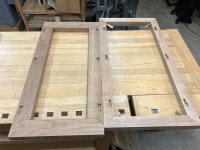
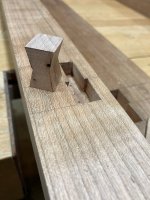
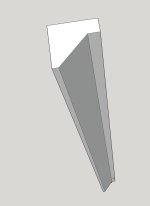
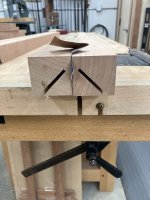
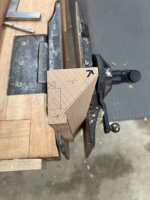
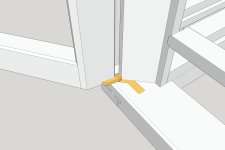
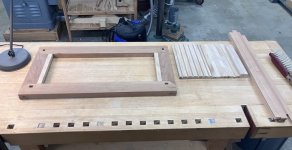
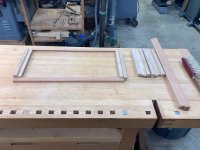
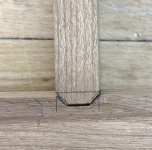
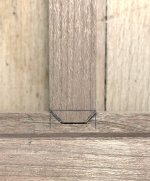
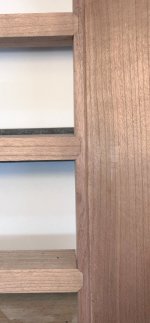
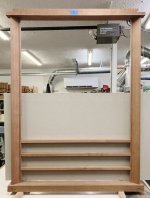
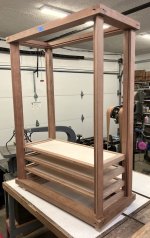
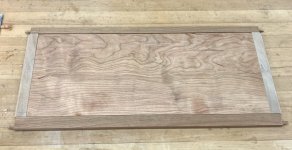
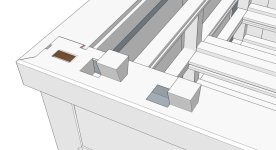
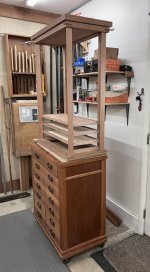
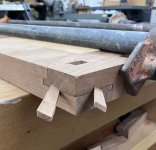
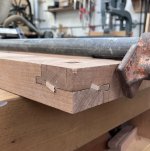
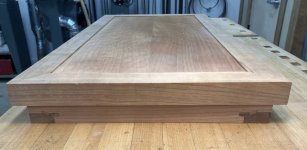
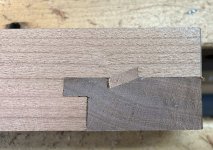
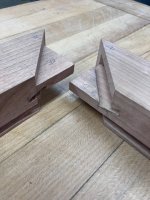
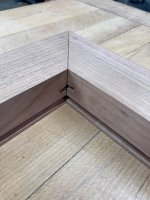
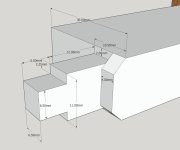
The most fiddly of the joinery I'm using for this cabinet is the connection between the front blade of the web frame, the front post, and side drawer guide. The drawer blade ends in a mitred open faced tenon. That blade also has a stepped tenon that will be draw bored into the tenon for the side drawer guide as they end inside the post. The idea, of course, is to form a rigid assembly without glue. The double mitred abutment will allow a small chamfer (not shown) to flow nicely around the corner of the drawer opening.
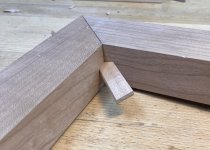
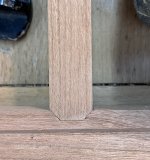
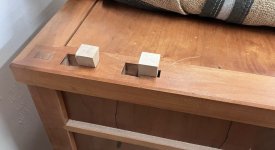
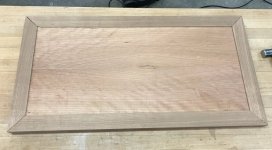
Here is what that will look like when assembled:
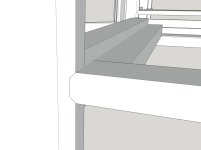
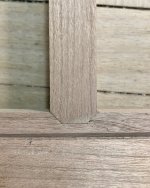
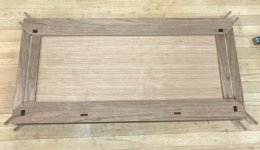
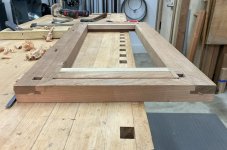
And without the post in view:
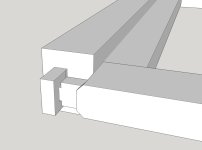
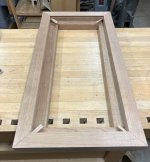
I used a similar joint for the web frames in the lower cabinet but without stepping the tenon. That approach left just a fragile 6 mm x 6 mm x 15 mm tenon to act as a draw bore peg and a couple of them broke off at their base during assembly. Although still small, this should be at least slightly more robust.
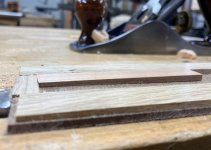
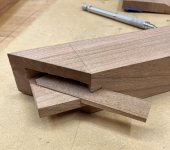
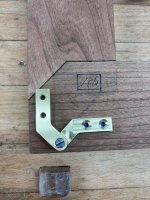
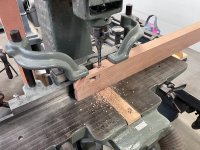
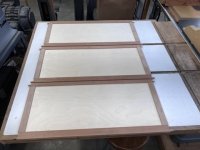
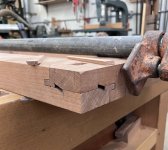
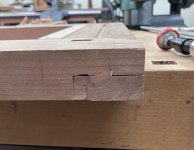
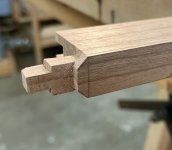
Here is the first joint off the saw and left wide a bit wide of the lines so I can trim to fit.
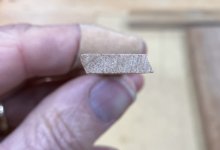
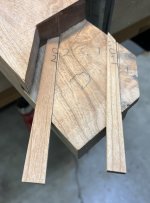
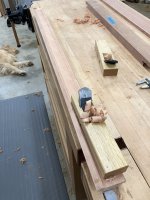
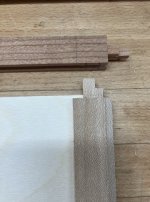
For trimming to dimension I'm using a couple of paring guides, a kotenomi chisel, and calipers. Here's one tenon cheek.
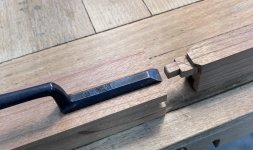
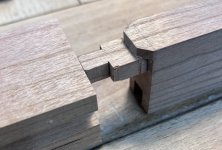
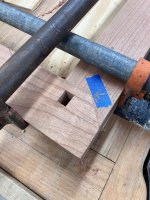
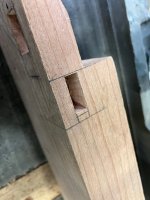
On my first joint I realized that I got the mortice in the post offset about a mm from where I wanted it so the post and web blade weren't flush.
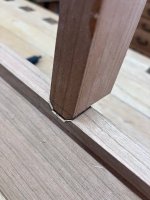
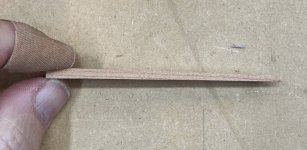
So I had to add some veneer to the far tenon cheek and trim the near face back, shifting tenon 1 mm.
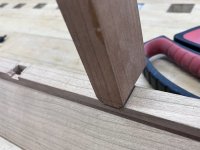
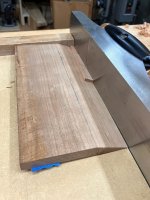
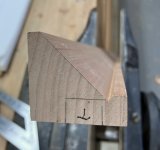
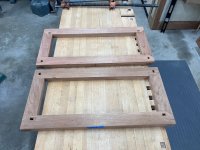
You can see I've still left the mitres fat. Those need to be carefully trimmed later. The hardest part of doing the joinery this way is that the web frame must fit precisely between posts that are already fixed in position. No room for error since there will be a gap if the blade is left too short for its mortice. It can be a just a hair too long, though since there can be some compression against the posts.
I freely admit that skipping the interlocking tenons and just gluing shorter tenons in place would be entirely adequate. But where is the fun in that?