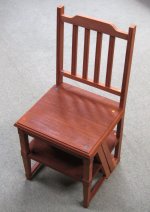
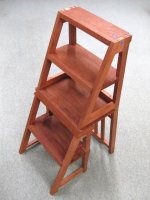
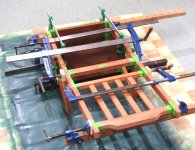
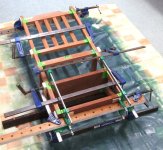
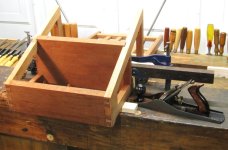
I'm waiting for the weather to get a bit warmer before doing the next glue-ups. In the meantime I have started work on the seat pieces. I wanted to have mouldings on the outer edges so had to choose a shape and a method of working them. I have a fair number of complex moulding planes but was not confident of being able to use them successfully on the end grain edges. Eventually I decided to cut ovolo shapes using a method rather similar to that of AndyT. Of course, an electric router could be used but I dislike them owing to the noise and the dust they make.
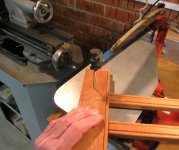
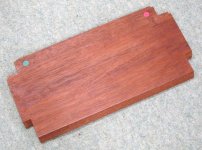
After shooting the boards to length I cut a shallow rebate.

Then I marked a line across the rebate and scored it deeper with a scalpel.
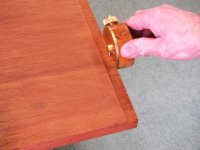

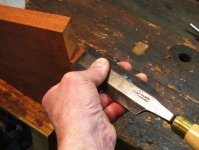
I used a paring chisel to cut a channel for starting a saw cut.

After that, I sawed a deep rebate almost as far as the depth I wanted.
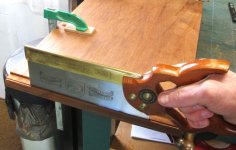
The scored line marks the intended final depth.

I removed most of the waste with a chisel.

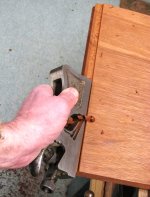
Then I finished to depth with a shoulder plane.
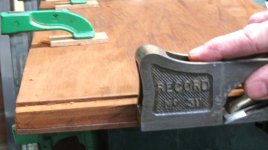
Next, I planed a chamfer.
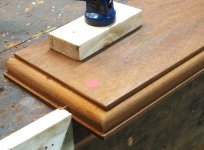
After dealing with all the end grain edges of both boards in the same way I clamped the boards together and proceeded to complete the shape using a "hollow" moulding plane, working from both ends towards the middle in order to avoid tear-out at an end. I have AndyT to thank for his example in clamping the boards together with the aim of having them line up nicely on the completed chair.

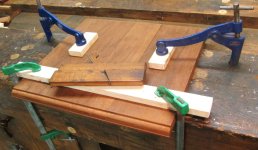
From reference to Goodman's British Planemakers, 4th Edition, my plane appears to have been made by John Green, father or son, in York between 1765 and 1808. I find it very pleasing to use such an old tool.

This is the moulding after a bit of cleaning up with abrasive paper.